A single public outburst at what was supposed to be a routine Canada–U.S. business gathering quietly altered the trajectory of North American economic relations. What unfolded was not merely a diplomatic embarrassment or a moment of personal misconduct, but a revealing stress test of a partnership that had grown increasingly volatile. In front of executives, foreign diplomats, and senior industry leaders, a profanity-filled confrontation shattered the expectation that disagreements would remain behind closed doors. The incident sent shockwaves through Ottawa and exposed a deeper issue Canada had been confronting for years: the risks of overdependence on an unpredictable ally.
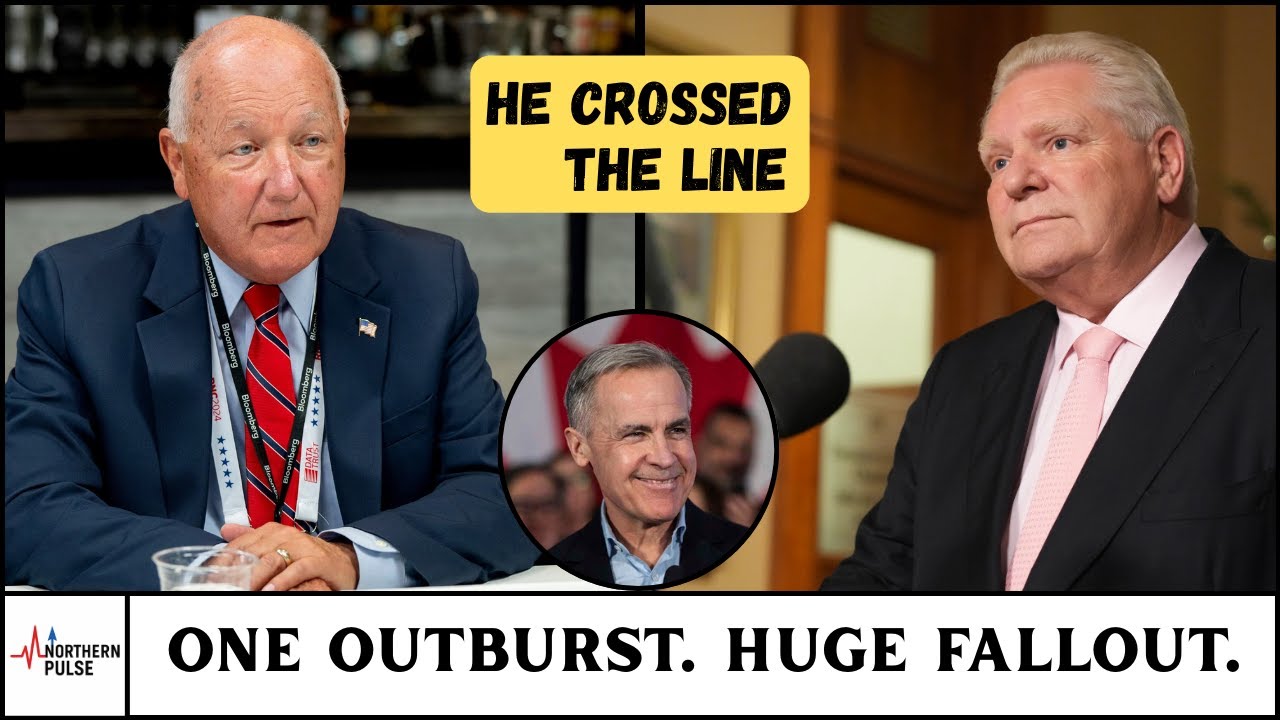
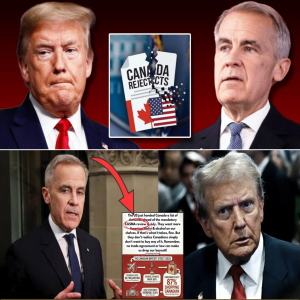
The event was designed to project cooperation and stability, a carefully choreographed reaffirmation of cross-border economic ties. Instead, witnesses described a sudden verbal eruption directed at Ontario’s trade leadership, sparked by a provincial advertising campaign airing in the United States. The ad itself was notably restrained, quoting Ronald Reagan’s 1987 warning that tariffs punish workers, raise prices, and weaken industries on both sides of the border. Yet its timing and framing cut directly into an already sensitive trade environment, turning a message about shared economic reality into a perceived act of defiance.
What made the moment consequential was not just the language used, but the setting. This was not a private dispute or a political rally. It was diplomacy unraveling in real time, in front of stakeholders with billions of dollars at risk. Within hours, reports of the incident spread across Ottawa, where officials quickly recognized that something fundamental had shifted. The outburst did not create tensions — it revealed how fragile the existing balance had become.

Washington’s response escalated rapidly. Trade discussions reportedly stalled, and the possibility of additional tariffs on Canadian goods was raised, threatening sectors already under strain, including steel, aluminum, automotive manufacturing, and energy. At the same time, U.S. manufacturing regions were absorbing the economic impact of earlier tariff policies, with job losses mounting across key industrial states. The Ontario advertisement did not cause these pressures, but it highlighted their origins, reframing protectionism as self-inflicted harm rather than economic strength.
Canada’s reaction marked a turning point. Ontario Premier Doug Ford publicly condemned the behavior as unacceptable, demanding accountability rather than smoothing tensions with diplomatic language. His response resonated domestically because it reflected a broader frustration that had been building for years — the sense that Canada had absorbed repeated economic shocks and public slights in the name of stability, while paying real costs at home. Tariffs were not theoretical; they affected factories, supply chains, and workers across the country.

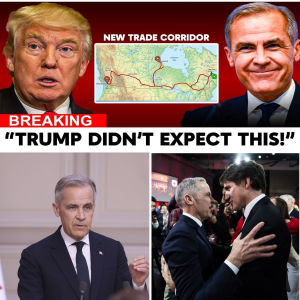
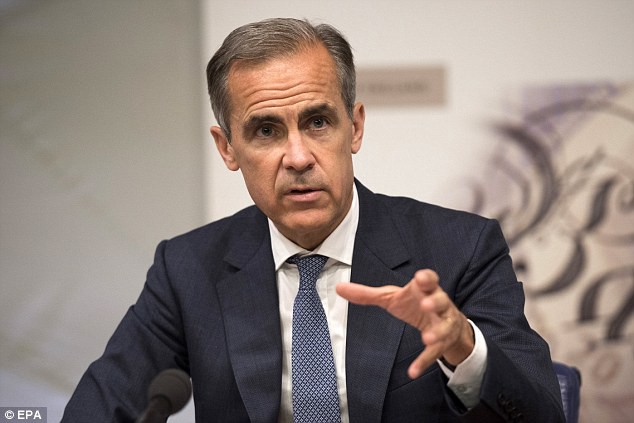
At the federal level, the response took a different form. While public attention remained fixed on the confrontation, C.a.r.n.e.y pursued a quieter strategy. Rather than escalating rhetoric, efforts focused on preserving flexibility while accelerating long-discussed plans to diversify Canada’s economic and strategic relationships. Trade engagement intensified across Asia, including South Korea and Japan, while cooperation with European partners deepened. These moves were not framed as a rejection of the United States, but as a recalibration of risk.
Economic restructuring followed quickly. Canada moved to strengthen domestic production capacity in steel and aluminum, recognizing vulnerabilities created by reliance on external supply chains. Investment in ports on both coasts accelerated to support export diversification, while rare earth processing and critical minerals shifted from policy discussions to national priorities. Energy partnerships expanded beyond North America, and defense procurement increasingly aligned with partners that emphasized predictability and long-term cooperation.
This shift became known among analysts as Canada’s quiet pivot. It was not driven by anger or retaliation, but by arithmetic. Dependence on a single partner whose policies fluctuated with political moods had become a strategic liability. Rather than waiting for stability to return, Canada began building insurance into its economic and security framework, prioritizing resilience, redundancy, and leverage.
Importantly, this transformation unfolded without dramatic announcements or symbolic ruptures. There was no declaration of separation, only steady movement. That subtlety allowed Canada to strengthen its position without provoking immediate retaliation, even as allies and markets took notice. Over time, the relationship with the United States did not weaken, but it changed in structure — from reliance to balance.
The incident will likely be remembered for its headlines and viral clips, yet its lasting impact lies in what followed after the noise faded. Canada stopped reacting and started deciding. By reducing dependence and widening its options, the country quietly altered the power dynamic that had defined North American relations for decades. Once that realization set in, it became irreversible. Canada did not walk away, but it no longer waited.