When Bob Rae, Canada’s former ambassador to the United Nations, described President Trump’s newly released national security strategy as “very problematic,” he was not merely critiquing a Washington document. He was naming a shift Canadians have been feeling for months: the sense that the United States is no longer speaking the language of partnership so much as the language of hierarchy.
The strategy, as debated in Canada this week, is controversial not because it is blunt — Canadians have lived through bluntness before — but because it appears to fuse security with economic leverage while discouraging allies from developing alternatives. In the simplest reading offered by critics, Washington is saying: America will step back from some stabilizing responsibilities, but allies should not step forward on their own.

That contradiction has become the center of Canada’s response. It is one thing for a superpower to pursue advantage. It is another to treat collaboration by allies as disloyalty at the very moment American policy is less predictable than it has been in decades. Rae’s warning landed because it reflected an anxiety that is not abstract. It has been sharpened by tariff shocks, by threats surrounding the coming review of North American trade rules, and by a broader political climate in which values and alliances can feel subordinate to transactional wins.
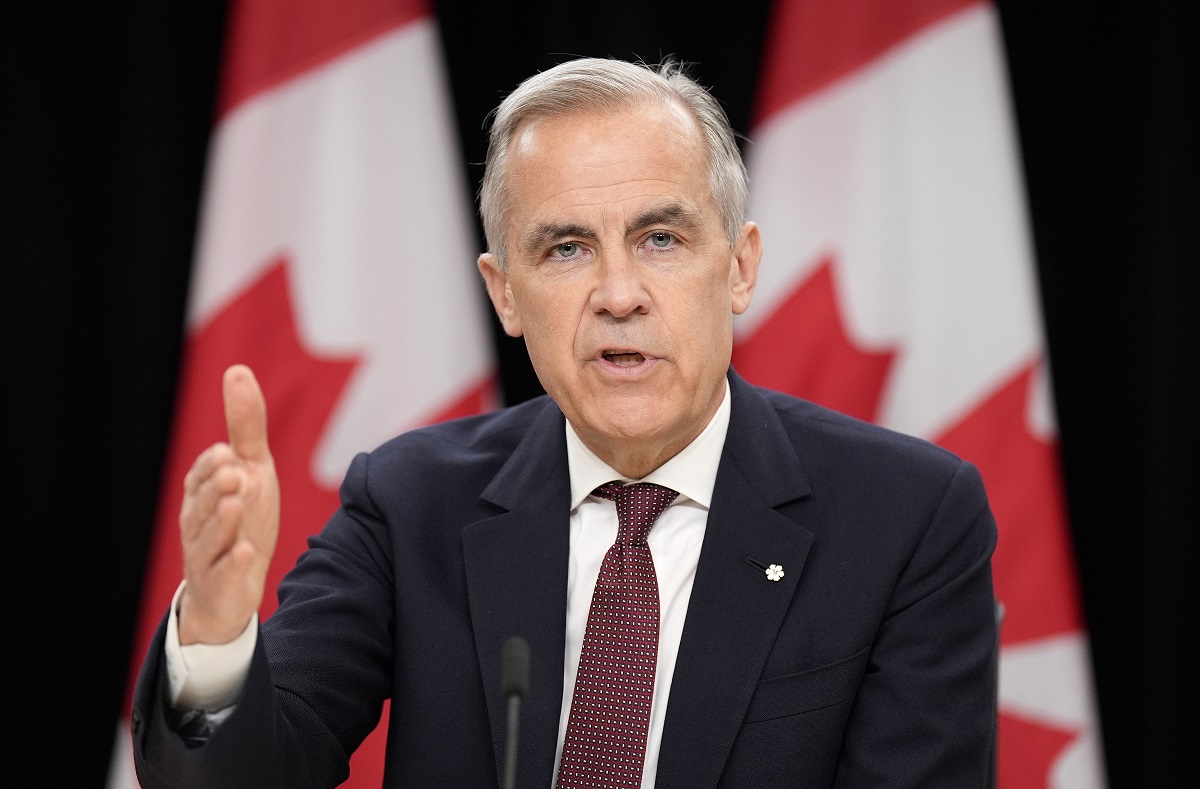
Canada’s answer, notably, has not been theatrical. Prime Minister Mark Carney has avoided the kind of rhetorical escalation that would make for satisfying clips and short-term applause. Instead, his government has been making a quieter argument: sovereignty is not hostility, and diversification is not betrayal.
Carney’s posture rests on a simple premise: a country of Canada’s size cannot be expected to behave as if it has no choices. Over the last year, Ottawa has been deepening links beyond the United States — with Europe, with Indo-Pacific partners, and with Latin America — not as an ideological statement, but as insurance. In a world where supply chains and security commitments can be disrupted by politics, insurance becomes strategy.
The national security strategy debate is now feeding into a larger Canadian reassessment: what does it mean to be a close ally of the United States when the United States signals it may discourage partners from building independent relationships elsewhere?
For many Canadians, the discomfort is not rooted in anti-American sentiment. The relationship remains intimate, practical, and deeply human. But the tone has shifted. Critics of Trump’s doctrine hear a demand for alignment without stability — loyalty without predictability — and they see it as an untenable bargain.
The most striking element of this moment may be how explicitly Canada is beginning to describe itself. Rae’s line that Canada has never been, and will never be, a vassal state is dramatic in its clarity, but it is also revealing in its necessity. Allies do not usually need to say such things out loud. They say them when they believe a boundary is being tested.

The pushback is playing out across policy areas that once seemed separate: trade, defense procurement, energy corridors, and digital governance. In each case, the underlying question is the same: how much dependency is acceptable when dependency can be exploited?
That question is now reshaping Canada’s energy debate. Carney and Alberta Premier Danielle Smith have moved toward a framework that could open the door to a new export route to the Pacific — an idea long considered politically radioactive, in part because it would require reconsidering the coastal tanker restrictions that have constrained Alberta’s ability to reach Asian markets. Supporters describe it as a nation-building project that would reduce Canada’s historic reliance on a single customer to the south. Opponents, including environmental groups and many Indigenous voices, warn that the risks to coastal ecosystems and local sovereignty are being minimized in a rush to reposition Canada geopolitically.
Whatever one thinks of the merits, the logic is unmistakable: a Pacific corridor is not only an economic project. It is a strategic one. It signals that Canada is no longer content to be a captive supplier within a single continental pipeline of influence.
The same dynamic is visible in defense and industrial policy. Canada has been exploring a wider set of relationships for future capabilities, arguing that no modern middle power can afford to rely on one partner for every strategic need. In the framework critics attribute to Trump’s doctrine, such moves are treated as disloyal. In Canada’s framework, they are treated as prudent.
This is why the current dispute feels bigger than a document. It is a contest over the rules of alliance itself. Washington’s traditional postwar posture — whatever its flaws — was built on the idea that shared security required shared respect. Critics in Canada now fear a drift toward a model in which security becomes a tool for extracting economic obedience.
Carney’s government is attempting a careful balancing act: pushing back without rupture, widening options without declaring a divorce. The bet is that Canada can increase its autonomy without losing the benefits of proximity to the world’s largest economy.
The deeper risk is that the pressure campaign implicit in Trump’s doctrine becomes self-defeating. The more the United States insists on restricting Canada’s choices, the more Canada will invest in creating choices. And once new routes, new contracts, and new partnerships solidify, the old leverage does not return simply because Washington wants it back.
In the end, Canada’s message is not that it seeks confrontation. It is that it rejects a role. In a world that is more volatile and less forgiving, the country is signaling that it will not accept a security relationship defined by obedience. If the United States wants influence, Canada’s critics argue, it will have to offer something sturdier than demands: it will have to offer reliability.