Ottawa — Canada has delivered an unusually direct rebuke to former President Donald J. Trump’s newly articulated national security strategy, marking a rare public rupture between two countries long defined by close strategic alignment.
Senior Canadian officials say the strategy, outlined by Trump advisers in recent weeks, represents a fundamental departure from the postwar alliance framework that has governed U.S.–Canadian relations for decades. Rather than emphasizing mutual defense and shared decision-making, they argue, the approach recasts alliances as hierarchical arrangements in which Washington exerts leverage and expects compliance.
Canadian leaders, according to officials familiar with internal deliberations, have concluded that silence is no longer an option.
“This is not a disagreement over policy details,” said one senior Canadian official, speaking on condition of anonymity to discuss sensitive diplomatic exchanges. “It is a disagreement over the nature of partnership itself.”
At the center of the dispute is what Canadian officials describe as an emerging doctrine that treats economic power, security guarantees, and trade access as tools of pressure — to be granted or withdrawn depending on political alignment with Washington. In Ottawa’s view, the approach risks eroding the sovereignty of allies by conditioning cooperation on obedience.
Trump’s team, several officials said, appeared surprised by the firmness of Canada’s response.
For much of the post–World War II era, Canada has been among the United States’ most reliable allies, integrated into American defense planning through NORAD, bound by deep trade ties, and aligned across NATO and other multilateral institutions. Disagreements have occurred before — over Iraq, trade disputes, and climate policy — but rarely have they carried such explicit questions about strategic subordination.
Canadian officials now describe Trump’s security vision as a “hierarchical doctrine,” one that places U.S. primacy above collective security. In private briefings, diplomats have warned that such an approach risks hollowing out alliances by replacing trust with transaction.
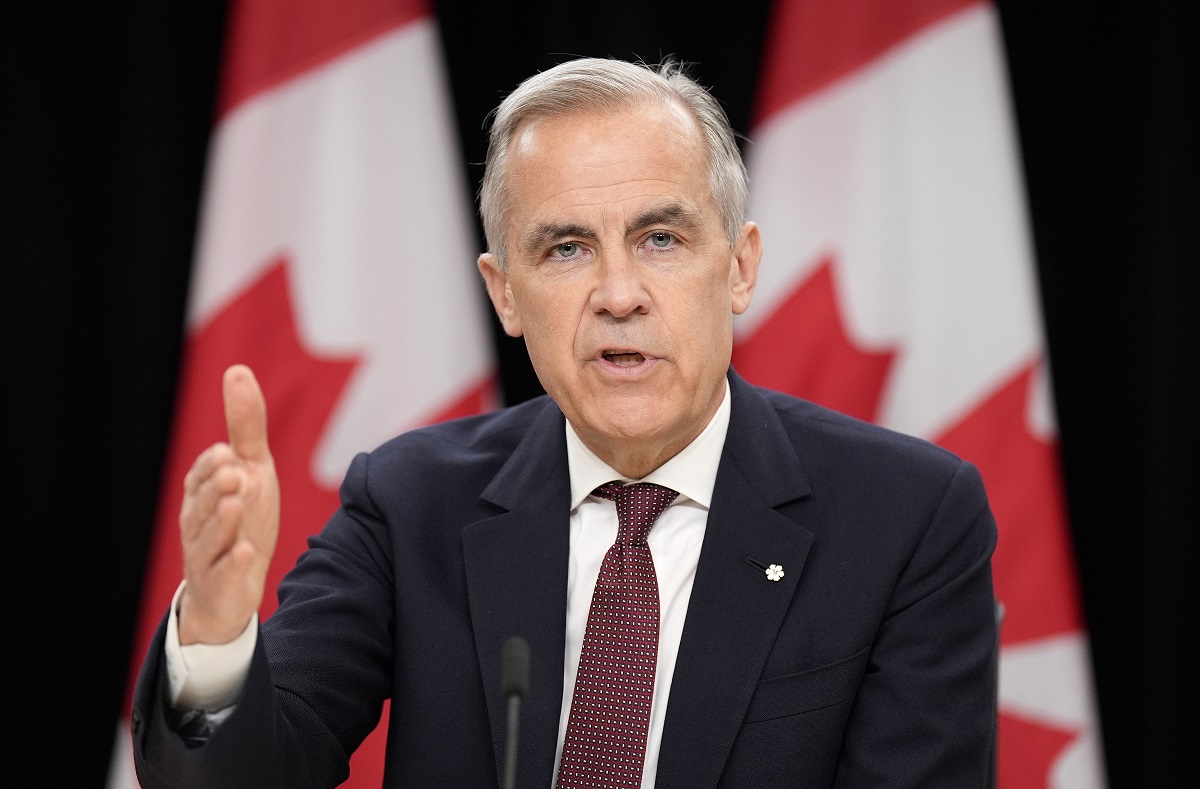
“This isn’t cooperation,” one Canadian official said. “It’s coercion.”
The reaction in Washington has been uneasy. Current and former U.S. officials say there is growing concern that Canada’s resistance could embolden other middle powers — particularly in Europe and the Indo-Pacific — to reassess their own relationships with the United States if Trump returns to office.
Analysts note that Canada’s response is not merely rhetorical. Ottawa has quietly accelerated efforts to diversify its economic and security partnerships, expanding defense cooperation with European allies, deepening trade ties in the Indo-Pacific, and investing in energy infrastructure aimed at reducing reliance on the U.S. market.
“These moves were already underway,” said a former Canadian diplomat. “But this has clearly added urgency.”

Supporters of Trump’s strategy argue that it reflects a necessary recalibration. They say decades of alliance commitments have imposed disproportionate burdens on the United States, and that demanding clearer returns on American power restores strategic discipline.
“Allies benefit from U.S. security guarantees,” said one Trump adviser. “It’s reasonable to expect alignment in return.”
Critics counter that the approach misunderstands the source of American influence. Alliances, they argue, have historically magnified U.S. power by making it indispensable rather than dominant — a distinction they say Trump’s strategy blurs.
Markets and diplomatic circles are watching closely. While no immediate economic retaliation has occurred, investors are sensitive to signs of instability in North American relations, particularly given the scale of cross-border trade and energy integration.

Some analysts see the dispute as an early indicator of a broader shift in global alignment. Middle powers, they argue, are increasingly unwilling to accept frameworks that limit strategic autonomy, even from long-standing partners.
“If Canada refuses this model,” said one geopolitical analyst, “it signals that loyalty can no longer be assumed — even among the closest allies.”
For now, officials on both sides are publicly downplaying the confrontation. But privately, diplomats acknowledge that the episode reflects a deeper question confronting the international system: whether alliances in the coming decade will be based on shared rules — or enforced hierarchy.
Canada, at least, appears to have made its position clear.