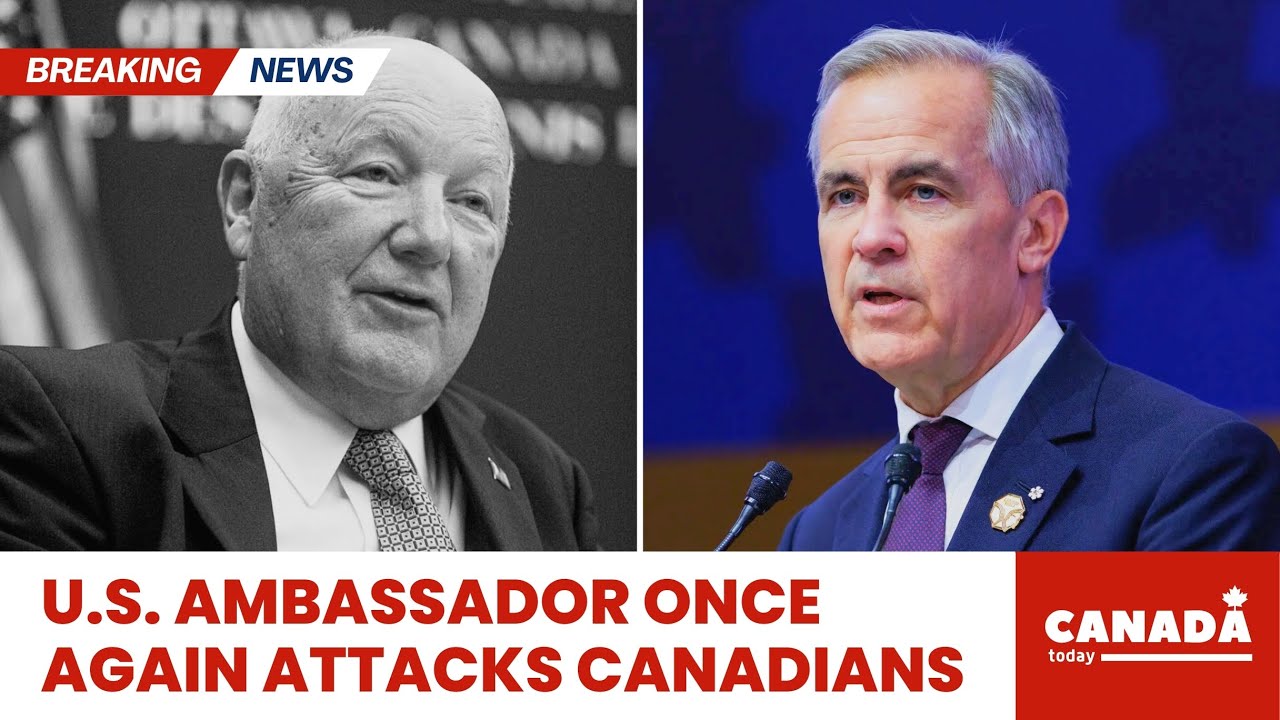
What initially appeared to be a routine explanatory interview has quickly evolved into a sensitive diplomatic flashpoint between Canada and the United States. When the U.S. ambassador to Canada publicly declared that Canada would “never” become an economic or military power on par with the United States, the message carried implications far beyond an assessment of capacity. For many observers, it signaled the drawing of a clear red line — not about capability, but about the limits Washington believes Canada should not be allowed to cross.
The remarks came at a moment when bilateral trade relations were already under unusual strain. For decades, Canada–U.S. disputes typically followed a predictable script: negotiations remained behind closed doors, public confrontation was avoided, and American domestic audiences were largely kept outside the conversation. That pattern shifted when Canadian-funded advertising campaigns began airing directly inside the United States, explaining in plain terms how tariffs affect American consumers.
The critical issue was not whether the advertisements were supported or opposed, but whether they worked. The U.S. ambassador himself effectively confirmed their impact, acknowledging that the messaging did not merely irritate aides or mid-level officials but reached the president personally. In politics, emotional reactions from the highest level are rarely accidental; they usually indicate that real pressure is being felt.

Washington has framed these ads as a breach of boundaries, particularly because they aired during high-profile events such as NFL Sunday broadcasts and the World Series, with budgets totaling tens of millions of dollars. While debate continues over whether the campaigns were funded by the federal government or by provincial authorities, from the U.S. perspective that distinction holds little weight. What matters is that Canada, as they see it, was speaking directly to American voters.
Ottawa’s response, however, followed a very different path. Rather than escalating tensions through confrontational rhetoric, Canada maintained a calm, disciplined, and consistent tone. While its message circulated within the U.S. political ecosystem, Canadian leadership focused on projecting stability, credibility, and respect for international norms. This contrast — Washington’s emotional response versus Ottawa’s restraint — quietly altered the balance of the exchange.
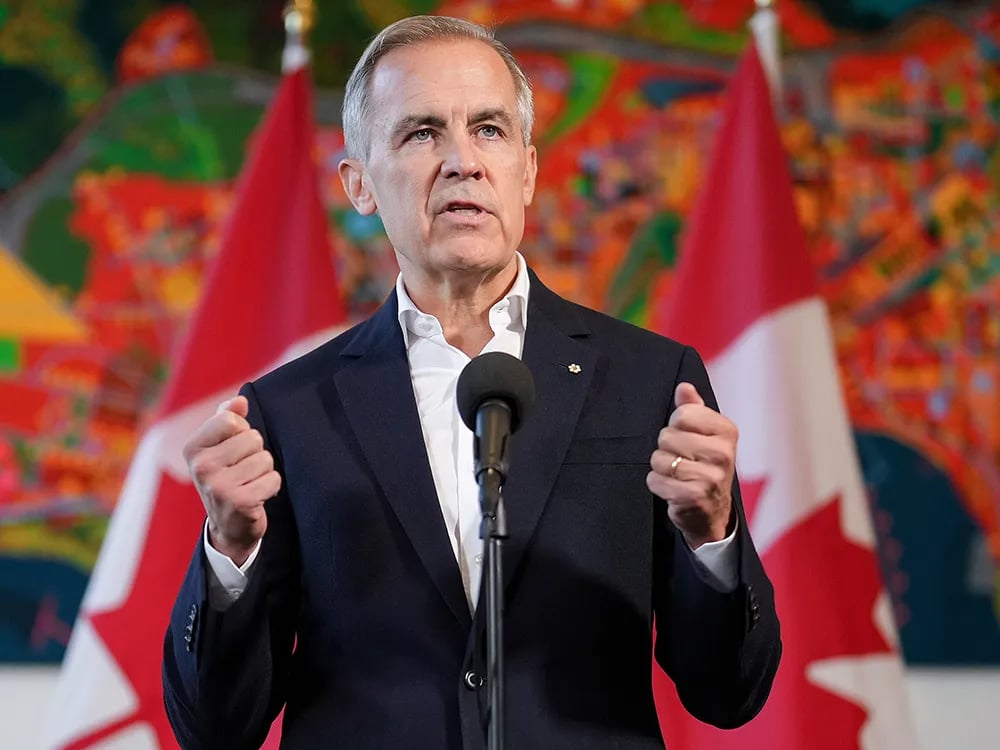
The role of C.a.r.n.e.y came into sharper focus not because of inflammatory statements, but because of strategic restraint. He neither provoked nor retreated. Instead, Canada continued to defend its interests steadily, demonstrating how pressure can be converted into leverage when managed with discipline and credibility.
Most striking was the ambassador’s comparison between Canadian policy messaging in the United States and the threat of election interference by countries such as China. This analogy shocked diplomatic observers, placing a democratic ally, NATO member, and America’s closest trading partner within the same rhetorical framework as authoritarian states accused of undermining U.S. elections. To many analysts, this comparison revealed less about Canada’s conduct and more about Washington’s discomfort with Canada’s growing assertiveness.
What was intended as a critique ultimately clarified the moment. It demonstrated that Canada’s message reached the American public, that it provoked a reaction at the highest levels, and that Washington remains uneasy with a partner that is no longer content to remain silent. In an era of shifting supply chains, global realignment, and evolving alliances, this episode marks an important transition: Canada is no longer merely absorbing pressure, but beginning to shape how that pressure is answered.
This was not a loud or reckless confrontation. It was a lesson in soft power, strategic discipline, and how a middle power can exert influence beyond traditional constraints — through patience, consistency, and confidence in its own position.