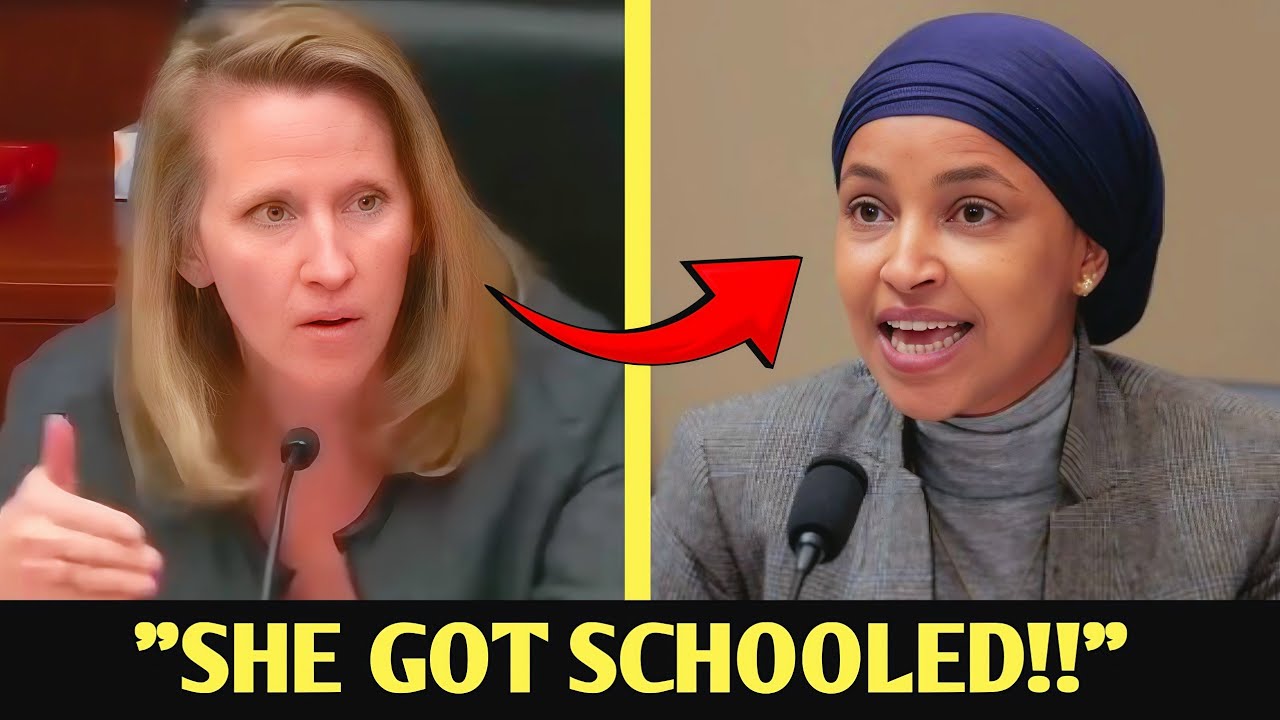
WASHINGTON — Congressional hearings often hinge on abstract language: incentives, structures, systems. But during a recent exchange on labor and compensation, a moment of apparent surprise over a basic workplace reality — whether employers ever reduce pay — redirected the conversation and briefly unsettled the room.
The exchange unfolded during what had been a routine discussion about wages, fairness, and worker protections. A small-business owner invited to testify described how compensation functions in many private-sector environments, particularly in sales, service, and performance-based roles. Pay, the witness explained, is not always static. It can rise with productivity and fall when performance declines — through reduced commissions, demotions, or restructured roles. In some cases, a pay cut serves as a warning before termination.
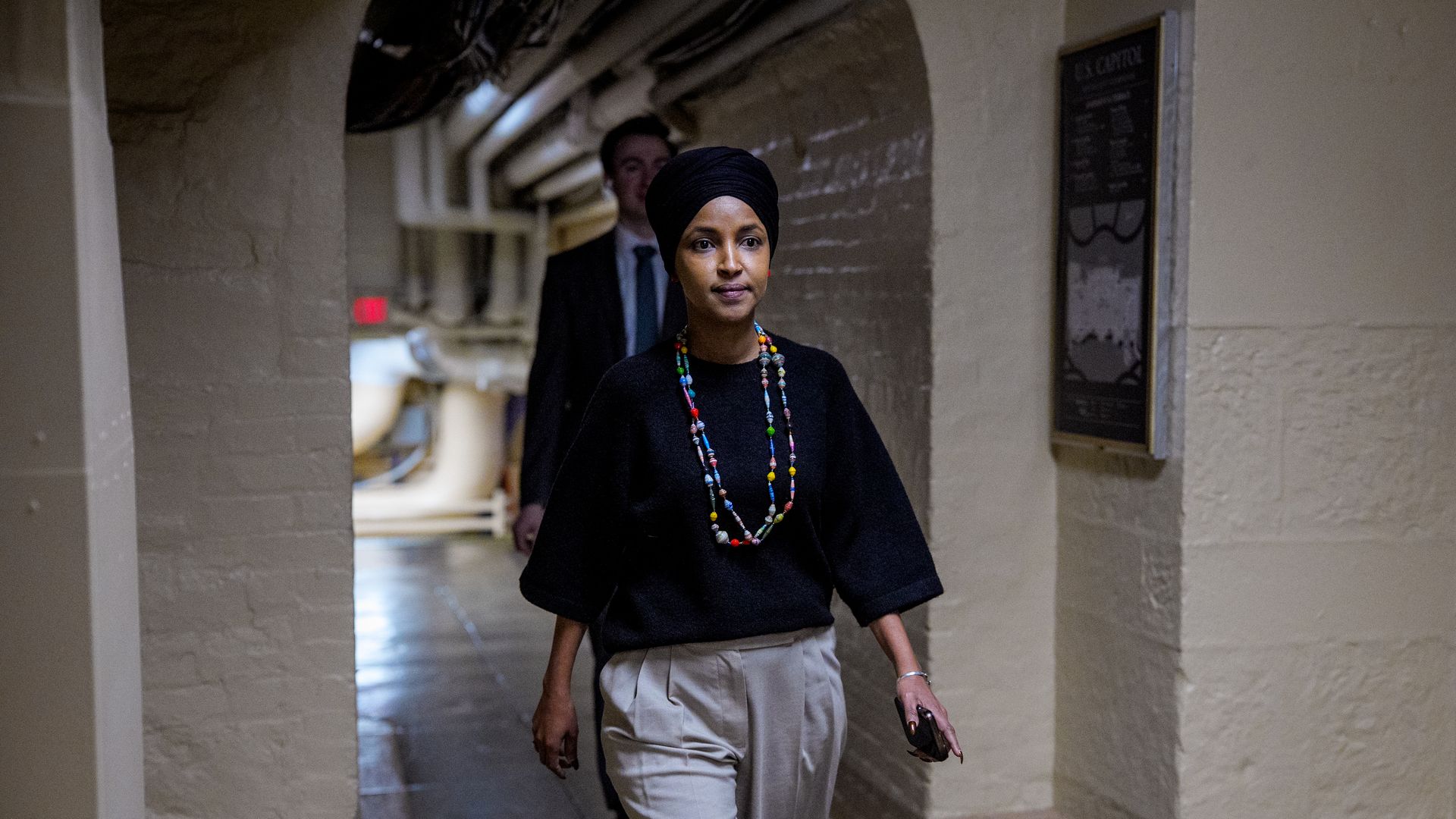
When Representative Ilhan Omar of Minnesota responded by asking whether any employer would “decrease pay,” the room shifted. To some lawmakers and observers, the question suggested a gap between policy-level debates and the lived mechanics of running a business. What followed was less a dispute over ideology than an impromptu lesson in how compensation often works outside government and unionized settings.
Other members quickly stepped in to clarify distinctions between base salary, commission-based earnings, and performance-related adjustments. But the moment had already taken on a broader meaning. The hearing was no longer just about wage policy; it had become a referendum on whether lawmakers fully grasp the realities faced by employers and workers navigating competitive markets.
Supporters of the business owner framed the exchange as illustrative rather than confrontational. In their view, the testimony highlighted a merit-based framework common in much of the private sector, where accountability is immediate and compensation reflects output. They argued that this reality is often absent from policy discussions dominated by assumptions of fixed wages and standardized protections.
“Outside Washington, pay isn’t theoretical,” said one small-business advocate following the hearing. “It moves up and down based on performance. That’s not punitive — it’s how businesses survive.”
Critics pushed back, arguing that the exchange blurred important distinctions. Many workers, they noted, are protected by contracts, labor laws, or collective bargaining agreements that prevent arbitrary pay cuts. Others emphasized that while commissions and bonuses fluctuate, base pay reductions are far less common and often constrained by regulation.
Still, even some defenders of Omar acknowledged that the moment resonated because it touched on something familiar to millions of workers. In industries ranging from retail and hospitality to finance and technology, earnings routinely change with hours worked, sales closed, or targets met. For those audiences, the exchange felt less like a policy debate and more like a glimpse into how differently the economy can look depending on one’s vantage point.
Political analysts say the reaction underscores a recurring tension in labor debates. Lawmakers often operate in environments where compensation is fixed, transparent, and insulated from short-term performance swings. That structure can shape assumptions — sometimes unconsciously — about how work is rewarded elsewhere.
“When policymakers talk about wages, they’re often thinking in terms of salary bands and statutory minimums,” said Dr. Karen Liu, a labor economist at Stanford University. “But a huge portion of the workforce experiences income volatility as a feature, not a bug, of their jobs.”
Omar has long positioned herself as an advocate for workers, particularly those in precarious or low-wage positions. Her supporters argue that her question reflected concern about employer abuse rather than ignorance — an attempt to probe whether pay cuts could be used coercively or unfairly.
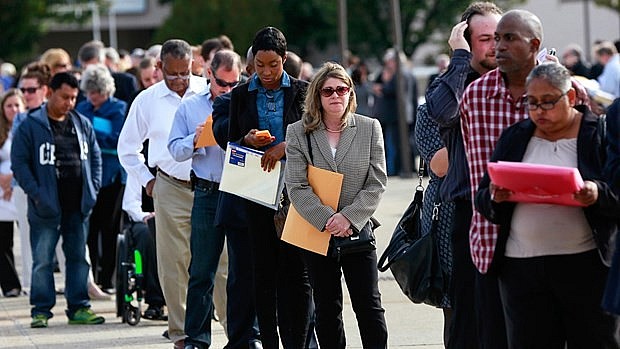
But critics counter that the framing revealed a disconnect between protective intent and operational reality. In competitive markets, they argue, accountability mechanisms — including reduced compensation — are often the only alternatives to immediate dismissal.
As clips of the exchange circulated online, reactions hardened along familiar lines. Some viewers described the moment as emblematic of a political class removed from everyday economic pressures. Others warned against drawing sweeping conclusions from a brief interaction, noting that hearings are designed to test assumptions, not affirm them.
What lingered was not the technical debate over pay structures, but the visible shift in the room when “real-world” mechanics entered the conversation. For a brief stretch, theory gave way to practice — and the contrast proved striking.
Whether the moment will influence policy is unclear. But it has already shaped perception, reinforcing a broader question facing Congress: how to craft economic rules for a system many lawmakers have never personally experienced from the ground up.
In that sense, the exchange was less about one representative or one witness, and more about the distance — sometimes narrow, sometimes wide — between Washington’s abstractions and the daily realities of work beyond its walls.