For months, international observers largely agreed on a single outcome: Donald Trump’s 50 percent steel tariff would push Canada into a corner. The pressure from Washington was widely viewed as overwhelming — direct, punitive, and capable of draining Canada’s steel sector to the point where Ottawa would have no choice but to return to the negotiating table from a position of weakness. U.S. media narratives repeatedly framed Canada as an economy too dependent on American market access to mount any meaningful resistance.
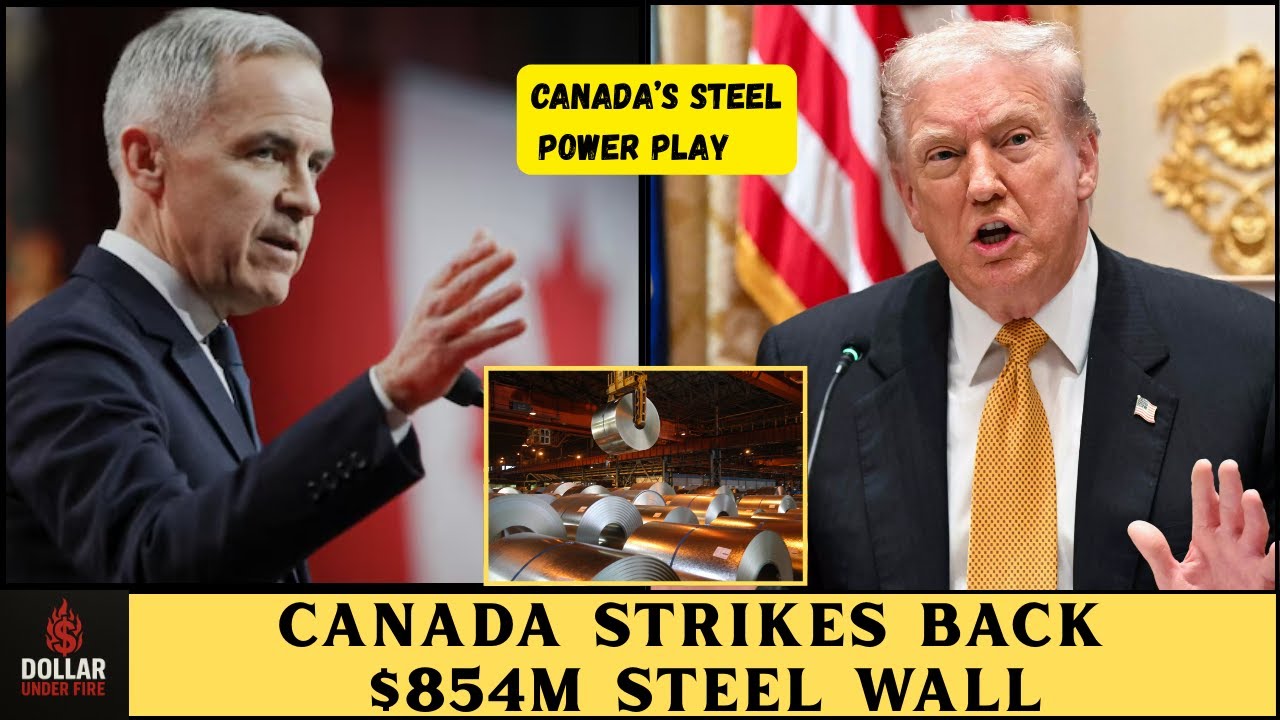
That scenario, however, never materialized. In a carefully prepared announcement in late November, C.a.r.n.e.y did something few expected. Rather than pleading for exemptions or responding with symbolic retaliatory tariffs, he unveiled a structural shift that fundamentally undermined the logic behind Trump’s trade strategy.
At the heart of the dispute was a long-standing assumption in Washington: that Canada had no viable alternative to the U.S. market. That belief had enabled successive American administrations — Democratic and Republican alike — to use tariffs as a tool of political leverage with limited long-term concern. Trump simply pushed that logic to an extreme. C.a.r.n.e.y, however, targeted the assumption itself, deploying a strategy designed not to confront the tariff directly but to render it far less effective.
By restructuring Canada’s domestic steel market, the government rapidly reduced the space available to imports from non-free-trade-agreement countries while significantly expanding guaranteed market access for Canadian producers. This was not a simple protectionist maneuver, but a calculated effort to preserve domestic value, employment, and industrial capacity at a moment when U.S. access had been abruptly restricted.

More significantly, the policy addressed a persistent contradiction within Canada’s economy: prohibitively high domestic transportation costs that made Canadian steel uncompetitive even at home. Through direct intervention in interprovincial rail freight pricing, the government reversed this imbalance, making domestically produced steel economically viable for infrastructure, construction, and defense projects across the country.
From a strategic standpoint, the objective was not to “defeat” Trump in a headline-driven trade dispute, but to strip U.S. tariffs of their intended leverage. As Canada reduced its reliance on American demand while strengthening domestic consumption, the practical impact of the 50 percent tariff diminished. Further escalation from Washington remained possible, but each additional step carried declining returns.

The reaction in the United States reflected genuine surprise. Policymakers in Washington had grown accustomed to a cautious Canada that prioritized preserving bilateral relations over restructuring its economic foundations. This time, they faced a government actively redesigning its development model to limit exposure to American political volatility.
In the longer term, the significance of this episode extends well beyond steel or tariffs. It signals a deeper shift in Canada’s economic thinking — away from the assumption that U.S. market access is permanently stable, toward a model centered on economic sovereignty and resilience. Trump’s tariff playbook was built on the belief that sufficient pressure would force compliance. C.a.r.n.e.y demonstrated that, in Canada’s case, that pressure instead accelerated a strategic transformation Washington did not anticipate.