The latest trade confrontation between the United States and Canada did not begin with steel, automobiles, or high-tech manufacturing. Instead, it ignited around something far more fundamental — potash, the mineral backbone of the global fertilizer supply. This time, Canada holds the decisive leverage. As Donald Trump revives threats of severe tariffs on Canadian fertilizer, particularly potash, Washington may have triggered a chain reaction that strikes directly at America’s own farmers — the economic and political backbone of the country.
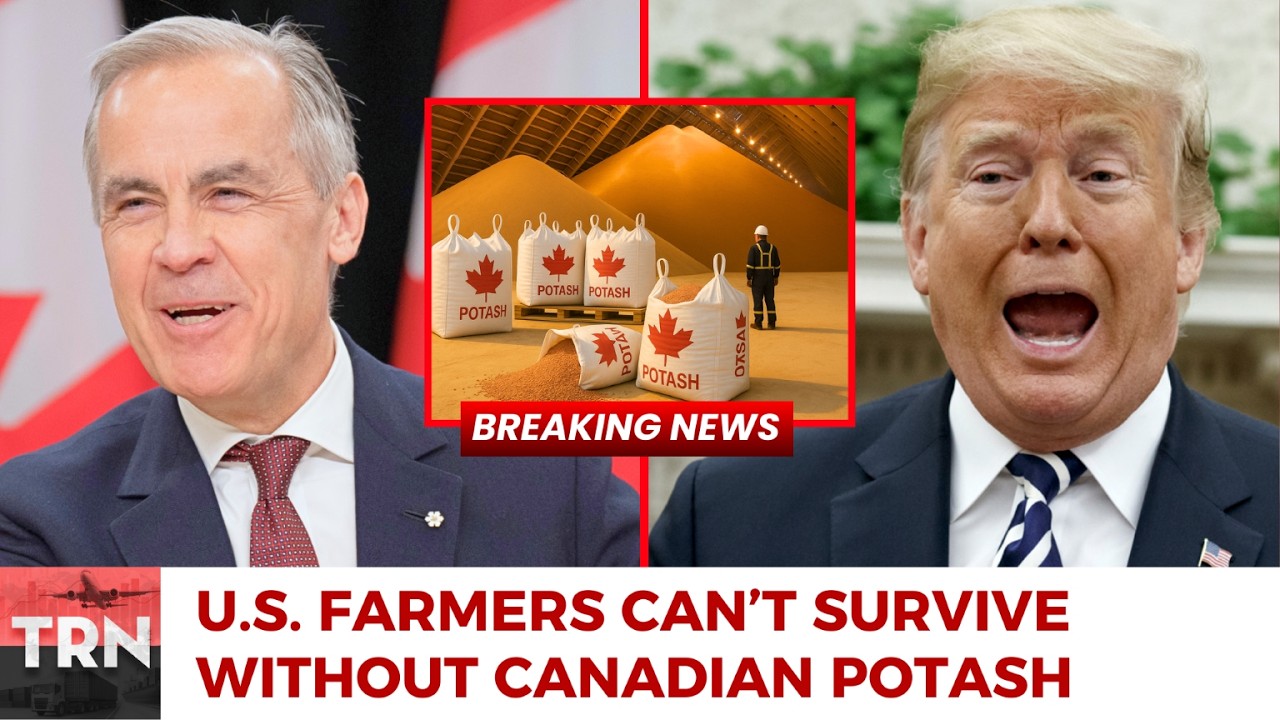
Potash is not like ordinary trade goods. The United States imports nearly 90% of its potash, and roughly 80% of that supply comes from Canada, primarily from Saskatchewan — a region with reserves and production capacity the U.S. cannot realistically replace in the medium or long term. There is no domestic backup. There is no alternative supplier waiting in the wings. Russia and Belarus are geopolitical non-options, and no other country can scale production fast enough to fill Canada’s role. This makes any tariff threat against Canadian potash an extreme gamble with the American food system itself.
The memory of 2018 still looms large across the U.S. farm belt. When Trump imposed tariffs on China, Beijing responded by halting purchases of American soybeans. Prices collapsed, storage facilities overflowed, and Washington was forced to deploy tens of billions of dollars in emergency bailouts to prevent mass farm bankruptcies. But potash presents a far more dangerous scenario. Losing an export market hurts farmers. Losing access to affordable fertilizer causes crops to fail. At that point, the risk spreads far beyond a single commodity, threatening the entire food chain — from grain and vegetables to livestock feed and grocery prices.
What makes the situation even more volatile is the timing. The dispute is unfolding just months ahead of the 2026 review of the CUSMA/USMCA trade agreement. Many analysts believe Trump is using American farmers as leverage to pressure Ottawa into concessions. But the strategy borders on self-destruction. U.S. farm groups have repeatedly warned the White House that fertilizer tariffs represent the fastest path to widespread insolvency across rural America — communities already squeezed by fuel costs, interest rates, and climate pressures.

While Washington escalates its rhetoric, Canada has taken a markedly different approach. The government of C.a.r.n.e.y has remained calm and disciplined, avoiding provocation while quietly strengthening its position. Major producers such as Nutrien are expanding export capacity, negotiating long-term contracts with Europe and Asia, and actively diversifying markets to reduce dependence on the United States. Globally, Canada is increasingly viewed as a stable and reliable supplier, in stark contrast to Washington’s growing unpredictability.
The political irony is striking. The states most loyal to Trump would be among the first to feel the damage. Rising potash prices drive up fertilizer costs. Higher fertilizer costs inflate corn and soybean production expenses. Increased feed costs squeeze livestock producers. Eventually, higher food prices reach American consumers. This is not a partisan issue. It is a systemic risk to U.S. agriculture and food security.

The potash crisis is therefore not merely a trade dispute. It exposes how Washington is replaying old tactics in a far more dangerous environment. In 2018, the result was an agricultural export crisis. In 2025, the stakes have escalated into a potential food-production crisis. Canada is not the aggressor. Canada is not escalating. Canada does not need to threaten anyone. The simple reality that the United States cannot operate its modern agricultural system without Canadian potash already constitutes overwhelming leverage.
The core issue is no longer whether Canada can withstand pressure. The real question is whether American farmers can survive being turned into bargaining chips yet again. Recent history suggests they have already paid the price once — and this time, the cost could be far higher.