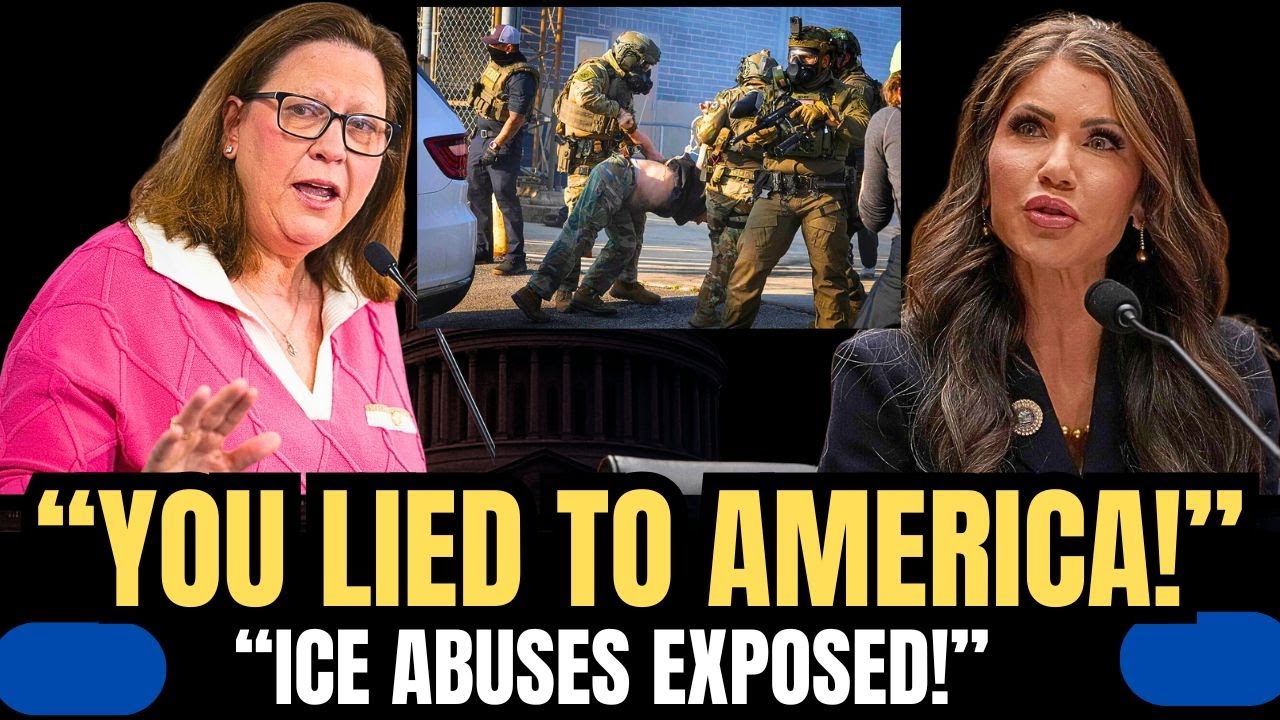
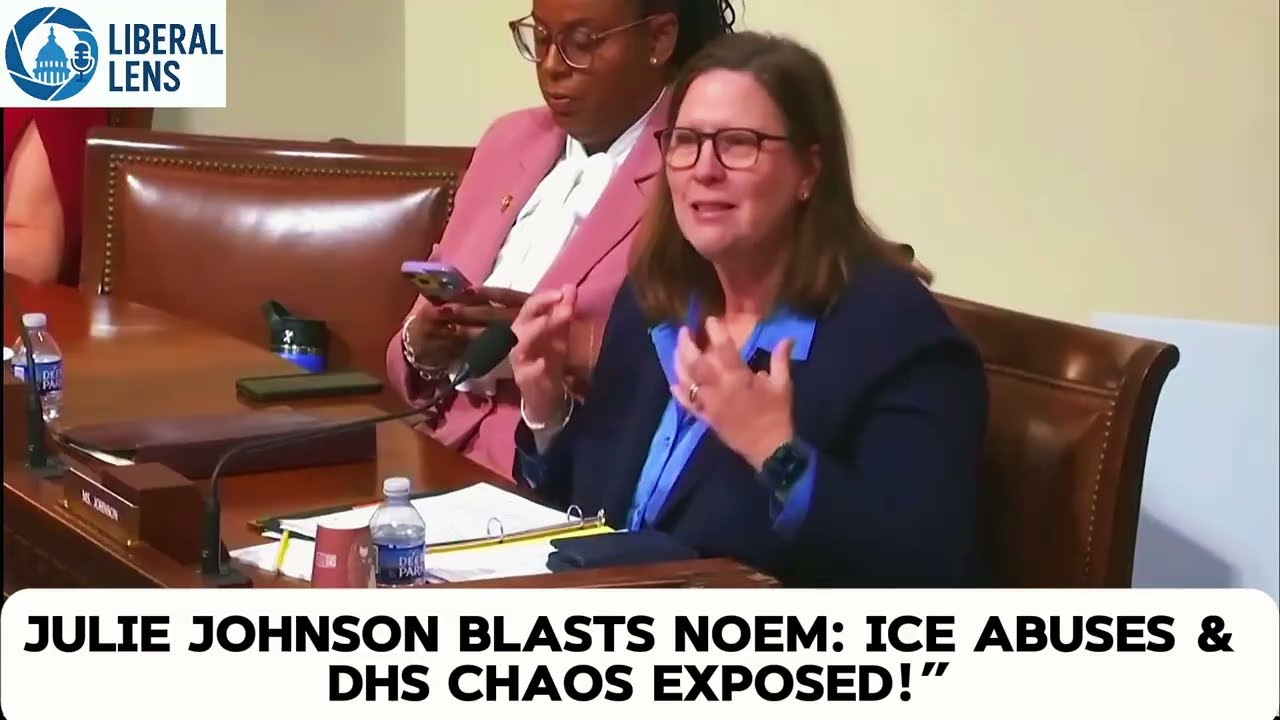
WASHINGTON — A House hearing meant to review routine Department of Homeland Security operations erupted into a sharp and consequential confrontation this week, as Representative Julie Johnson delivered a blistering critique of DHS leadership and Immigration and Customs Enforcement practices, accusing the department of systemic failures that are eroding public trust and violating basic principles of due process.
Addressing DHS Secretary Kristi Noem, Johnson laid out a detailed and unsettling picture: U.S. citizens detained by ICE despite having no criminal record, internal accountability mechanisms failing to restrain bad actors within law enforcement, and a pattern of leadership indifference toward repeated congressional warnings. Her message was unambiguous — the problem is no longer isolated incidents, but a culture of chaos enabled by inaction at the top.
“This is not enforcement,” Johnson said during the exchange. “This is fear-based governance, and it is breaking the trust between the American people and the institutions meant to protect them.”
Allegations That Cut to the Core of DHS Authority
Johnson’s remarks focused on cases in which ICE allegedly detained individuals later confirmed to be U.S. citizens, some of whom were held for extended periods without clear explanation or prompt access to legal remedies. According to Johnson, these cases reveal deep procedural breakdowns — failures in verification, oversight, and internal discipline that should never occur within a system governed by constitutional protections.
She emphasized that the issue is not whether immigration laws should be enforced, but whether enforcement is being carried out lawfully and competently.
“When citizens are detained with no criminal history and no meaningful due process,” Johnson said, “that is not a policy disagreement. That is a constitutional crisis.”
The congresswoman argued that DHS has repeatedly been alerted to these problems through oversight letters, hearings, and internal reports, yet meaningful reforms have failed to materialize. In her view, that pattern reflects leadership paralysis — or worse, a willingness to tolerate abuses so long as they remain politically defensible.
A Department Under Strain
The exchange highlighted broader concerns about DHS’s operational coherence. Created in the aftermath of September 11, the department oversees a vast and complex portfolio that includes border security, counterterrorism, disaster response, and immigration enforcement. Critics have long warned that this scale, combined with shifting political priorities, makes DHS especially vulnerable to fragmentation and inconsistent enforcement.
Johnson seized on that vulnerability, accusing the department of lacking a clear chain of accountability. She cited whistleblower complaints, inspector general findings, and media investigations that point to uneven discipline within ICE and inadequate supervision of field offices.
Unchecked misconduct, she warned, does not remain isolated. It spreads.
“When bad actors are ignored or protected, they don’t just violate individual rights,” Johnson said. “They poison the credibility of every agent who is trying to do their job correctly.”
Due Process as a Casualty
Perhaps the most consequential element of Johnson’s critique centered on due process. She argued that DHS’s current enforcement posture relies too heavily on intimidation and speed at the expense of verification and legal safeguards.
In several of the cases she referenced, detainees reportedly struggled to obtain timely hearings or clear explanations for their detention. Johnson contended that such practices invert the presumption of legality that underpins the justice system.
“The government has extraordinary power,” she said. “But that power is only legitimate when it is restrained by law. Right now, those restraints are being treated as inconveniences.”
Legal experts note that even a small number of erroneous detentions can have outsized consequences, particularly when they involve citizens. Beyond the immediate harm to individuals, such cases expose the government to legal liability and undermine confidence in enforcement agencies nationwide.
Leadership Under Fire
Secretary Noem, responding to Johnson’s accusations, defended DHS’s mission and emphasized the challenges of managing a large enforcement apparatus under intense political pressure. She pointed to internal review processes and stated that the department takes allegations of misconduct seriously.
But Johnson was not persuaded.
She argued that internal reviews mean little if their outcomes are opaque, delayed, or ignored. Oversight, she said, cannot function when Congress receives reassurances instead of data, and promises instead of corrective action.
“This committee is not here to rubber-stamp your talking points,” Johnson said. “We are here because the Constitution demands accountability.”
The Cost of Ignoring Oversight
Johnson warned that DHS’s approach is fueling a dangerous cycle: fear leads to silence, silence enables abuse, and abuse further erodes trust. Communities become less willing to cooperate with law enforcement, victims avoid reporting crimes, and the legitimacy of enforcement collapses from within.
She emphasized that these consequences are not hypothetical. They are already unfolding in communities where ICE operations are perceived as arbitrary or punitive rather than lawful.
“When people believe the system is rigged or reckless,” Johnson said, “they stop believing in the rule of law altogether.”
A Defining Moment
The hearing marked one of the sharpest public confrontations yet between DHS leadership and congressional Democrats over enforcement practices. While similar concerns have been raised before, Johnson’s presentation stood out for its specificity and moral clarity.
This was not a debate over immigration numbers or border statistics. It was a direct challenge to the department’s adherence to constitutional norms.
As the session concluded, Johnson made clear that the issue would not end with a single hearing. She called for expanded investigations, formal responses to outstanding oversight requests, and concrete reforms to detention and verification procedures.
“The American people deserve a department that enforces the law without abusing it,” she said. “Until that happens, this committee will not stop asking questions.”
Whether DHS leadership will respond with meaningful change remains uncertain. But one thing is clear: the clash exposed deep fault lines within the nation’s largest law enforcement apparatus — and a growing impatience in Congress with explanations that no longer match the reality on the ground.