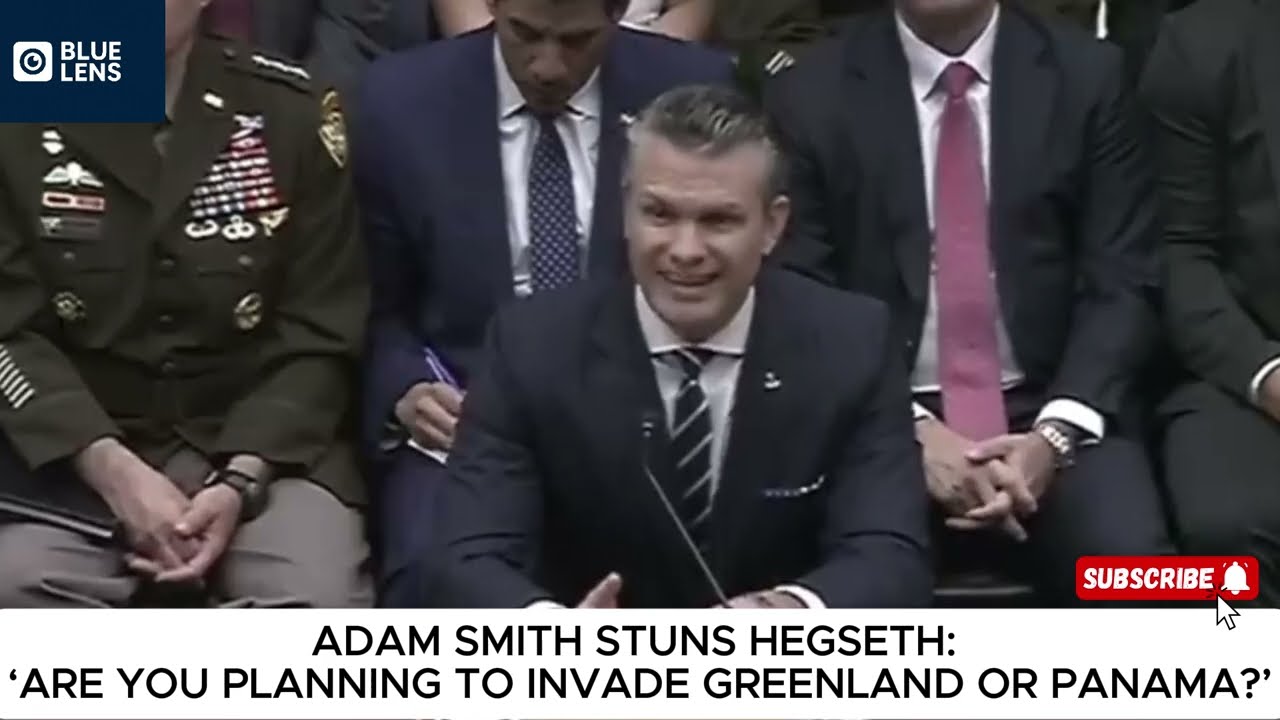
WASHINGTON — A routine oversight hearing of the House Armed Services Committee took an unexpected turn this week when Representative Adam Smith, the panel’s ranking Democrat, confronted Defense Secretary Pete Hegseth with a question that instantly cut through hours of prepared testimony.
“Do you have a plan to invade Greenland or Panama?” Mr. Smith asked.
The question, delivered without theatrics, drew audible reactions in the hearing room and quickly became one of the most replayed moments of the session. While clearly rhetorical, it was rooted in a deeper concern that Democrats on the committee say has gone insufficiently addressed: whether the Pentagon under Mr. Hegseth has articulated clear strategic limits amid revived rhetoric from President Trump and his allies about territorial control, military leverage, and the use of force to advance geopolitical objectives.
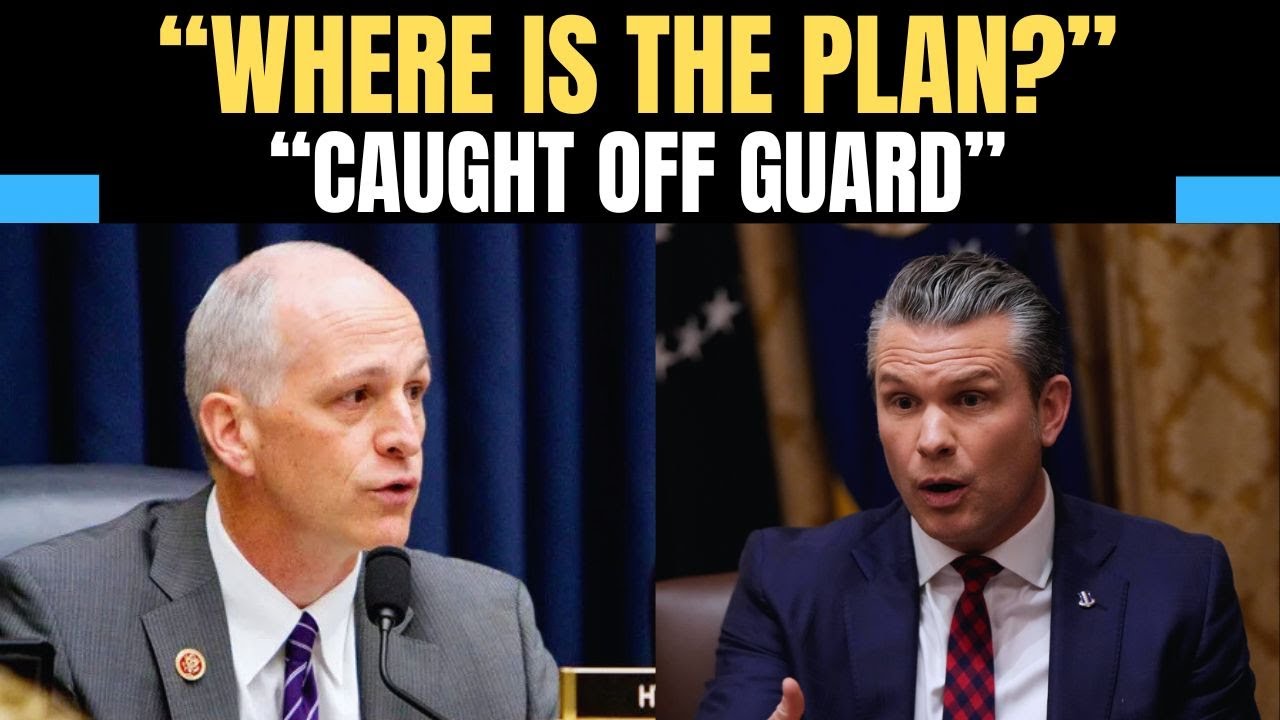
Mr. Hegseth did not answer the question directly. Instead, he pivoted to a broad defense of American deterrence, insisting that the United States remains committed to its treaty obligations and to maintaining global stability. But the exchange had already done its work. Within minutes, clips were circulating online, and lawmakers from both parties were fielding questions about what, precisely, the secretary was being asked to clarify.
A Question With a Purpose
Mr. Smith later explained that the question was not meant to suggest that the United States is actively planning military operations against Greenland or Panama — two scenarios widely viewed as implausible — but to expose what he described as a troubling pattern of ambiguity.
“For months, we’ve heard aggressive, sometimes flippant statements about using American power to ‘take back’ territory, to ‘reassert control,’ or to ‘do whatever it takes,’” Mr. Smith said. “My concern is not about Greenland. It’s about whether the Department of Defense has clear guardrails.”
Greenland, an autonomous territory within the Kingdom of Denmark, is a NATO ally. Panama controls the Panama Canal under international agreements finalized decades ago. Any suggestion of military action involving either would represent a dramatic departure from long-standing U.S. policy.
Mr. Smith’s question, aides said, was designed to force clarity — and to test whether Mr. Hegseth would explicitly reject the notion of offensive action absent congressional authorization or treaty justification.
Hegseth’s Record Under Scrutiny
The exchange landed with particular force because of Mr. Hegseth’s past public statements. Before becoming defense secretary, he had built a media career marked by blunt rhetoric, skepticism of multilateral institutions, and frequent criticism of what he described as “soft” American leadership abroad.
During the hearing, Democrats repeatedly returned to those remarks, asking whether they reflected the administration’s actual policy posture or were merely political commentary. Mr. Hegseth maintained that his role as secretary required discipline and restraint, but he offered few specifics.
Pressed by Mr. Smith on whether he would categorically rule out military action against allies absent a direct threat, Mr. Hegseth said only that “every option exists to defend American interests,” a formulation that did little to reassure skeptics.
“That’s the problem,” Mr. Smith responded. “When everything is an option, nothing is accountable.”
Republican Pushback
Republicans on the committee accused Democrats of grandstanding and mischaracterizing administration policy. Representative Mike Rogers of Alabama, the committee’s chairman, dismissed the exchange as “theatrics,” arguing that no serious policymaker believes the United States is contemplating such actions.
“This hearing is about readiness, deterrence, and supporting our troops,” Mr. Rogers said. “Turning it into a viral moment doesn’t help anyone.”
Still, several Republicans privately acknowledged that the question resonated because it captured a broader unease — not about specific invasion plans, but about messaging discipline and the relationship between presidential rhetoric and military planning.
Civil–Military Boundaries
Defense analysts say the exchange highlights a recurring tension in American governance: how civilian leaders articulate ambition without creating strategic uncertainty.
“Words matter,” said Kori Schake, a former Pentagon official now at the American Enterprise Institute. “Even offhand or hypothetical statements can ripple through alliances and adversaries alike. When Congress asks for clarity, it’s not an academic exercise.”
Ms. Schake noted that U.S. allies closely monitor congressional hearings for signals about American intentions. Ambiguity, she said, can be destabilizing even when no concrete plans exist.
Why the Moment Stuck
What made Mr. Smith’s question memorable was not its literal content, but its efficiency. In a single sentence, it encapsulated concerns about transparency, escalation, and the erosion of institutional norms.
By declining to answer it directly, Mr. Hegseth allowed those concerns to linger.
As the hearing moved on, lawmakers returned to budgetary issues and force readiness. But the Greenland question continued to echo — in headlines, on social media, and in diplomatic circles abroad.
In Washington, where hearings often blur into procedural routine, moments that crystallize deeper anxieties are rare. This one did not allege a plan. It demanded a boundary.
And for many watching, the most striking part was not the question itself — but how hard it seemed to answer.