Question Period in Canada’s House of Commons is rarely subtle. It is designed for confrontation, for sharp elbows and sharper sound bites. On this day, however, it was restraint — delivered in a single sentence — that drew the loudest reaction.
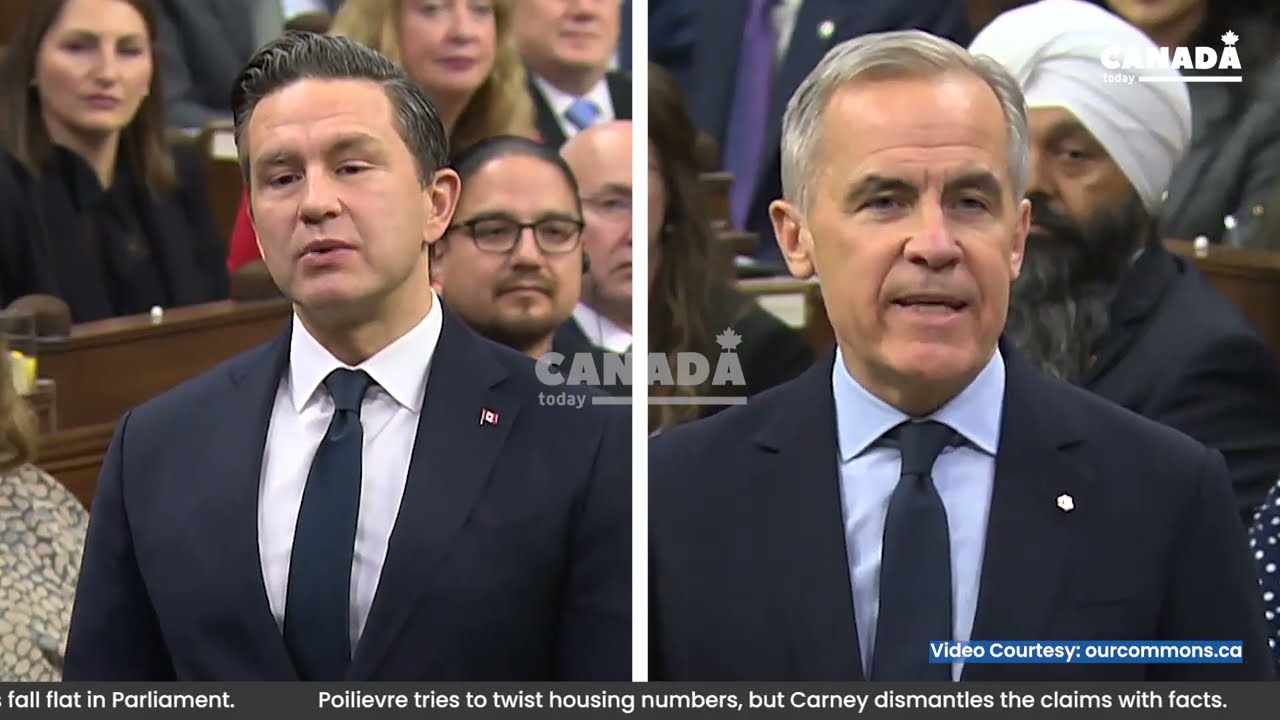
When Pierre Poilievre, the Conservative leader, pressed Mark Carney with a characteristically forceful question, the exchange seemed poised to follow a familiar script. Poilievre leaned into performance, his tone sharpened for the cameras. Carney, newly arrived in parliamentary politics but no stranger to high-stakes pressure, responded without raising his voice.
Then came the line.
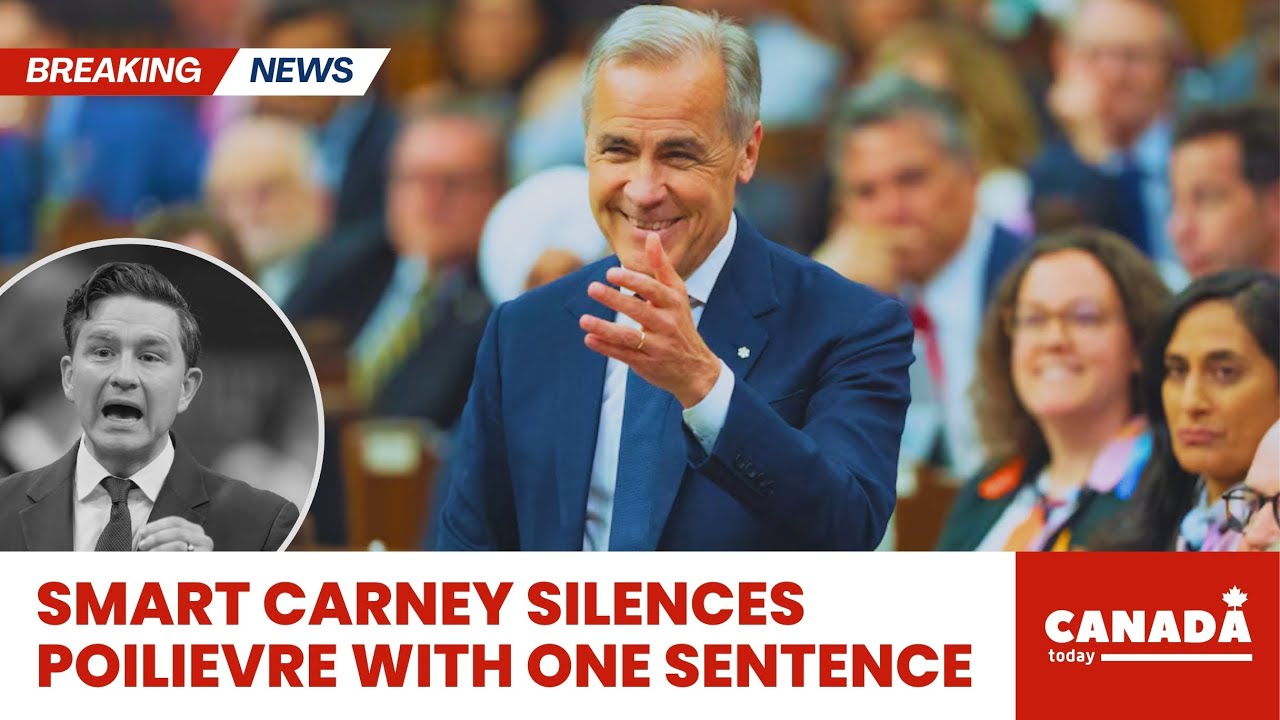
Delivered dryly, almost conversationally, Carney’s remark punctured the moment. Laughter rippled across the chamber, not only from government benches but from unexpected corners of the House. The contrast was immediate and visible: a barrage of rhetoric met by composure, spectacle answered with economy.
Within minutes, clips of the exchange were circulating online. Viewers replayed the moment frame by frame, dissecting tone, timing and body language. In an institution built on words, the reaction suggested that delivery can matter as much as content.
Supporters of Carney praised the response as a study in discipline. They described it as a reminder that authority in politics is not always asserted through volume. Critics attempted to minimize the moment, casting it as routine parliamentary theater. Yet even some Conservative strategists privately acknowledged that the exchange had landed awkwardly for their leader.
Mr. Carney’s political style is still taking shape, but moments like this have begun to define it. A former central banker who has led institutions through global financial crises, Carney projects calm as a form of credibility. In Parliament, that demeanor sets him apart from opponents who rely on indignation and repetition to drive their message.
“This is not someone who needs to win the room every minute,” said a former parliamentary aide. “He’s comfortable letting silence and contrast do the work.”
Mr. Poilievre, by contrast, has built his leadership on confrontation. His approach has energized supporters who feel alienated by technocratic language and incrementalism. But Question Period is an unforgiving arena, and the same tactics that galvanize a base can appear excessive when met with restraint rather than rebuttal.
The moment’s significance extended beyond the chamber. Shortly after the exchange, Carney left Parliament to meet with First Nations leaders, a previously scheduled engagement that gained new resonance in the aftermath. Images of the meeting circulated alongside the Question Period clip, reframing the day’s narrative. What had begun as an attempt to provoke appeared, in hindsight, to have misfired.
Political analysts noted the sequencing. “It changed the context,” said a professor of political communication in Ottawa. “The attack lingered, but Carney moved on — and that contrast undermined the intended effect.”
Staffers familiar with Carney’s approach say the response was not improvised bravado but calculated restraint. He would not trade barbs, they said; he would answer once and return to substance. The goal was not domination of the moment but control of the frame.
Such moments rarely decide elections. Yet they can recalibrate perceptions, especially for a leader still being defined in the public mind. For Carney, the exchange reinforced an image of steadiness and confidence under pressure. For Poilievre, it raised questions about whether performative outrage loses force when it meets a quieter kind of authority.
The broader implication is about leadership styles in an era of political noise. As social media amplifies the loudest voices, moments of restraint can feel disruptive — even disarming. They invite comparison, and comparison is rarely neutral.
In Parliament, power often reveals itself indirectly. It appears in who controls the tempo of debate, who dictates the emotional register of the room. On this day, that balance briefly shifted.
Whether the moment marks a lasting change in the political dynamic remains to be seen. Parliament will return to its rhythms, and both leaders will continue refining their approaches. But for a few seconds — and for millions watching online — the contrast was unmistakable.
One sentence. Two styles. And a reminder that in politics, command is not always shouted. Sometimes, it is simply allowed to speak for itself.