What began as a routine criminal case involving alleged fraud in Minnesota has taken on a far larger political dimension, as new reporting, whistleblower claims and widely shared images have pushed the story into national view — and placed Gov. Tim Walz under renewed scrutiny.
In recent days, media coverage and online commentary have suggested that the scale of the alleged fraud may be significantly larger than initially understood. Figures cited by commentators have varied widely, and authorities have not publicly confirmed revised totals. Still, the perception of escalation has been enough to transform what was once a bureaucratic investigation into a broader political test.
The shift came after a combination of developments: updated reporting on the scope of the alleged scheme, statements attributed to unnamed whistleblowers, and the circulation of photographs showing individuals connected to the case alongside prominent Democratic officials. The images, shared repeatedly on social media and highlighted by partisan outlets, quickly became a focal point of debate — raising questions about oversight, proximity to power and political accountability.
State and federal investigators have confirmed that fraud cases are being pursued in Minnesota, but they have not announced new charges beyond those already on the public record, nor have they substantiated claims that totals have dramatically increased. Officials have cautioned that complex financial investigations often unfold over long periods and that preliminary estimates can change as cases develop.
Nevertheless, the political consequences are already evident.
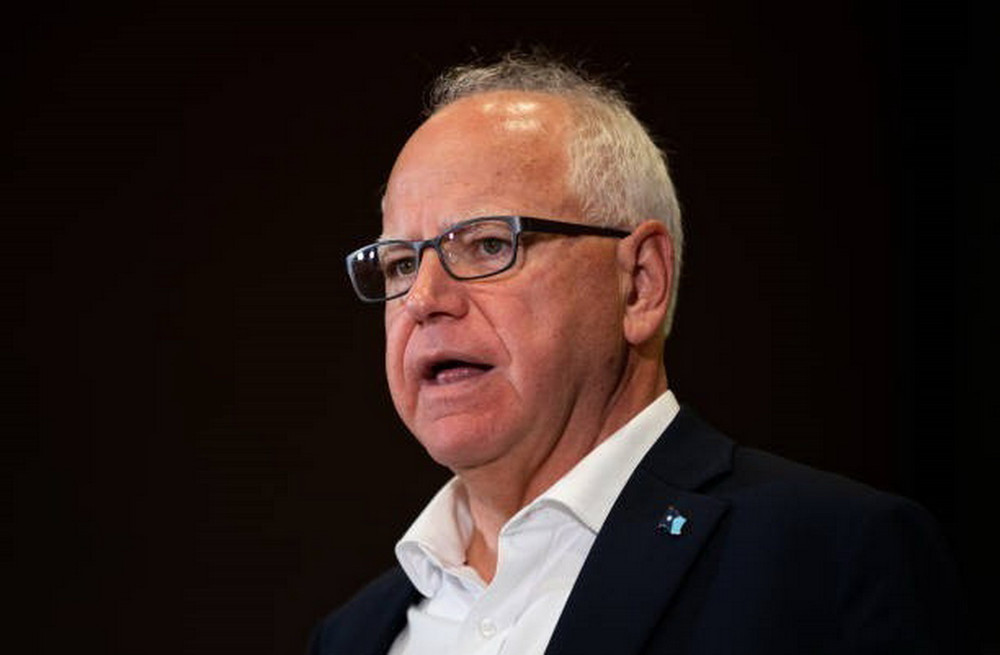
Mr. Walz, a Democrat who has served as governor since 2019, now faces a delicate balancing act. Critics argue that aggressive prosecution risks underscoring failures in oversight during his administration, while a more restrained approach could be framed as insufficiently tough. Supporters counter that law enforcement operates independently and that political leaders should not interfere with ongoing cases.
“This is the classic governance dilemma,” said a former state prosecutor familiar with large-scale fraud investigations. “The executive branch is accountable for systems, but prosecutions belong to investigators and courts.”
The online conversation has added another layer of complexity. Whistleblower claims — often cited without documentation — have circulated widely, suggesting that investigators are uncovering broader patterns involving pandemic-era programs such as the Paycheck Protection Program and Medicaid reimbursements. Some commentators have also pointed to spikes in professional licensing approvals as potential areas of review, though no agencies have publicly confirmed such inquiries.
Legal experts warn that conflating speculation with confirmed action can distort public understanding. “Large fraud cases tend to expand as evidence is gathered,” said one former federal investigator. “But expansion is not the same as proof of systemic political wrongdoing.”

The photographs circulating online have proven especially potent. While the images themselves do not indicate misconduct, analysts say they have fueled a perception problem by visually linking alleged fraud defendants with powerful political figures. In an era of rapid digital sharing, optics can carry as much weight as substance, even when connections are tangential.
Mr. Walz has not commented directly on the photos. In prior statements, his administration has emphasized cooperation with law enforcement and reiterated that no one is above the law. A spokesperson declined to address speculative claims about future arrests, noting that investigators have not announced additional actions.
Behind the scenes, political strategists in both parties are watching closely. Republicans see an opportunity to press themes of accountability and mismanagement heading into an election cycle. Democrats worry that repeated insinuations — even if unproven — could harden into conventional wisdom if left unanswered.
News organizations have taken differing approaches. Some outlets have focused narrowly on confirmed court filings and indictments. Others have explored the broader implications of the case, including how pandemic relief programs created opportunities for fraud nationwide. Several have cautioned readers against assuming that political proximity implies culpability.
The uncertainty has allowed speculation to flourish. Online, predictions of an “arrest wave” have circulated without corroboration, often framed as imminent. Authorities, however, have made no such announcements. Investigations of this scale typically proceed incrementally, with charges brought as evidence meets prosecutorial standards.
What remains clear is that the case has become a political Rorschach test. To critics, it symbolizes systemic failure and demands sweeping accountability. To supporters of the governor, it represents the risk of politicizing criminal investigations for electoral gain.
As the legal process continues, the distance between what is known and what is assumed has grown. Verified facts remain limited: fraud cases exist, investigations are ongoing, and courts will ultimately determine responsibility. Much else — including the size of the alleged losses and the scope of future charges — remains unresolved.
For now, the controversy continues to reverberate through Minnesota politics and beyond, driven as much by images, rhetoric and suggestion as by documented findings. Whether it ultimately reshapes the political landscape will depend less on viral headlines than on what investigators and judges establish in the months ahead.
Until then, the story remains unfinished — unfolding at the intersection of law, optics and a public eager for answers.