The moment unfolded live, then lingered far longer online.
What began as another round of viral footage showing immigration enforcement activity in Minnesota quickly morphed into a broader political spectacle, as commentators and partisan media figures linked the clips to Representative Ilhan Omar and revived long-running allegations that have circulated around her name for years. By the end of the day, phrases like “Trump was right,” “files being pulled,” and “fraud” were trending across platforms — despite the absence of any new official findings.
The episode illustrated how rapidly policy discussions can be overtaken by scandal narratives in an era shaped by short clips, repetition and suggestion.
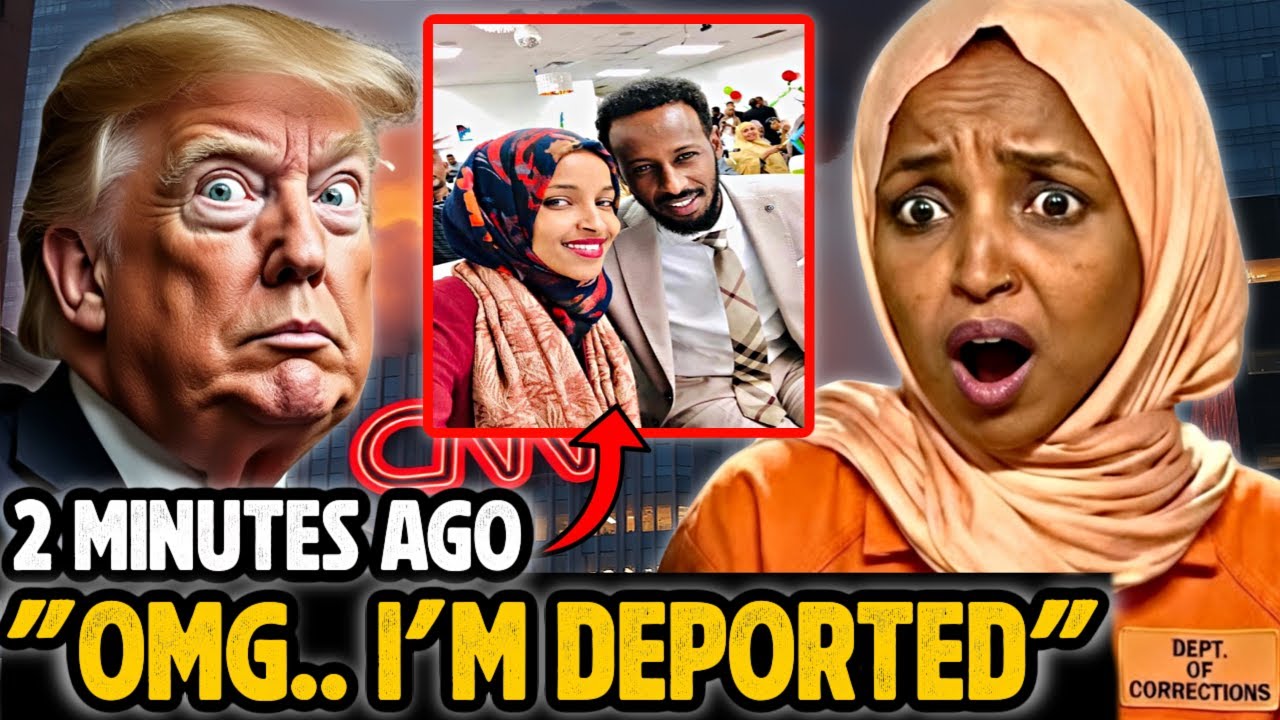
The initial spark was a series of videos depicting Immigration and Customs Enforcement operations in Minnesota. Such footage has become a recurring feature of online political debate, often framed differently depending on the source sharing it. This time, however, the images were quickly folded into a broader storyline, as commentators began connecting the enforcement activity to claims about political corruption and financial misconduct.
Former President Donald J. Trump’s allies amplified the narrative, arguing that the developments validated his past criticisms of Ms. Omar. Short clips featuring pundits declaring vindication circulated widely, frequently paired with ominous language suggesting that investigations were imminent.
No federal or state agency has announced new probes involving Ms. Omar, and no documents have been released to substantiate the claims circulating online. Still, the suggestion of official action — implied through phrases like “records,” “reviews,” and “deep dives” — proved enough to fuel a wave of speculation.
Ms. Omar, a Democrat who has represented Minnesota’s 5th Congressional District since 2019, responded by dismissing the allegations as baseless and politically motivated. Her pushback, delivered through public statements and social media, was quickly dissected. Supporters praised her for confronting what they described as misinformation. Critics, meanwhile, framed her response as defensive, interpreting tone and timing as evidence of unease rather than rebuttal.
The clash quickly took on the characteristics of political celebrity culture, with moments frozen into looping clips and captions crafted for maximum engagement. Media analysts noted that the emphasis shifted away from verification toward reaction.

“This is how these cycles work,” said a journalism professor who studies misinformation. “The claim doesn’t need to be proven to dominate the conversation. It just needs to be provocative enough to sustain attention.”
Behind the scenes, the machinery of modern political media moved into high gear. According to people familiar with digital strategy operations, teams on multiple sides began isolating the most combustible soundbites for redistribution, often stripped of qualifiers or context. The goal, they said, was not persuasion but saturation.
Traditional news organizations faced a dilemma familiar in recent years: how to cover a fast-moving narrative without reinforcing unverified claims. Some outlets focused on the viral phenomenon itself, emphasizing that no new evidence had been presented. Others examined the broader implications, noting how immigration enforcement footage can be repurposed to support unrelated political agendas.
Ms. Omar has been the subject of repeated scrutiny throughout her tenure, including ethics complaints and political attacks that have varied in substance and outcome. The current wave draws heavily on that history, recycling past allegations alongside new insinuations. Legal experts cautioned that repetition alone can blur distinctions between resolved issues and unresolved accusations.
“Once old material is reintroduced without context, it can feel new,” said a former federal ethics official. “That’s where confusion sets in.”

The role of silence also became part of the story. As speculation intensified, the absence of formal announcements from authorities was interpreted in competing ways — either as proof that something was being quietly examined, or as evidence that nothing was underway at all. Analysts warned that such interpretive gaps are often filled by assumption rather than fact.
Political strategists acknowledged that the episode highlights the volatility of immigration as an issue, particularly when enforcement actions intersect with high-profile figures. For Republicans, the narrative reinforced calls for accountability and aggressive oversight. For Democrats, it raised concerns about how quickly insinuation can harden into belief.
As of now, no investigative agency has confirmed reviews or actions tied to the claims circulating online. No charges have been filed, and no evidence has been presented publicly to support the most serious allegations.
Still, the momentum shows little sign of slowing. Clips continue to circulate, commentary grows louder, and each iteration adds another layer to a story driven more by suggestion than documentation.
Whether the episode fades or escalates will depend not on viral declarations or on-air theatrics, but on verifiable facts — or their absence. Until then, the controversy stands as a case study in how modern political narratives are built: through fragments, amplification and the powerful implication that something is always just about to be revealed.
For now, the internet keeps talking. The record, however, remains unchanged.