WASHINGTON — A routine congressional hearing on national security priorities took an unexpected turn this week when Representative Adam Smith of Washington, the ranking Democrat on the House Armed Services Committee, posed a pointed and unusual question to Pete Hegseth, the former Fox News host and defense commentator whose name has circulated in recent months in connection with debates over U.S. military posture.
“Are you planning to invade Greenland or Panama?” Mr. Smith asked, his tone measured but unmistakably sharp.
The remark immediately drew attention in the hearing room, crystallizing broader concerns among lawmakers about rhetoric that, in their view, blurs the line between serious strategic planning and provocative political messaging. Though clearly rhetorical, the question reflected unease over recent public statements by some conservative figures that have revived talk of American assertiveness abroad, including renewed interest in strategically significant regions long considered settled matters of international law.
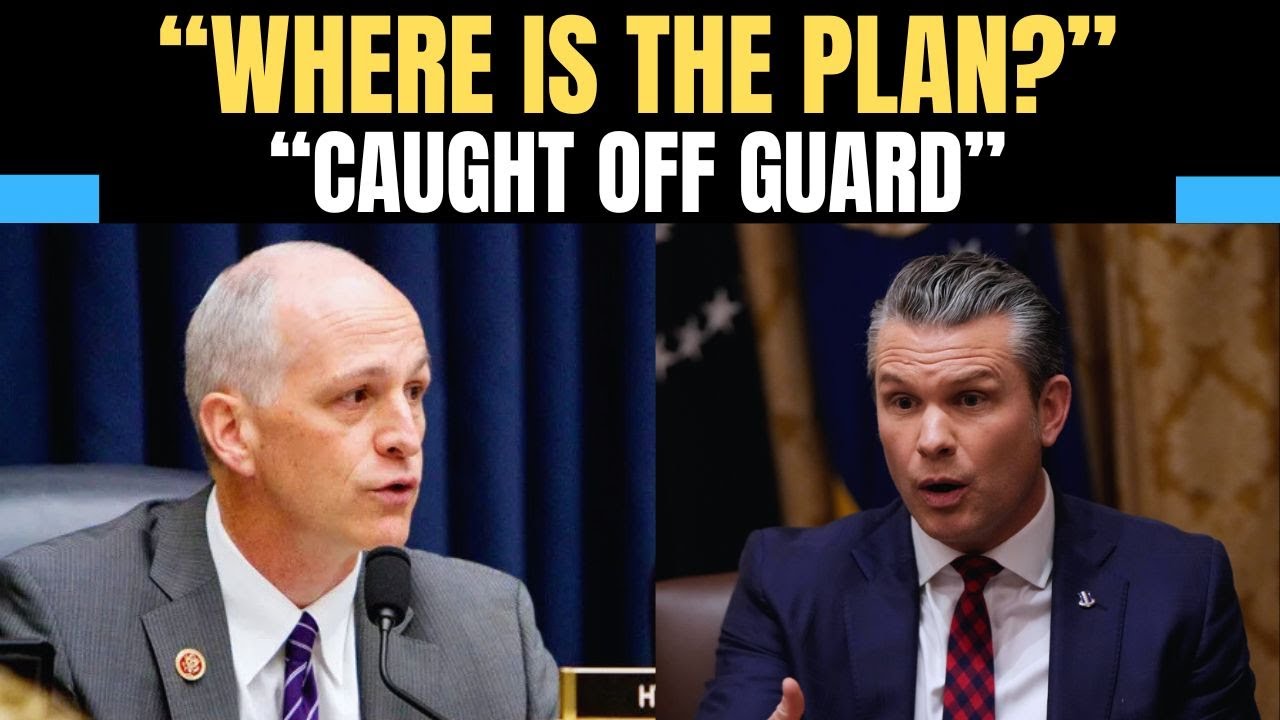
Mr. Hegseth, appearing as a witness, pushed back on the premise of the question, saying that he was not advocating military action against U.S. partners or allies. He framed his comments as part of a broader debate about American strength, deterrence and the need to protect national interests in an increasingly competitive global environment.
Still, Mr. Smith’s remark resonated far beyond the hearing room, quickly circulating online and prompting renewed discussion about the direction of U.S. foreign policy and the political language used to describe it.
The exchange came at a moment when the United States is grappling with multiple international crises, from the war in Ukraine to heightened tensions in the Middle East and growing strategic competition with China. Against that backdrop, lawmakers from both parties have sought to emphasize stability, alliances and predictability — themes that Mr. Smith said risk being undermined by offhand or exaggerated talk of territorial ambitions.
Greenland, an autonomous territory within the Kingdom of Denmark, has periodically surfaced in American political discourse because of its strategic location in the Arctic and its importance to missile defense and early warning systems. In 2019, former President Donald Trump’s interest in purchasing Greenland was widely mocked abroad but also underscored the region’s growing geopolitical relevance as climate change opens new shipping routes and access to resources.
Panama, meanwhile, occupies a central place in the history of American interventionism, particularly because of the Panama Canal, which the United States controlled for much of the 20th century before transferring authority to Panama in 1999. Any suggestion of renewed military involvement there carries heavy historical baggage.

Mr. Smith later clarified that his question was intended to highlight what he described as a troubling trend in political rhetoric rather than to accuse Mr. Hegseth of advocating specific military actions. “Words matter,” he told reporters after the hearing. “When influential voices talk loosely about force or expansion, it can send the wrong signal to allies and adversaries alike.”
Mr. Hegseth’s supporters dismissed the moment as political theater, arguing that critics were deliberately mischaracterizing his views. They said his emphasis on strength and deterrence reflected mainstream conservative thinking and did not amount to calls for invasion or unilateral action. “This was a gotcha moment,” one ally said, “not a serious engagement with the substance of U.S. defense policy.”
The episode highlights the increasingly performative nature of congressional hearings, where pointed questions are often designed as much for public consumption as for policy clarification. In an era of viral clips and rapid online reaction, a single line can overshadow hours of testimony, shaping public perception long after the hearing concludes.
For defense analysts, the exchange also reflects deeper tensions within American politics over how to talk about power in a changing world. Some argue that frank discussions about strategic interests are necessary to deter adversaries. Others warn that provocative language risks normalizing ideas that run counter to international norms and long-standing diplomatic commitments.
As the hearing moved on, the immediate drama subsided, but the question lingered. It served as a reminder that debates over American military power are no longer confined to classified briefings or academic journals. They now play out in real time, before cameras and online audiences, where tone and implication can matter as much as policy detail.
Whether Mr. Smith’s remark will have lasting impact remains unclear. But in a polarized political climate, it underscored a central anxiety: that the language of strength, if left unchecked, can blur into something far more unsettling — and that even rhetorical questions can expose fault lines in how the nation understands its role in the world.