The move was easy to miss at first. There was no press release, no conference call, no celebratory photograph on the steps of an exchange. Yet within financial circles, word spread quickly that a major global investment fund had chosen Toronto—not New York—as the base for a new North American foothold. By the time market commentators began to take notice, the decision had already been executed.
The fund has not been publicly identified, and neither Canadian nor American officials have confirmed the details. But people familiar with the matter say the investor ranks among the world’s largest pools of “patient capital,” the kind that plans in decades rather than quarters. Its decision to establish operations in Canada, bypassing Wall Street entirely, has unsettled some analysts who view it as a signal rather than an anomaly.
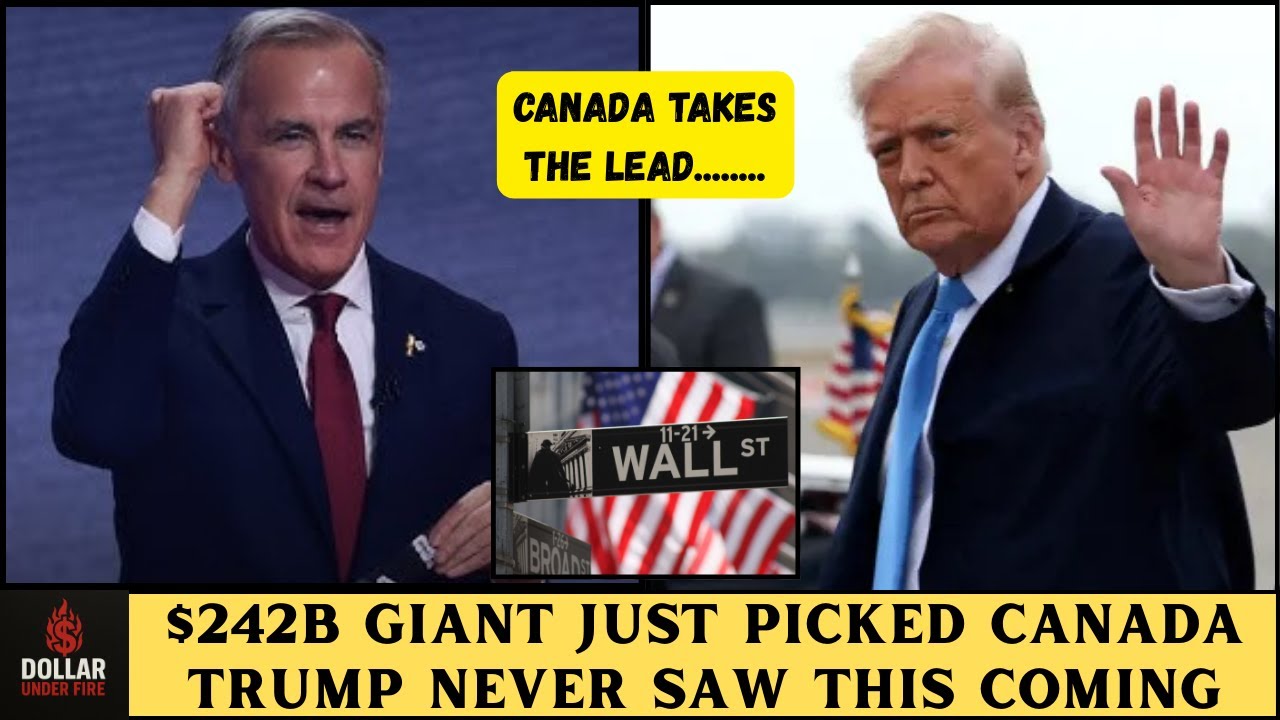
Toronto has long been an important financial center, home to major banks, pension funds, and a sophisticated regulatory environment. What makes this moment different, observers say, is the context. The move comes amid renewed tariff tensions, rising political uncertainty in the United States, and growing unease among global investors about long-term policy predictability.
“This isn’t about chasing yield,” said one senior strategist at a European investment firm, speaking on condition of anonymity because of client sensitivities. “It’s about jurisdictional confidence. Where do you put capital when trade rules are in flux and politics keeps bleeding into markets?”
For decades, New York has served as the default gateway for global capital entering North America. Its depth, liquidity, and influence have been unmatched. But the same scale that makes Wall Street powerful can also amplify volatility. Sudden policy shifts—on trade, sanctions, or industrial strategy—now carry real financial consequences, particularly for investors with exposure across borders.
Canada, by contrast, is increasingly being framed as a steadier alternative. Its trade relationships are broad, its regulatory changes tend to be incremental, and its political environment is perceived as more predictable. For long-horizon investors, those qualities can outweigh the benefits of being at the center of global finance.
People familiar with the Toronto move say the initial footprint is modest: a small team, a limited operational scope, and no immediate public-facing transactions. But they caution against interpreting restraint as hesitation. “This is how large funds operate,” said a former sovereign wealth adviser. “They anchor quietly, study the terrain, and only then expand.”

What has fueled speculation is not just where the fund chose to locate, but what it may be preparing to pursue. Industry analysts point to sectors that have become strategically sensitive: energy infrastructure, transportation corridors, data centers, and digital networks that underpin modern economies. These assets often require regulatory stability, long approval timelines, and insulation from abrupt trade actions.
Canada offers advantages in each of those areas. Its energy networks connect both east–west and north–south. Its ports and rail systems serve as gateways between continents. And its growing role in data governance and artificial intelligence has drawn interest from technology-focused investors seeking predictable oversight rather than regulatory whiplash.
Some market participants argue that tariffs were the immediate catalyst. Recent trade disputes have reminded investors how quickly cross-border assumptions can break down. Even the threat of new tariffs can alter return calculations, especially for assets that depend on integrated supply chains.
Others see a deeper story unfolding. In this view, the Toronto move reflects a gradual rebalancing rather than a dramatic break. Capital, like water, flows toward stability when pressure builds elsewhere. The United States remains the world’s largest economy and a magnet for investment, but its dominance no longer goes unquestioned.
“This doesn’t mean Wall Street is losing relevance,” said a Canadian economist who advises institutional investors. “It means the monopoly on trust is weakening. Investors are diversifying their political risk, not just their portfolios.”

Public reaction has mirrored that divide. Some commentators have dismissed the move as symbolic, noting that New York continues to attract enormous inflows. Others have framed it as an early warning, the kind that only becomes obvious in hindsight once patterns repeat.
Canadian officials have declined to comment, citing confidentiality around private investment decisions. American regulators, asked about the broader implications, have emphasized the continued strength and openness of U.S. markets. Neither side appears eager to frame the episode as a competitive shift.
Still, within financial circles, the questions persist. If one large fund is willing to bypass New York, others may follow—quietly at first, then more visibly. And if Toronto is seen not just as an auxiliary hub but as a strategic anchor, the map of North American finance could begin to look less centralized than it has for generations.
For now, the move remains more suggestive than definitive. But markets are built as much on perception as on numbers. When capital starts asking new questions about where it belongs, those questions have a way of reshaping reality—slowly, discreetly, and often before anyone is ready to say so out loud.