Ukraine’s Early-Morning Strike Sets Off Diplomatic Shockwave as Russia Summons U.S. Ambassador

In the predawn hours of Thursday morning, a Ukrainian long-range strike penetrated deep into Russian-occupied territory and ignited a diplomatic chain reaction stretching from Kyiv to Washington. The attack, carried out around 4 a.m., reportedly targeted a major weapons production site — but analysts say the significance of the strike lies less in the facility destroyed and more in what it revealed.
Hours after confirming the attack, Moscow summoned the United States ambassador in an unusually aggressive diplomatic rebuke, accusing Washington of enabling Ukraine’s expanding operational reach. It was one of the most public confrontations between the two nations since the early months of the war, and one that American officials privately described as “theatrical, but calculated.”
The episode became the centerpiece of a widely viewed late-night segment by MSNBC host Rachel Maddow, who suggested that Russia’s reaction hinted at vulnerabilities the Kremlin has attempted to conceal. According to Maddow, U.S. intelligence sources have circulated a classified assessment that the strike may have exposed structural weaknesses in Russia’s weapons production network — weaknesses that challenge Moscow’s narrative of wartime resilience.

A Carefully Timed Strike
Ukrainian officials have not publicly acknowledged targeting a specific factory, consistent with Kyiv’s practice of strategic ambiguity. But satellite imagery reviewed by Western analysts shows extensive damage to a facility believed to be integral to Russia’s missile and drone manufacturing lines. A senior European defense official, speaking on condition of anonymity, said the strike “landed precisely where Ukraine intended it to.”
The timing of the operation — carried out in the early morning, when Russian air defenses are typically less alert — appeared intentional. A U.S. military official familiar with the intelligence community’s reporting called the strike “one of Ukraine’s most methodical long-range operations to date.”
Moscow’s Escalatory Response
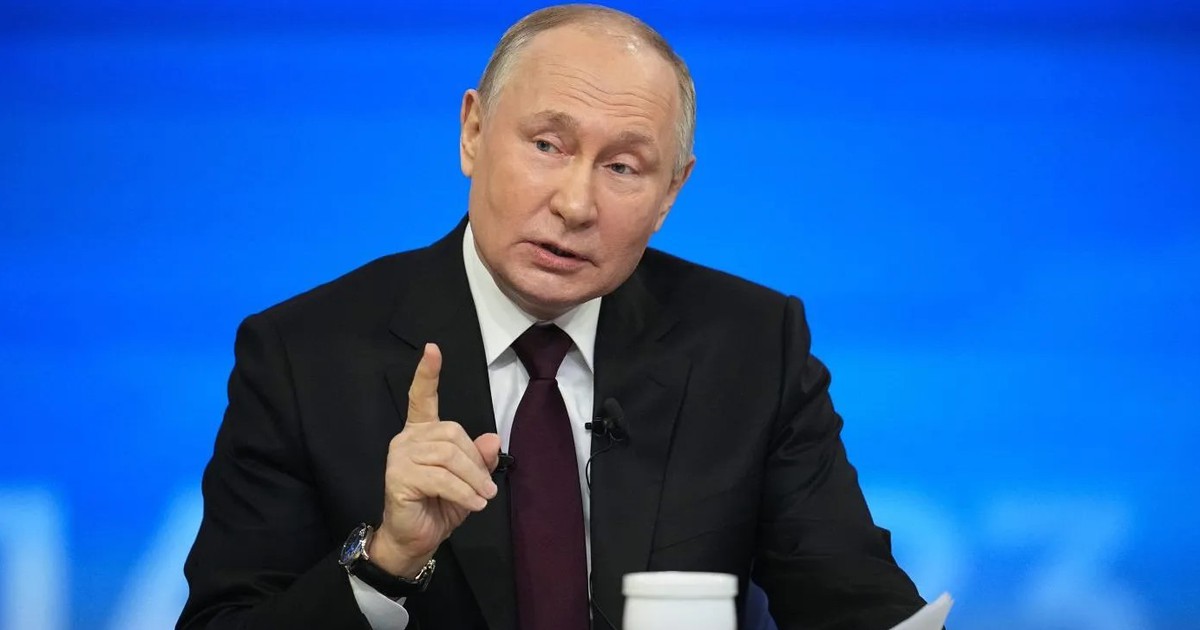
Within hours, Russia summoned U.S. Ambassador Lynne Tracy for what the Ministry of Foreign Affairs described as an “urgent and decisive demarche.” The Kremlin accused Washington of enabling the attack by supplying advanced munitions and intelligence support — accusations the U.S. has neither confirmed nor denied publicly.
Diplomats who have attended similar high-level summonses in Moscow described Thursday’s meeting as unusually performative. “It was designed for domestic and international consumption,” said a former European ambassador to Russia. “By framing the incident as a direct confrontation with the United States, the Kremlin is trying to shift the narrative away from Ukraine’s growing capabilities.”
Russian state television amplified the message throughout the day, portraying the strike as proof that Washington, rather than Kyiv, is driving the conflict.
Washington’s Internal Calculations
In Washington, the strike triggered a flurry of secure calls between the White House, the Pentagon, and U.S. European Command. Officials sought to assess whether the Kremlin’s response was merely rhetorical or indicative of preparations for escalation — cyberattacks, military repositioning, or intensified bombardment of Ukrainian cities.
Privately, American defense analysts expressed concern that Russia’s unusually sharp diplomatic maneuver may have been prompted by more than the strike itself. Some believe the attack revealed deficiencies in Russia’s supply chain and production infrastructure that the Kremlin has long attempted to downplay.
“What unsettled Moscow was not the physical destruction,” said a senior U.S. official briefed on early assessments. “It was the political implications of losing something they claimed was untouchable.”
A Turning Point for Western Policy?
The Biden administration now faces a familiar but increasingly fraught dilemma: whether to restrain Ukraine’s ability to strike into Russian-controlled areas to manage escalation risks, or to continue endorsing Kyiv’s right to target military infrastructure used for attacks on Ukrainian civilians.
If Washington signals hesitation, critics warn, it could embolden Russia’s coercive tactics. But firm support carries its own risks, particularly as the Kremlin intensifies efforts to portray the United States as a direct participant in the conflict.
“This moment matters because it tests the credibility of Western commitment,” said Dr. Elena Markov, a political scientist who studies nuclear coercion. “If threats succeed, they will be repeated — not only by Russia.”
Ukrainian Civilians Brace for Fallout
In cities across Ukraine, residents faced renewed Russian missile attacks overnight, leading to widespread power outages. For many, the question now is whether Western political dynamics will interrupt or sustain the military support that has allowed Ukraine to counter Russia’s long-range capabilities.
“This strike may have shifted the diplomatic landscape,” said Oleksiy Danilov, a former national security official in Kyiv. “But for civilians, what matters is whether the lights stay on.”
A Conflict Entering a New Phase
As Maddow’s segment continued to circulate online, drawing millions of views, analysts noted that the incident highlights a broader truth: the war has entered a phase where symbolic reactions may have as much impact as battlefield outcomes.
What remains unclear is whether Thursday’s strike represents an isolated tactical maneuver — or the first public sign of a deeper shift in Ukraine’s ability to penetrate Russia’s wartime defenses, and Moscow’s ability to contain the political consequences.