Toyota Quietly Pivots to Canada, in a Rebuke to Trump’s Tariff Strategy
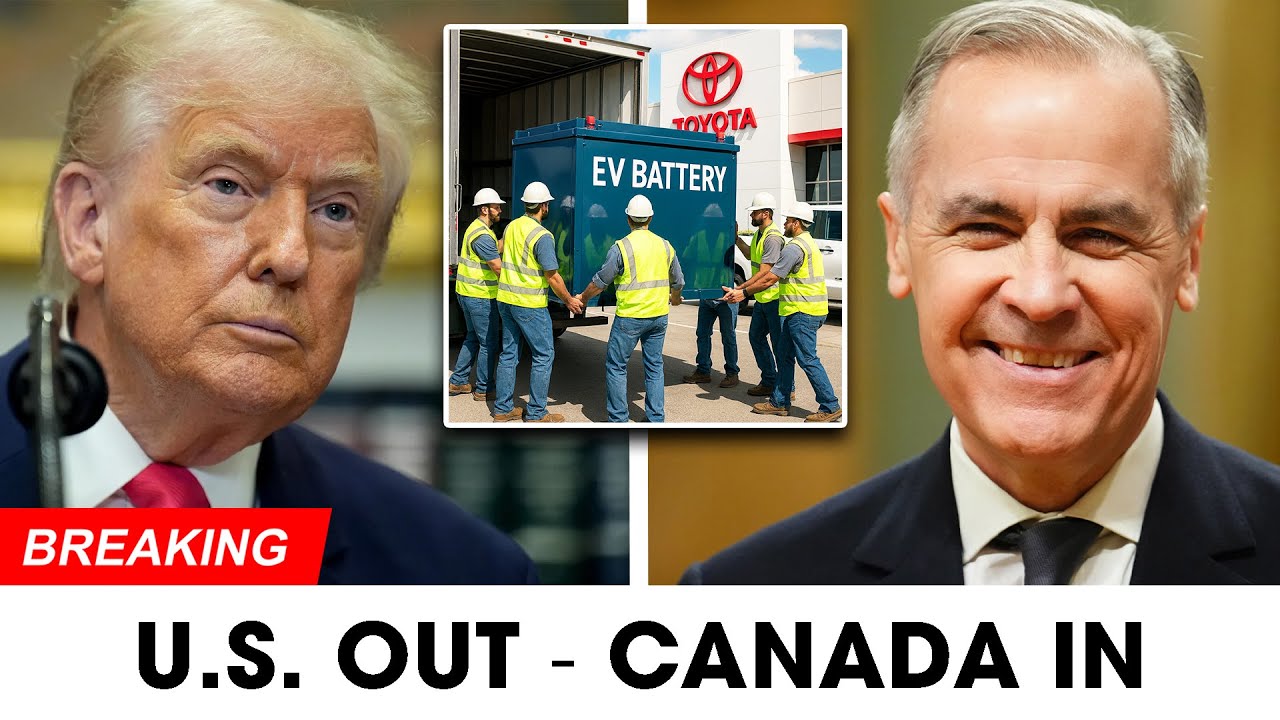
GREENSBORO-RANDOLPH Megasite, N.C. — On a crisp December morning, the final panels are being bolted onto what was supposed to be the crown jewel of America’s electric-vehicle ambitions: Toyota Battery Manufacturing North Carolina, a $13.9 billion complex that will eventually employ more than 5,000 people and ship its first lithium-ion cells in weeks. Local politicians still tout the sprawling campus as proof that the South can lead the battery revolution.
Yet 1,200 miles north, in the industrial corridors of Ontario and Quebec, Toyota has already begun writing a different future.
In a move that has unfolded with almost no public fanfare, the world’s largest automaker by volume has sharply accelerated investment in Canada while slowing or rethinking several multibillion-dollar projects on the United States side of the border. Industry executives, provincial officials and analysts say the shift is driven by a single, overriding calculation: Canada offers the policy stability and critical-mineral infrastructure that an increasingly erratic Washington no longer can.
The timing is exquisitely awkward for the incoming Trump administration. President-elect Donald J. Trump has promised 60 percent tariffs on Chinese goods and 25 percent duties on imports from Mexico and Canada unless those countries curb migration and fentanyl flows. He has also threatened blanket tariffs on Japanese vehicles. Toyota, which exported 542,000 cars from Japan to the United States last fiscal year and sources major components from Mexico now faces potential cost increases measured in the tens of billions of yen.
“Toyota is not making a political statement,” said one senior executive at Toyota Motor North America, speaking on condition of anonymity to discuss internal strategy. “It is making a spreadsheet statement.”

That spreadsheet has turned brutally simple. Canada checks every critical box for the electric-vehicle era: abundant nickel, lithium and cobalt deposits; large-scale refining and processing capacity; long-term government contracts offtake agreements; and a policy environment that changes, at most, every four or five years. The United States, despite the generous subsidies of the Inflation Reduction Act, still lacks domestic refining at scale and has become hostage to what one Toyota planner called “monthly regulatory whiplash.”
The numbers tell the story. Ottawa has committed more than 6.44 billion Canadian dollars to accelerate mining projects and another 2 billion to expand refining. Ontario alone has landed Honda’s $15 billion EV hub, Stellantis-LG’s battery plant and now a cascade of Toyota-linked suppliers. Quebec is building North America’s first modern cobalt refinery. All of these facilities qualify for I.R.A. tax credits because they sit in countries with which the United States has free-trade agreements, giving Toyota the compliance it needs without the political risk it increasingly associates with building inside the United States.
In contrast, Toyota’s once-celebrated EV assembly plant in Kentucky has slipped to mid-2026, delayed by permitting battles and uncertainty over future incentives. Plans to shift Tacoma production from Mexico to Texas, originally conceived as a tariff-avoidance move, are under review again because parts from Canada would still face duties if broader levies are imposed.
Canadian officials are not gloating, at least not publicly. But Prime Minister Mark Carney, the former Bank of England governor who took office in March 2025, has made no secret of his strategy: turn Canada into the indispensable upstream partner for every automaker that wants North American content without North American political risk.

“Stability is the new subsidy,” Mr. Carney said in a speech last month in Windsor, Ontario, standing in front of a new battery-materials plant. “Companies making 30-year investments cannot live with four-year cliff edges.”
The pivot has already cost American states dearly in political capital. Governors in the Midwest and South who offered Toyota billions in incentives now watch as suppliers quietly relocate across the border. Lawmakers in Washington warn that Canada is becoming a “back door” for foreign manufacturers to collect American tax credits while creating jobs elsewhere.
Toyota insists it is not abandoning the United States. The North Carolina battery plant will still reach its full capacity of 30 gigawatt-hours annually, enough for roughly 500,000 long-range EVs. Factories in Kentucky, Indiana, Mississippi and Texas will continue building millions of vehicles each year. But the strategic center of gravity for the company’s electrified future battery cells, motors, power electronics, and the critical minerals that feed them has unmistakably moved north.
Analysts say Toyota is merely the most visible example of a broader trend. Volkswagen, Mercedes-Benz and Hyundai are all expanding Canadian supply-chain partnerships faster than American ones. The Ontario-Quebec corridor is rapidly becoming what one Goldman Sachs report called “the Detroit of the battery age.”
For the United States, the implications are profound. A policy mix designed to bring manufacturing home high tariffs to punish offshoring, rich subsidies to reward onshoring is instead pushing some of the world’s biggest manufacturers to a neighbor that offers neither the tariffs nor the uncertainty.
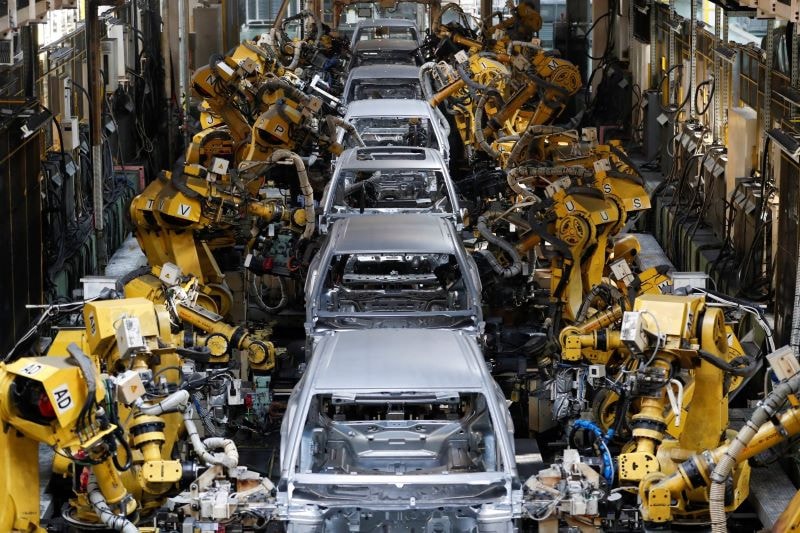
As the first battery cells roll off the line in North Carolina this winter, they will carry an ironic footnote: many of the refined minerals inside them will have crossed the border from Canada, processed in facilities built with Canadian government money, under contracts signed because Toyota could no longer count on Washington to keep its word for the decades an automotive investment requires.
In the end, the quietest corporate decisions often speak the loudest. Toyota has not issued a press release declaring victory for Canada or defeat for the United States. It has simply followed the incentives, the minerals and the stability where they lead.
North, as it turns out.