A congressional hearing that began as a standard inquiry into state-level responses to nationwide rioting quickly devolved into one of the most contentious and politically volatile exchanges seen on Capitol Hill in recent months. Representative Anna Paulina Luna, a Florida Republican known for her combative legislative style, delivered a blistering line of questioning aimed directly at Minnesota Governor Tim Walz. The confrontation unfolded in a near-silent Democratic caucus, whose members appeared increasingly cautious as Luna escalated her allegations with a mix of sharp interrogation, prepared documents, and sweeping claims about foreign interference.
What took place, according to observers from both parties, was less a routine oversight proceeding and more a rhetorical collision between two starkly different interpretations of the unrest that has spread across several major cities. Luna insisted that the recent riots—widely reported as protests sparked by immigration-related tensions—are in fact part of a coordinated, foreign-backed influence operation, leveraging immigrant communities as a political accelerant. Walz, maintaining a measured posture throughout the exchange, repeatedly rejected the allegations as “unsubstantiated,” “reckless,” and “potentially dangerous.”
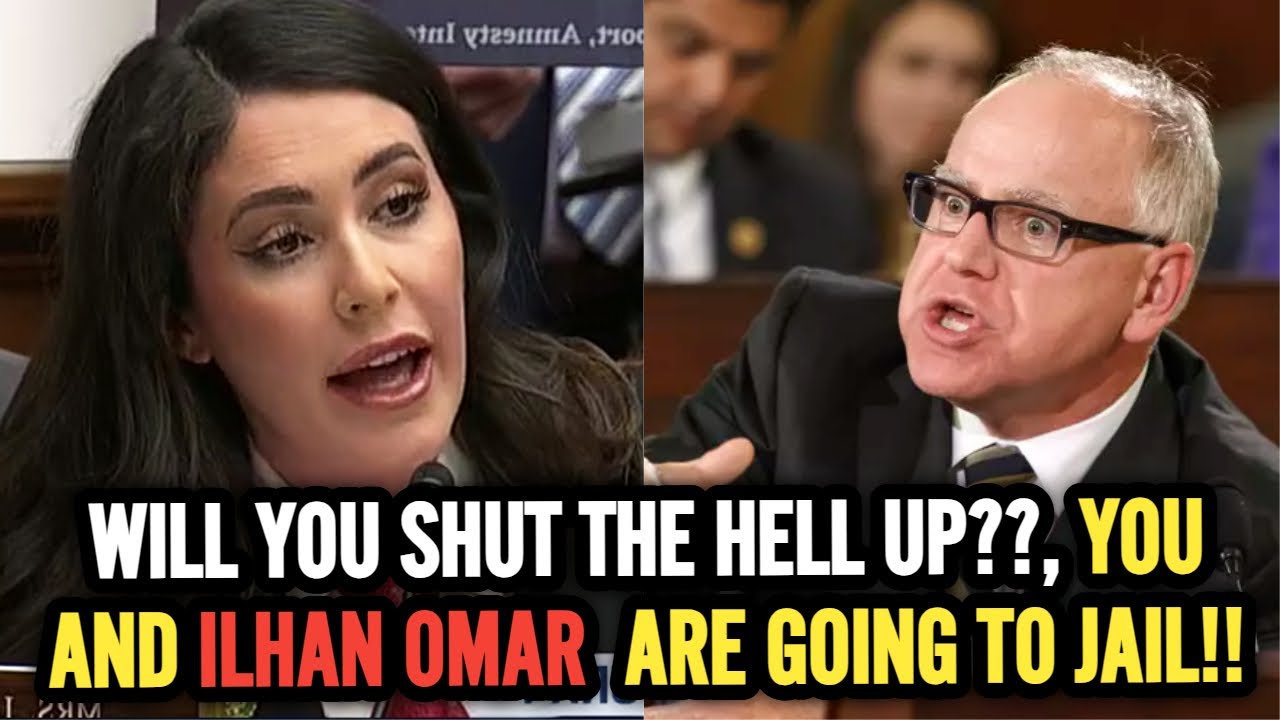
But Luna, armed with binders of documents that she claimed contained financial records, communications data, and intelligence leads, pressed on. Her central argument was both dramatic and provocative: that the escalation of street violence is not spontaneous, domestic, or organic, but rather the result of targeted funding and ideological manipulation by what she termed “a hostile geopolitical rival.” While she did not explicitly name a specific nation in her opening remarks, members of the committee later confirmed that Luna referenced China, Venezuela, and Russia in subsequent questioning.
The hearing room grew increasingly tense as Luna laid out what she described as a “systemic infiltration of protest movements,” asserting that immigrant communities were being “used as disposable props” in a broader attempt to destabilize U.S. institutions. According to statements she read aloud, the supposed operation involved funneling money through nongovernmental organizations, activist groups, and charitable networks that outwardly support immigrant advocacy.
Governor Walz, whose state has experienced several high-profile protests in recent years, countered that such claims distort the realities of both immigration and civil unrest. He emphasized that Minnesota officials have found “no credible evidence” of foreign-directed riots and warned that insinuating otherwise risks stigmatizing vulnerable communities. “Conflating legitimate protests with foreign subversion,” Walz said, “undermines the very democratic processes this committee is tasked with protecting.”
Still, Luna pressed her argument with increasing force. At one point, she displayed a printed chart that purported to show financial transfers between several nonprofit groups active in immigration advocacy. She claimed the funds originated from shell entities abroad, though the underlying documents were not publicly released and could not be independently verified by journalists present. Several Democratic members exchanged glances but declined to interrupt or interject—an unusual departure from typical oversight committee dynamics, where partisan friction tends to erupt readily.
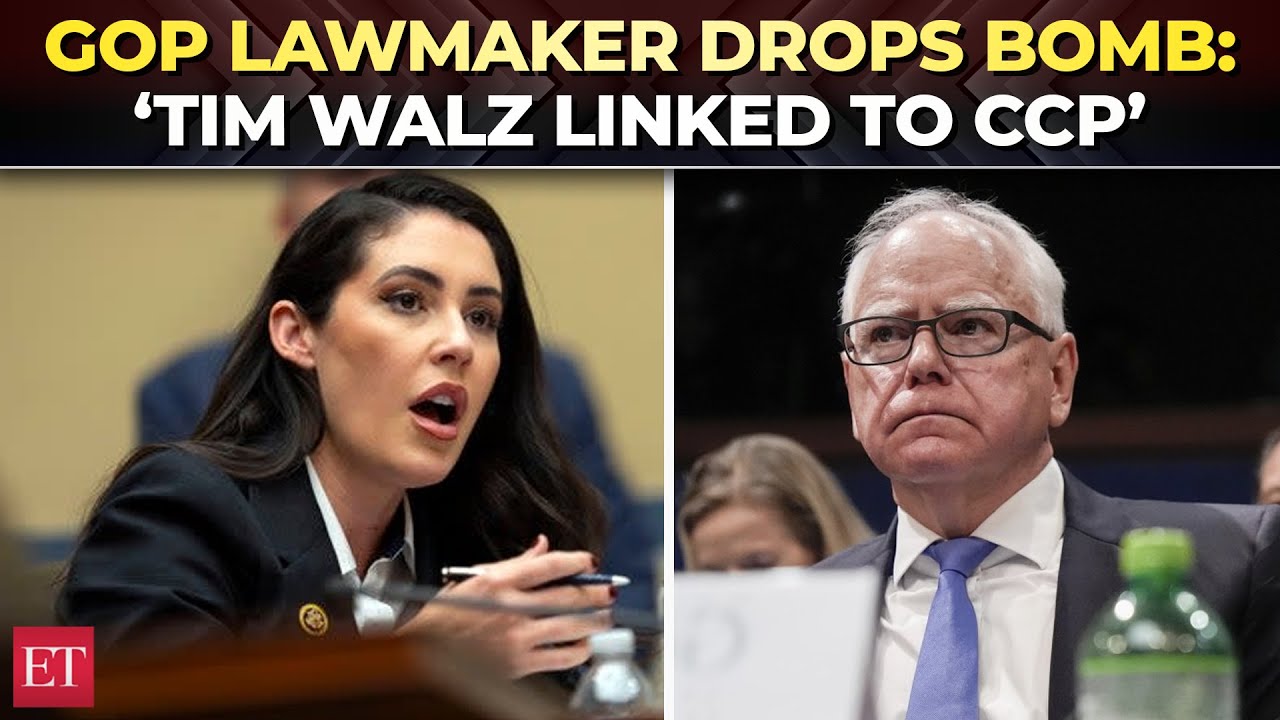
A senior Democratic staffer later described the silence as strategic. “There was no incentive to elevate the moment,” the aide said. “Interrupting her would have turned it into a spectacle. But letting her speak meant she owned the burden of proving every extraordinary claim she made.” Another staffer suggested that members were awaiting fact-checking from committee analysts before engaging directly with Luna’s assertions.
Political scientists and congressional observers were quick to note that Luna’s performance, whether substantiated or not, aligns with an emerging pattern within certain segments of the Republican Party: reframing episodes of domestic unrest as part of a broader geopolitical contest. That framing, analysts say, allows lawmakers to argue that national security vulnerabilities extend beyond traditional espionage or cyber interference and into the realm of social and demographic politics.
Governor Walz pushed back on this narrative throughout his testimony. He argued that attributing domestic unrest to foreign actors absolves local and federal officials of their responsibility to address socioeconomic grievances, policy failures, and the underlying conditions that contribute to civil disorder. “Blaming global conspiracies for what are ultimately local challenges is not governing,” Walz said. “It risks ignoring the legitimate concerns of residents in our communities.”
Nonetheless, Luna’s cross-examination resonated strongly with conservative media outlets, which swiftly circulated edited clips of her arguments. Within hours, several networks characterized the exchange as a “devastating takedown” of the Democratic governor, highlighting Walz’s difficulty in responding directly to Luna’s specific, though unverified, documents. On social media, the moment trended widely, fueling debate not only over the veracity of Luna’s claims but also over the hearing’s broader implications for how Congress frames immigration, activism, and foreign policy going into an election year.
Outside the hearing room, reactions were sharply divided. Republican lawmakers praised Luna’s confrontational approach as overdue scrutiny of both state governments and nonprofit networks involved in immigration policy. Democratic leaders, however, privately expressed concern that elevating allegations of foreign-backed riots could heighten tensions in immigrant communities already under political pressure.
Experts in foreign influence operations urged caution. Several noted that while foreign actors have historically attempted to exploit U.S. social divisions, public accusations require meticulous evidence to avoid fueling misinformation. “The danger is that speculative claims can quickly become political narratives,” one researcher at a Washington think tank said. “And once they take root, they can shape policy discussions in ways that outpace the underlying facts.”
By the time the hearing adjourned, neither side had shifted its position. Luna insisted she would continue to investigate what she termed a “coordinated destabilization campaign,” while Walz maintained that her allegations distorted the complexities of immigration-related protests and risked undermining community trust.
If the hearing demonstrated anything, it was the deepening ideological divide in how lawmakers interpret unrest, foreign interference, and the responsibilities of state and federal institutions. Whether Luna’s claims lead to further investigation—or remain a flashpoint of political theater—will depend largely on what evidence, if any, emerges from the documents she cited.
For now, one thing is clear: the hearing will likely be remembered less for its stated agenda than for the moment Democrats sat in silence as an intense and highly charged confrontation unfolded, reshaping the political conversation in real time.