🔥 MIAMI ERUPTS: DEMOCRATS SHATTER MAGA STRONGHOLD WITH A STUNNING 80-POINT SWING — TRUMP’S ENDORSEMENT TURNS TOXIC 🔥
In a political reversal few imagined possible even a year ago, the city of Miami — a metropolis long regarded as a glittering MAGA fortress — delivered a jolt to the Republican establishment Tuesday night. Democrat Eileen Higgins, a county commissioner known for her pragmatic tone and relentless on-the-ground organizing, decisively won the mayoral runoff, defeating Trump-endorsed Republican Alio Gonzalez by a margin that left strategists questioning the very ground beneath Florida politics.
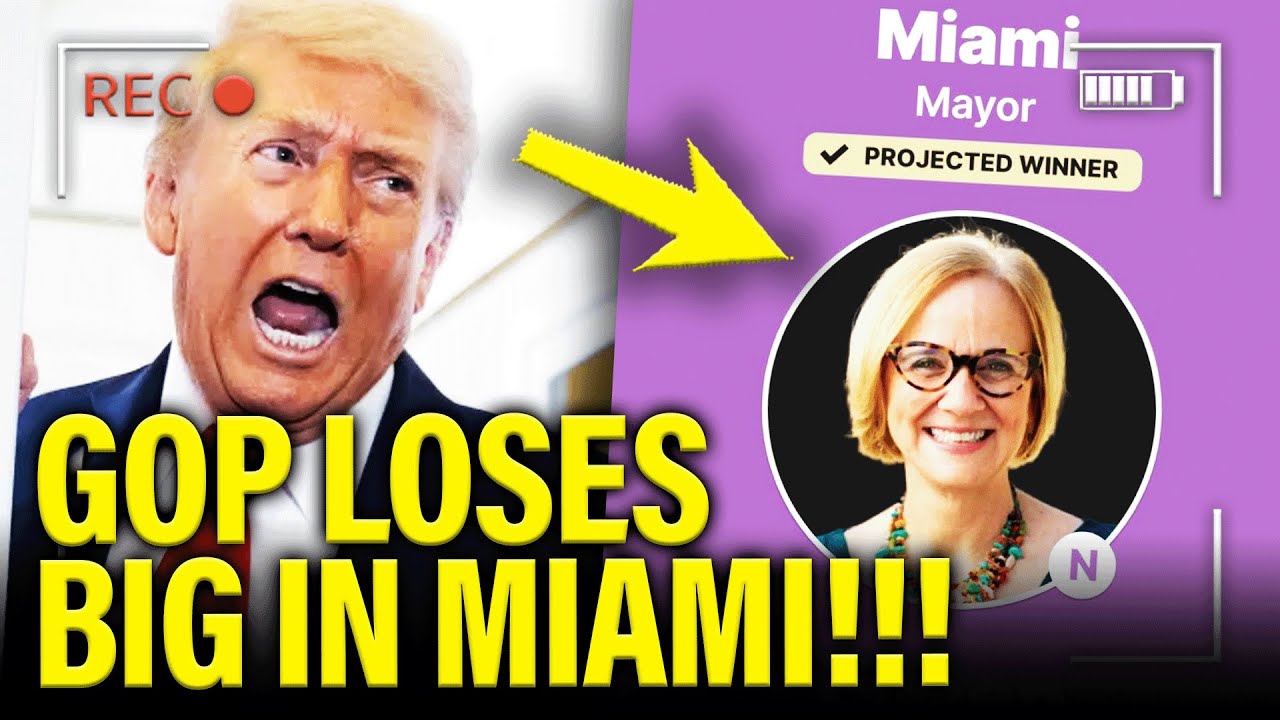
The numbers were staggering. In 2021, the incumbent Republican mayor Francis Suarez — now under multiple ethical clouds and widely accused of monetizing his office like a personal tech start-up — won by 67 points. This year, with 90% of the vote counted, Higgins led by nearly 20. The math isn’t just dramatic; it’s cinematic. Miami didn’t drift. It snapped — an 80-point whiplash that borders on the geological.
For Republicans, the loss came with an especially bitter aftertaste: Trump wasn’t just adjacent to this race. He wrapped his arms around it, squeezed, and declared Gonzalez one of his chosen. Twice. Loudly. The type of endorsement that once could electrify a Republican base now seemed to operate more like a political fire alarm.
“Vote for Republican Gonzalez. He is fantastic,” Trump wrote in the final days of the campaign, urging Miami to fall in line. The city, in response, did something surprising: it didn’t.
The shift reflects a larger national pattern emerging in real time. Once a cornerstone of Trump’s electoral coalition, Latino voters in 2024 and 2025 have increasingly signaled profound disillusionment with his immigration policies. Miami, a city where 60% of residents are foreign-born, sits directly in the blast radius of those federal crackdowns.
In the debate that would come to define the race, Gonzalez attempted to thread a needle so thin it might as well have been imaginary. Confronted about Trump’s mass-roundup immigration plans — ones that have disproportionately targeted non-criminal migrants — Gonzalez insisted he supported “rounding up criminals” while quickly shifting blame to federal authorities. It was the political version of shrugging and hoping nobody noticed the contradiction.
Higgins, standing a few podiums away, did notice. And she struck. Calmly but firmly, she laid out the consequences of those policies: families torn apart, workers suddenly stripped of TPS status, businesses forced to fire employees with no warning. Her tone was measured, but the indictment was devastating.

“I’m very glad the president did not endorse me,” she added — a sentence that landed like a quiet thunderclap.
If Gonzalez struggled to defend his alignment with Trump, he fared even worse when asked about corruption allegations tied to his abrupt resignation as city manager. His explanation — that he stepped down only to care for his wife — contrasted sharply with the well-documented turmoil swirling through city hall at the time. His answer drew eye rolls from even moderate voters, who have grown exhausted by years of scandal-laden leadership.
Miami’s political dysfunction has become a recurring national storyline. Under Suarez, the mayor’s office transformed into what critics called a “consulting incubator,” one in which public service and private enrichment blurred beyond recognition. His net worth skyrocketed from roughly $400,000 to more than $5 million while he drew a taxpayer salary under $100,000. His assets grew to include crypto holdings, multiple investment properties, and a $235,000 boat — a nautical symbol of the city’s ethical drift.
Higgins capitalized on that vacuum. Her message was less ideological crusade and more stubborn practicality: Miami is drowning — financially, ethically, and in literal rising seawater — and voters deserved a mayor not auditioning for a cable-news chyron.
Her win, though municipal on paper, reverberates far beyond city limits. Across Florida on Tuesday, Democrats outperformed expectations in district after district, even in deep-red Trump strongholds. A 30-point overperformance in Florida House District 90. A 25-point one in Senate District 11. A mayoral flip where none was predicted.
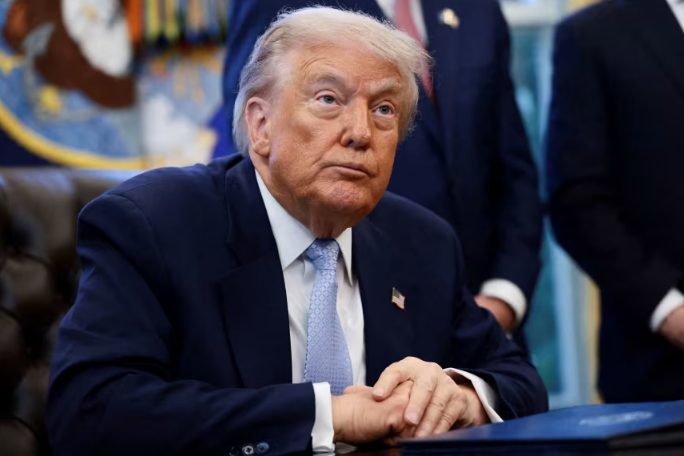
For Trump, the night underscored an unsettling truth: the MAGA brand may still dominate certain corners of the electorate, but in diverse, immigrant-heavy cities like Miami, it is rapidly approaching toxicity. Latino voters, once seen as ripe territory after 2020 gains, have recoiled sharply. Polls show Trump underwater by over 30 points with Latino voters on immigration alone — a drop-off so steep it resembles something that requires a safety harness.
Miami has long been viewed as a symbol — of culture, of opportunity, of shifting American identity. After Tuesday night, it now symbolizes something else: the limits of fear-based politics in a city built by immigrants who know firsthand what state power can do when pointed at the vulnerable.
Eileen Higgins didn’t just win an election. She cracked open the MAGA mythology that Florida is an impenetrable red wall.
Miami, in its humid, unpredictable way, just rewrote the script.