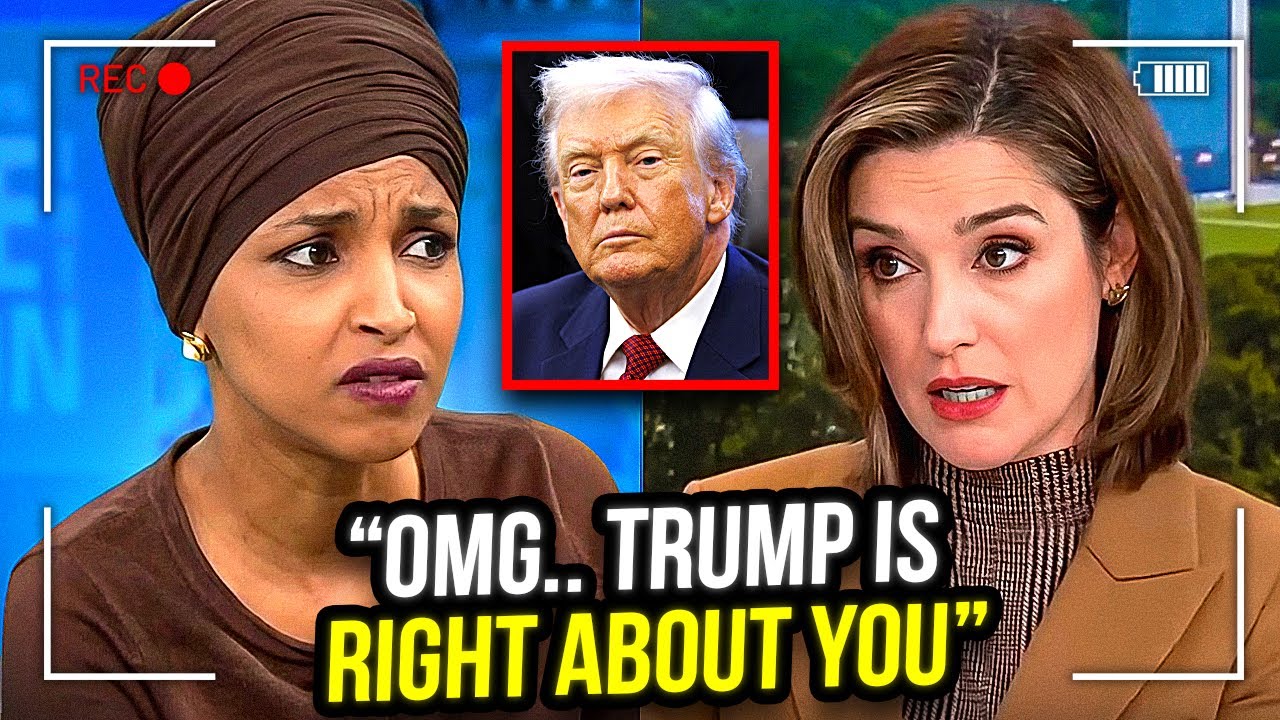
What began as a routine interview with a Treasury analyst evolved rapidly into one of the most scrutinized moments on political television, as the guest referenced a series of financial filings and internal compliance reports that, according to investigators, are now part of a wider federal inquiry. While none of the materials presented have been verified independently, the anchor’s shift from skepticism to evident surprise — broadcast live — quickly circulated online, fueling partisan interpretations and raising questions about how the media should handle emerging claims.
CBS declined to comment on the broadcast beyond confirming that the documents shown during the segment were provided by the interviewee, not the network. Still, the moment was striking enough that it spiraled across social platforms within hours, amplified by commentators who argued that former President Donald J. Trump’s past rhetoric regarding Omar — rhetoric Democrats long dismissed — might now be reexamined in light of the new disclosures. Others cautioned that the political reaction was moving far faster than the facts.
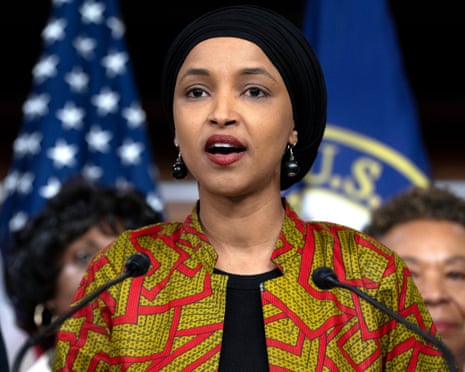
The materials referenced during the segment included a set of wire-transfer summaries, compliance memos, and redacted Treasury department notifications involving multiple individuals and small nonprofit organizations. Nothing in the segment indicated wrongdoing by Omar directly, and the House Democrat has not been accused of a crime. But the mere suggestion that some of the transactions occurred in proximity to organizations with which she had past associations was enough to ignite widespread speculation.
Democratic aides, speaking anonymously because of the sensitivity surrounding the inquiry, described the immediate reaction on Capitol Hill as “frustrated and defensive,” with several noting that the timing — in the early stages of an election year — exacerbated the political temperature. “There is a fear,” one aide said, “that perception is running ahead of process, and that the narrative may harden before the facts are settled.”
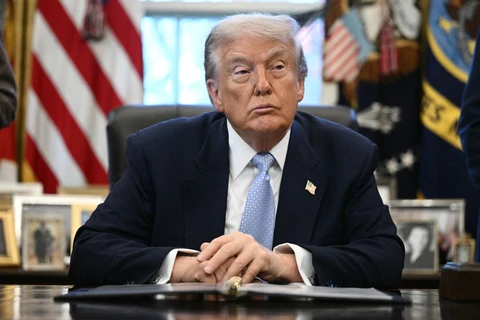
Republican lawmakers, meanwhile, seized on the footage almost instantly. Several pointed to Trump’s years-old commentary as prescient, arguing that the CBS host’s startled reaction validated concerns the media previously downplayed. Political strategists on both sides acknowledged that the clip is likely to feature heavily in campaign ads and committee hearings in the months ahead, regardless of how the investigation evolves.
Media analysts say the moment reflects a broader challenge facing news organizations that must balance transparency, speed, and accuracy in an increasingly polarized environment. “You could see the anchor wrestling with the information in real time,” said Claire Dawson, a professor of journalism ethics at Columbia University. “That vulnerability is rare on national television. But it also shows how unverified documents can shape political understanding immediately if presented without full context.”
Advocacy groups have warned against drawing conclusions prematurely. Omar’s office released a statement late Wednesday calling the talk surrounding the segment “irresponsible speculation built on incomplete and misleading material.” The statement emphasized that the congresswoman has complied fully with all past inquiries and expects this latest controversy to follow the same pattern: “loud allegations, no underlying evidence.”
Yet even some Democratic strategists concede that perception is now a challenge regardless of outcome. The combination of televised surprise, ambiguous documentation, and preexisting political narratives has created what one consultant called “a combustible mix.” “It doesn’t matter whether this resolves cleanly,” the strategist said. “The story now has momentum.”

Experts on regulatory enforcement note that the Treasury documents cited during the broadcast — known as Suspicious Activity Reports, or SARs — often reflect compliance flags rather than formal allegations. SARs, they say, are filed broadly and frequently, and their appearance in media coverage can lead to public misunderstandings about their meaning. “A SAR is not an accusation,” said former Treasury official Michael Hartwell. “It is a data point, and sometimes a very weak one.”
Still, the political reverberations show no signs of slowing. Several congressional committees have requested briefings on the matter, and multiple lawmakers hinted that hearings could follow if the inquiry expands. Immigration policy advocates expressed concern that the episode could be used to justify broader rhetorical attacks on newcomers and refugee communities, while watchdog groups say any legitimate questions should be investigated dispassionately rather than through partisan framing.
For CBS, the incident is likely to spur internal review about how sudden document disclosures should be handled on air. For Omar, it marks the beginning of what could be a prolonged period of scrutiny, even if the facts ultimately deflate the controversy. And for a political system already strained by distrust, the episode underscores how quickly a single televised moment can realign narrative trajectories.
As one longtime Washington observer put it: “In this town, it’s not the allegations that move fastest. It’s the reactions.”