Late-Night Jokes About Trump Trigger Sharp Response as Kimmel and Colbert Deliver Coordinated On-Air Critiques
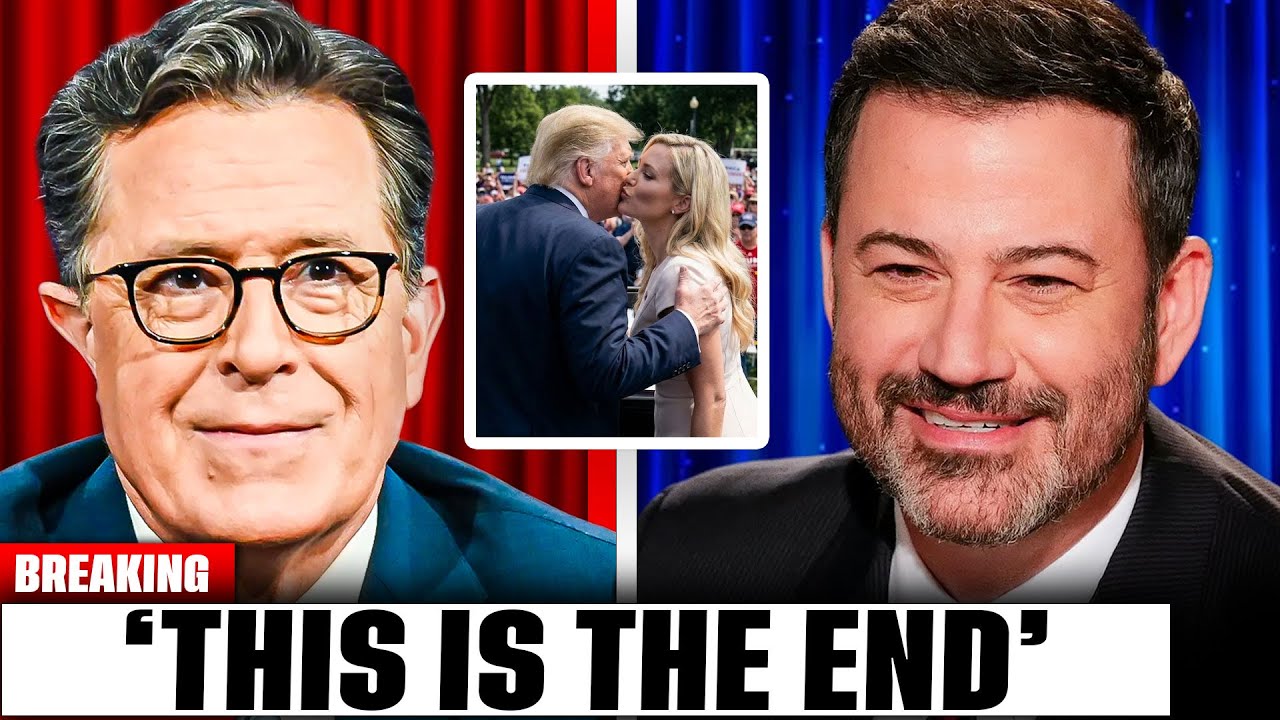
New York — A pair of unusually synchronized late-night monologues from Jimmy Kimmel and Stephen Colbert ignited an intense political and media backlash on Thursday, after both hosts devoted extended segments to scrutinizing former President Donald J. Trump’s business dealings, political rhetoric and internal campaign behavior. The comedic critiques — framed as satire but delivered with a pointed edge — drew a swift and angry response from Mr. Trump and his allies, setting off a new round of cultural and political confrontation.
The two hosts, who have long been among Mr. Trump’s most outspoken critics, appeared to build their monologues around similar themes, airing them within minutes of each other on ABC and CBS. While there was no evidence of formal coordination, the parallel framing — including references to recent court filings, testimony from Trump associates and reports highlighted in major newspapers — quickly led viewers to interpret the broadcasts as an unusually forceful late-night rebuke.
Within hours, clips circulated widely on social media, prompting trending hashtags in the United States and abroad. But it was Mr. Trump’s response, according to aides familiar with the situation, that transformed the comedic segments into a larger political story.
Trump’s Reaction: Public Condemnation and Private Frustration
Advisers to Mr. Trump, speaking on the condition of anonymity, described the former president as “furious” after watching excerpts of the monologues online. One aide said Mr. Trump “felt blindsided” by the back-to-back critiques, believing the networks were “acting in concert” to damage his reputation. Several aides also said Mr. Trump made a series of calls late Tuesday night to political allies, conservative media figures and campaign staff, urging them to counter what he described as “coordinated media attacks.”
On his social media platform, Mr. Trump accused the hosts of spreading “malicious lies,” though he did not specify which claims he disputed. He also criticized network executives and suggested that both ABC and CBS were “actively campaigning” against him.
A spokesperson for Mr. Trump said the segments reflected “the political agenda of coastal elites,” adding that the former president “remains focused on the issues that matter to Americans.”
Kimmel and Colbert Defend Their Segments as Satire

Producers for both Jimmy Kimmel Live! and The Late Show with Stephen Colbert declined to comment on the political fallout but emphasized that the content was based on publicly available reporting. On-air, both hosts framed their commentary as part of their regular comedic coverage of national politics.
Mr. Kimmel, whose monologue included graphics and video clips related to court testimony and campaign allegations, told the audience that he was “simply connecting dots that Donald Trump has already drawn.” Mr. Colbert, in his segment, said he was “reacting to the week’s news” and joked that Trump “makes the job far too easy.”
Media analysts said the simultaneity of the critiques — even if coincidental — heightened their impact.
“This is a case where the framing mattered as much as the content,” said Mike Socolow, a media historian at the University of Maine. “Two influential hosts delivering strikingly similar critiques in the same news cycle created a perception of collective cultural judgment.”
Mar-a-Lago Scramble as Allies Seek to Control Narrative

Inside Mr. Trump’s orbit, aides and advisers moved quickly to contain the fallout. Two people familiar with internal discussions said senior members of his media team drafted talking points for Republican lawmakers and conservative commentators, urging them to dismiss the segments as “performative entertainment” rather than serious reporting.
The Trump campaign also contacted at least one major conservative network, expressing frustration that its commentary did not immediately counter the late-night criticism, according to a person briefed on the outreach.
But some Republican strategists privately acknowledged that the attention generated by the segments risked re-centering public focus on controversies the campaign hoped to move past.
“The challenge is that comedy often reaches audiences political messaging cannot,” said one GOP consultant. “When satire goes viral, it can shape narratives in unpredictable ways.”
Democrats Seize the Moment — Carefully
Prominent Democrats shared clips of the monologues, though party leaders avoided commenting directly. One senior Democratic strategist said the viral segments were “a cultural moment, not a campaign moment,” but acknowledged that the critiques helped reinforce perceptions already held by a significant portion of the electorate.
Late-night comedy, the strategist added, “does not persuade everyone — but it reminds people of what they already suspect.”
Broader Questions About Politics and Entertainment
:max_bytes(150000):strip_icc():focal(758x170:760x172)/jimmy-kimmel-stephen-colbert-late-show-kimmel-live-100125-1-ef5d5f2fa7864cbfafe8bed6a8c9d0f8.jpg)
Scholars of political communication said the episode underscores the increasingly blurred boundary between entertainment and political discourse. Late-night hosts — once focused primarily on celebrity interviews and light satire — now play a significant role in shaping public interpretation of political events.
“Comedy has become a space where complex political narratives are distilled,” said Sarah Sobieraj, a sociology professor at Tufts University. “And when political figures react strongly, it amplifies the impact of the satire.”
What Comes Next
Neither ABC nor CBS has indicated whether Kimmel and Colbert will continue to address the controversy, though both hosts have historically built follow-up jokes around Trump’s reactions.
For Mr. Trump, the episode represents another moment in which late-night television — traditionally a cultural afterthought — has become a flashpoint in his political battles. His advisers said he remains frustrated by the attention but is unlikely to stop responding to such critiques.
As one aide put it: “He watches the clips. He hears the jokes. And he always feels compelled to answer.”