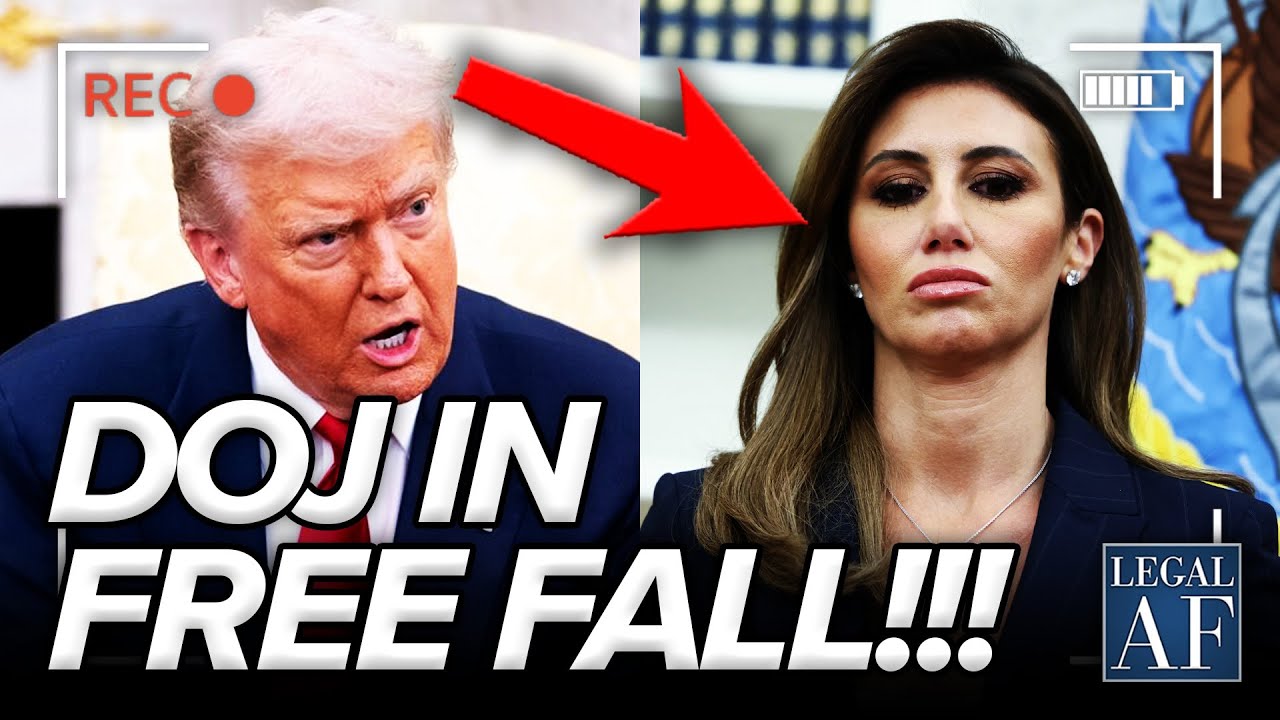
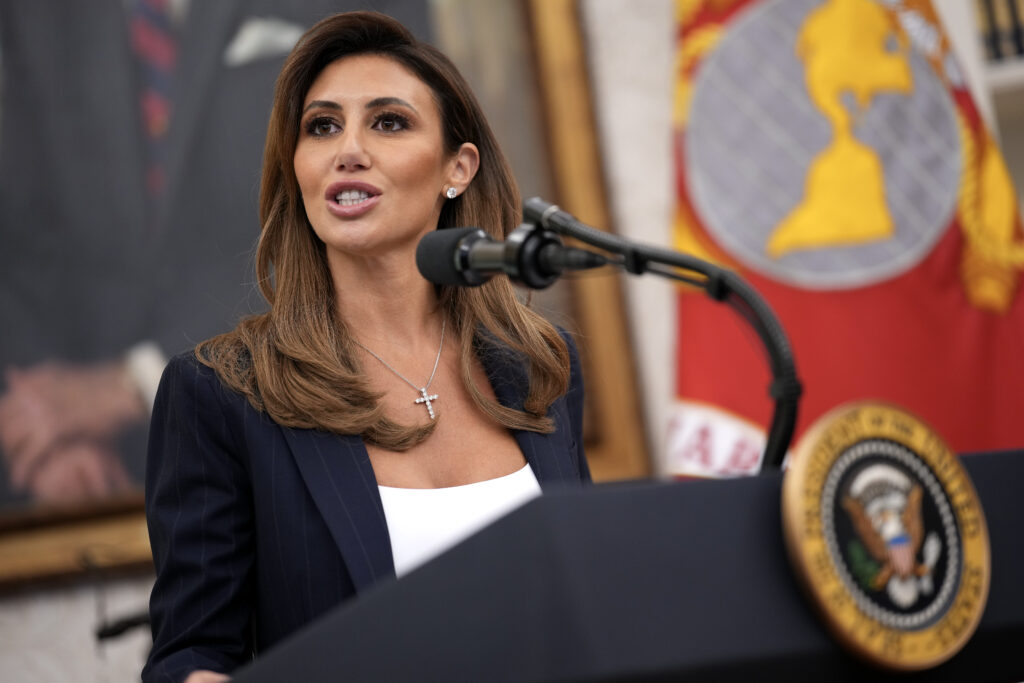
WASHINGTON — A federal appeals court on Friday sharply curtailed former President Donald J. Trump’s attempt to install interim U.S. attorneys without Senate confirmation, issuing a ruling that legal scholars say could unwind a broader strategy by the administration to place loyalists in critical prosecutorial roles across the country. The decision, which invalidated the appointment of Alina Habba as interim U.S. attorney, immediately reverberated through legal and political circles, marking one of the most direct judicial rebukes yet to the administration’s efforts to exert influence over federal law enforcement.
The three-judge panel concluded that the statutory mechanism the administration relied upon to justify the appointment had been “improperly invoked,” and that the use of temporary acting officials in this manner risked circumventing constitutional confirmation obligations. While the court stopped short of questioning the legitimacy of all acting U.S. attorney appointments, the ruling appeared to set a clear limit: the executive branch cannot unilaterally install prosecutors when the Senate has not been given a meaningful opportunity to consider nominees.
Within minutes of the decision’s release, legal experts took to social platforms to analyze the implications. Some described the ruling as “a long-overdue assertion of separation-of-powers principles,” while others warned that it could create temporary uncertainty within several offices where appointments had been made under similar procedures. The ruling quickly trended across legal and political communities, generating an unusual level of public engagement for what is typically viewed as a technical area of federal appointments law.
A Quiet Strategy Draws Judicial Scrutiny
For months, critics of the administration had expressed concern about what they saw as a concerted effort to place politically aligned attorneys in interim roles while avoiding the Senate confirmation process. Although the practice of using temporary appointees is not new, the volume and concentration of such appointments in several high-profile districts — including jurisdictions in Virginia, California, Nevada and New York — drew heightened attention from oversight advocates.
Legal scholars noted that the ruling did not categorically prohibit the use of acting officials, but rather underscored that interim appointments cannot substitute for the constitutional requirement that U.S. attorneys eventually be nominated and confirmed by the Senate. “This decision sends a clear message that the executive cannot rely on perpetual interim placements to avoid accountability,” said Samuel Hargreaves, a professor of constitutional law at Georgetown University.
According to two Senate aides familiar with internal discussions, several Republican senators privately welcomed the ruling. They described it as “necessary institutional cover” to resist pressure from the administration to support nominees whose qualifications or political independence had been questioned. The aides emphasized that concerns extended beyond partisan lines, rooted instead in broader anxieties about precedent and long-term institutional integrity.
Political and Institutional Repercussions
The decision arrives at a moment when the Justice Department faces growing scrutiny over the independence of its prosecutorial functions. While the administration defended its appointments as lawful and necessary for operational continuity, critics argued that the pattern of selecting individuals closely aligned with the former president risked undermining public trust.
The removal of Ms. Habba from the interim role is expected to have immediate administrative consequences. Justice Department officials said the office would be led on a temporary basis by a career deputy until a new nominee is put forward. It remains unclear whether the administration will attempt to appeal the decision or revise its approach in response to the court’s reasoning.
Political analysts say the ruling may also complicate the administration’s efforts to install preferred officials in other districts. “This is not just about one appointment,” said María Delgado, a senior fellow at the Brennan Center for Justice. “It challenges a broader mechanism the administration has used to shape the federal prosecutorial landscape without undergoing the constitutional confirmation process.”

A Rare Moment of Bipartisan Alignment
Perhaps most striking was the muted response from some members of the president’s own party, several of whom signaled privately that the ruling alleviated internal tensions that had been building over the appointments strategy. “There has been discomfort for some time,” one senior Republican aide said. “This ruling provides a clear framework that many felt was overdue.”
The administration, by contrast, reacted sharply. A spokesperson for the former president criticized the court’s decision as “misguided” and warned that it could disrupt ongoing investigations. But legal analysts noted that such disruptions were unlikely, citing longstanding procedures for temporary leadership transitions.
A Turning Point in the Appointments Debate
Although the broader implications will unfold in the coming months, the ruling represents a pivotal moment in the debate over executive power, judicial oversight and the limits of interim federal appointments. It may shape not only future Justice Department staffing decisions but also congressional efforts to clarify statutory language governing temporary service in high-level federal positions.
For now, the decision stands as one of the clearest judicial signals that the long-running tension between expedience and constitutional design has reached a breaking point — and that attempts to bypass Senate confirmation may face increasing institutional resistance.