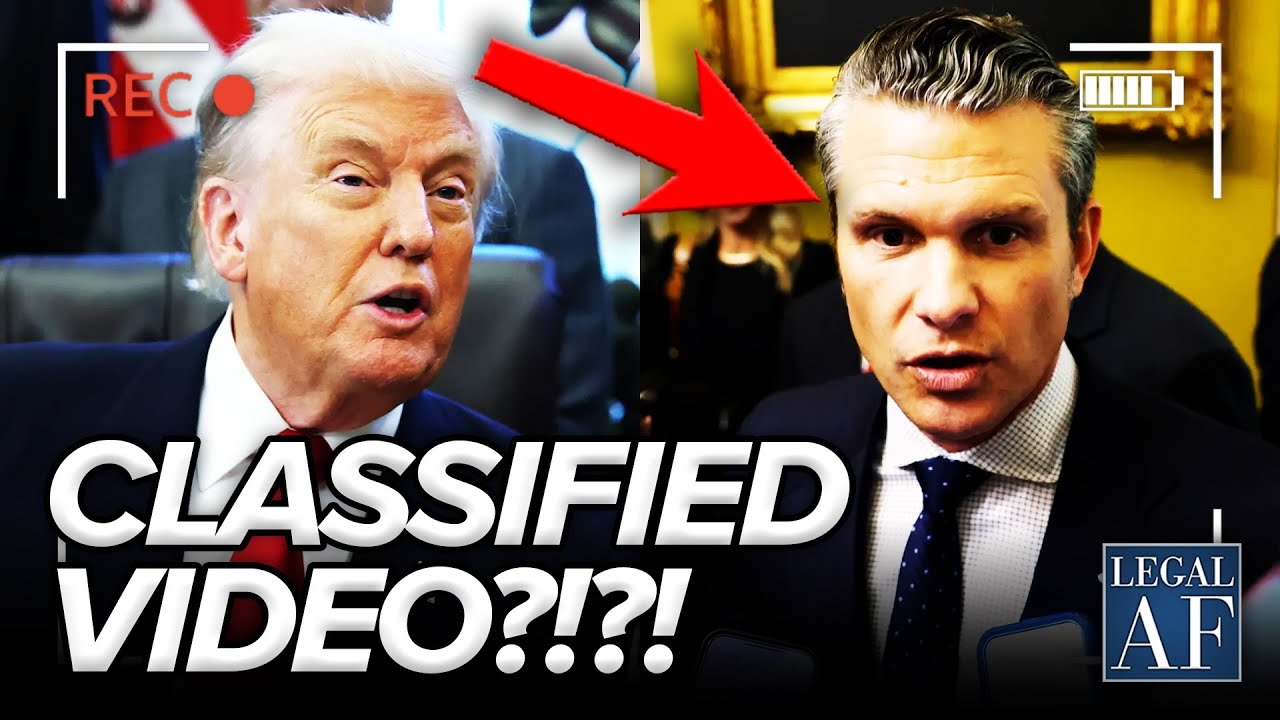
WASHINGTON — A newly resurfaced video of Defense Secretary Pete Hegseth praising strict accountability for war crimes has collided with emerging footage from a controversial U.S. maritime operation near Venezuela, creating a political and institutional crisis that senior Pentagon officials privately describe as “one of the most destabilizing episodes of the administration.”
The 2016 Fox News segment, in which Mr. Hegseth asserted that “abject war crimes must be punished” and that U.S. service members “have a duty to refuse illegal orders,” reappeared on social platforms Wednesday morning — mere hours after lawmakers viewed classified footage of a recent boat strike that left two shipwrecked survivors in the water before a second munition was reportedly launched. The juxtaposition of past commentary and present responsibilities has placed the Defense Secretary under unusually intense scrutiny from Congress, veterans’ groups and military lawyers.
The resurfaced clip, circulating widely among Pentagon personnel according to two officials with direct knowledge, comes as members of the Senate Armed Services Committee are preparing a formal inquiry into what some have described as an “unjustifiable escalation” in the Venezuela operation. Several committee members, including Senator Mark Kelly, a former Navy pilot, have publicly signaled concern that rules of engagement may have been violated. Privately, aides say the senator is weighing whether to press for a fact-finding hearing that could require sworn testimony from senior defense officials.
A Growing Divide Between Public Messaging and Operational Reality
Mr. Hegseth has denied that any unlawful order was given and has characterized criticism of the strike as “misinformed” and “politically motivated.” Pentagon statements have emphasized that the incident occurred during “an active interdiction of a hostile vessel engaged in international narcotics trafficking,” and asserted that operators acted in accordance with standing authorities.
But officials who have seen the unedited footage describe a sequence at odds with the department’s public framing. According to three individuals familiar with classified briefings, the initial strike disabled the suspect vessel, leaving several passengers in the water. What happened next is the focus of escalating concern: a second munition appears to strike near two surviving individuals who showed no immediate hostile intent. Lawyers inside the military justice system say this raises serious questions about proportionality, necessity and compliance with both U.S. and international law.
“The footage is deeply troubling,” said a retired Marine judge advocate who reviewed a detailed summary provided by a congressional staffer. “There are scenarios where a follow-on strike is justified, but the circumstances described here do not appear to meet those standards.”
Political Reverberations in Washington
The timing of the resurfaced 2016 clip has exacerbated tensions within the administration. Several senior officials, speaking on condition of anonymity, said the president’s advisers were “caught off guard” by how quickly the episode spiraled, with one describing the juxtaposition of “Hegseth then versus Hegseth now” as “politically devastating.”
White House aides have reportedly urged the Defense Secretary to “stay disciplined” in his public messaging, particularly after online commentators amplified the contradiction between his earlier condemnation of illegal orders and his current refusal to release the full unedited footage. The administration has not committed to providing the video to Congress, citing operational sensitivities, though legal experts say lawmakers have the authority to obtain it.
Meanwhile, veterans’ groups — traditionally reluctant to criticize Republican national-security leaders — have begun issuing carefully framed statements urging transparency. One prominent organization said the United States “cannot risk eroding the moral foundation that distinguishes lawful military force from criminal conduct.”

Inside the Pentagon: Concern, Confusion and Quiet Anger
Interviews with defense officials paint a portrait of a department on edge. Junior officers and mid-career personnel, already strained by months of political uncertainty, are said to be circulating the resurfaced clip in internal chats, comparing the secretary’s past assertions about ethical conduct with the administration’s current posture.
“People are shaken,” said a senior military planner who has worked on maritime interdiction operations. “We operate in gray zones all the time, but the expectation is that leadership will be forthright when something goes wrong. This feels like the opposite.”
The official added that the controversy threatens to undermine operational authority at a moment when southern maritime routes are experiencing increased activity from regional criminal networks.
A Crisis Far From Resolved
Whether Mr. Hegseth can weather the fallout remains unclear. Some congressional Republicans have defended him, arguing that critics are politicizing a complex, high-risk operation. Others, however, have begun privately expressing concern about the strategic and legal ramifications of the incident.
If the Senate Armed Services Committee calls a hearing — a step aides say could come within weeks — Mr. Hegseth may face questions under oath about the legality of the strike, the decision-making chain, and the department’s refusal to release the full video. Several former Pentagon officials say such testimony could shape not only his tenure but broader public trust in the administration’s handling of military operations.
For now, the political and ethical tremors continue to build. The resurfaced clip, the leaked operational footage and the unresolved legal questions have converged into a controversy that shows little sign of fading — and may yet evolve into one of the most significant national-security challenges of the year.