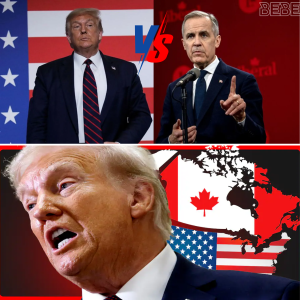
Canada’s unexpected decision to withdraw from several long-standing auto manufacturing cooperation frameworks with the United States has injected a new level of uncertainty into one of North America’s most deeply integrated industries. While the move is not a total dismantling of cross-border production — Canada remains tied to U.S. supply chains through the USMCA trade pact — it signals a deliberate reassessment of the country’s economic exposure at a moment of rising trade tensions and shifting industrial policy in Washington.
Officials in Ottawa said the decision was driven by a need to protect domestic manufacturing from what they described as increasingly unpredictable tariff and subsidy environments in the United States. Though they did not reference former President Donald Trump by name, senior government advisers acknowledged that the return of aggressive tariff proposals — including floated increases on autos and parts — made long-term planning for cross-border cooperation “operationally uncertain and strategically risky.”

For Detroit, the announcement landed with immediate consequences. Automakers that have relied for decades on the seamless movement of parts, engines and components across the border now face a period of recalibration. Several companies confirmed that production forecasts are being revisited, with analysts noting potential delays for new vehicle launches and rising costs linked to reconfiguring supply chains. Auto suppliers in Ontario and Michigan, already contending with high interest rates and post-pandemic volatility, expressed concern that the move could accelerate job losses on both sides of the border.
Economists say the development underscores the vulnerabilities of regional manufacturing systems built on assumptions of political stability. Under the North American auto alliance — shaped by NAFTA in the 1990s and refined under the USMCA — the industry evolved into a highly synchronized network, with parts crossing the border hundreds of times before entering final assembly. Any disruption, they note, compounds quickly.
In interviews, Canadian officials argued that distancing the country from certain forms of U.S. policy alignment could ultimately strengthen domestic resilience. Ottawa has been investing aggressively in electric-vehicle supply chains, battery facilities and mineral extraction strategies. By reducing dependency on U.S. regulatory conditions, officials say Canada can pursue a more predictable industrial plan. Still, they acknowledge that any transition will be complicated, with impacts on employment and investment likely to unfold unevenly across provinces.
In Washington, reaction was mixed. Some lawmakers criticized Canada for what they described as an unnecessarily abrupt step. Others expressed concern that U.S. tariff proposals may have contributed to the breakdown. Officials at the Department of Commerce emphasized that the United States remains committed to integrated manufacturing, but did not directly address whether tariff escalations had factored into Canada’s decision.
Market response was swift. Auto stocks — particularly those with heavy cross-border integration — experienced short-term volatility as investors reassessed uncertainties around production schedules and cost structures. Analysts cautioned, however, that it is too early to gauge long-term effects, noting that companies have weathered past disruptions through diversification, automation and regional flexibility.

Worker communities, meanwhile, voiced apprehension. In Windsor and Oshawa, Ontario — two cities deeply intertwined with U.S. assembly lines — union leaders described the policy shift as both a warning and an opportunity. While some fear job displacement, others argue that Canada’s push for domestic investment could create new openings in advanced manufacturing. In Detroit and Toledo, workers expressed concern that supply-chain realignment might lead to temporary layoffs or increased work stoppages.
Trade experts say the current moment reflects broader global trends. Nations are increasingly prioritizing industrial sovereignty, particularly in strategic sectors such as autos, semiconductors and clean energy. The interruption of North American auto cooperation, they argue, may be less an isolated dispute than a sign of shifting geopolitical realities.
Still, many questions remain unresolved. Canada has not detailed the full scope of its withdrawal or the long-term timeline for replacing joint production mechanisms. U.S. officials have yet to provide clarity on how potential tariffs will be implemented or whether negotiations could soften their impact. Automakers are seeking guidance from both governments, with industry groups calling for diplomacy to prevent further fragmentation.
For now, the North American auto landscape remains in flux. The cross-border model that shaped decades of economic growth is entering a period of recalibration, and both nations face the complex task of balancing national interests with the realities of an interconnected industrial system.
As the transition begins, economists warn that the coming months may prove pivotal in determining whether the region moves toward renewed cooperation — or deeper divergence.