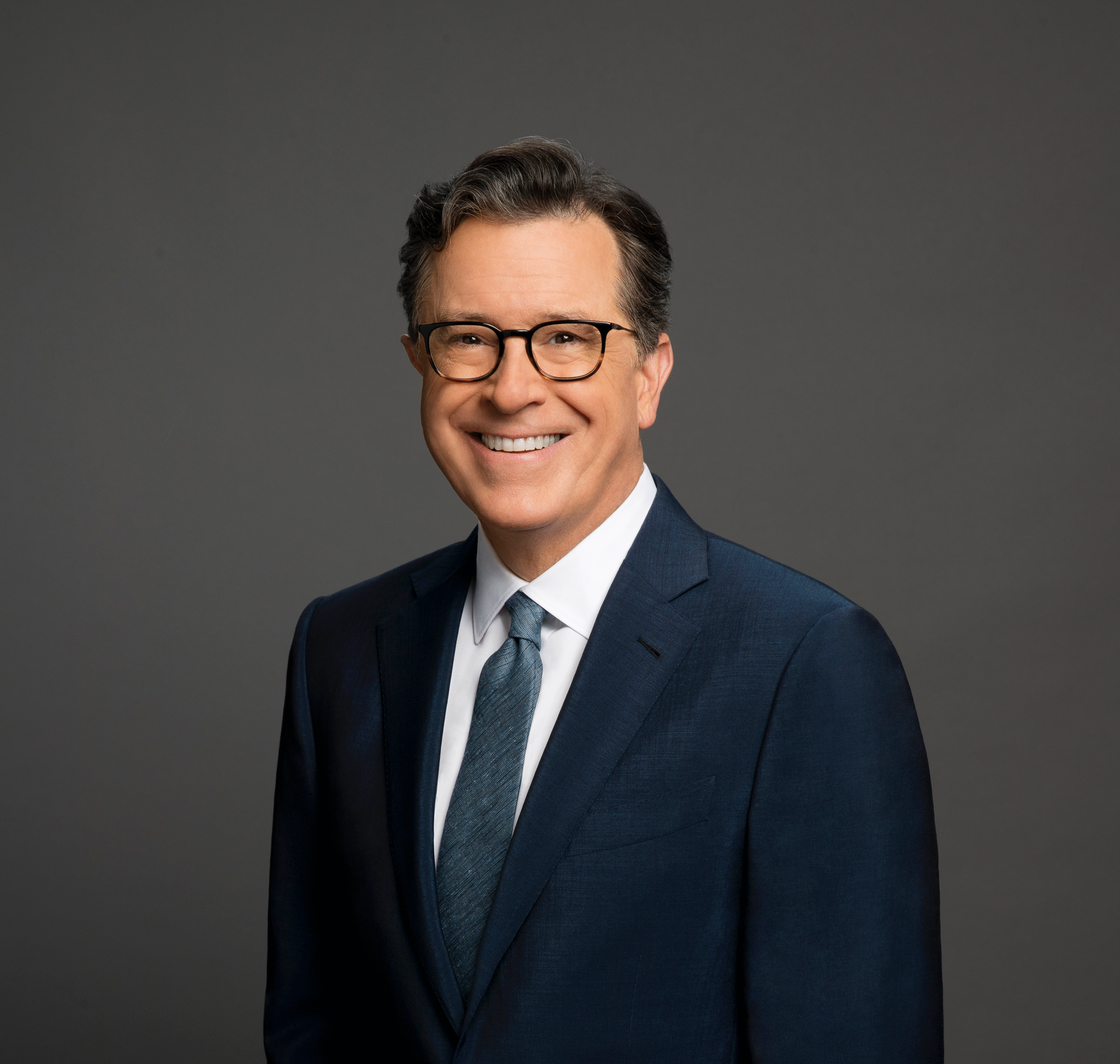
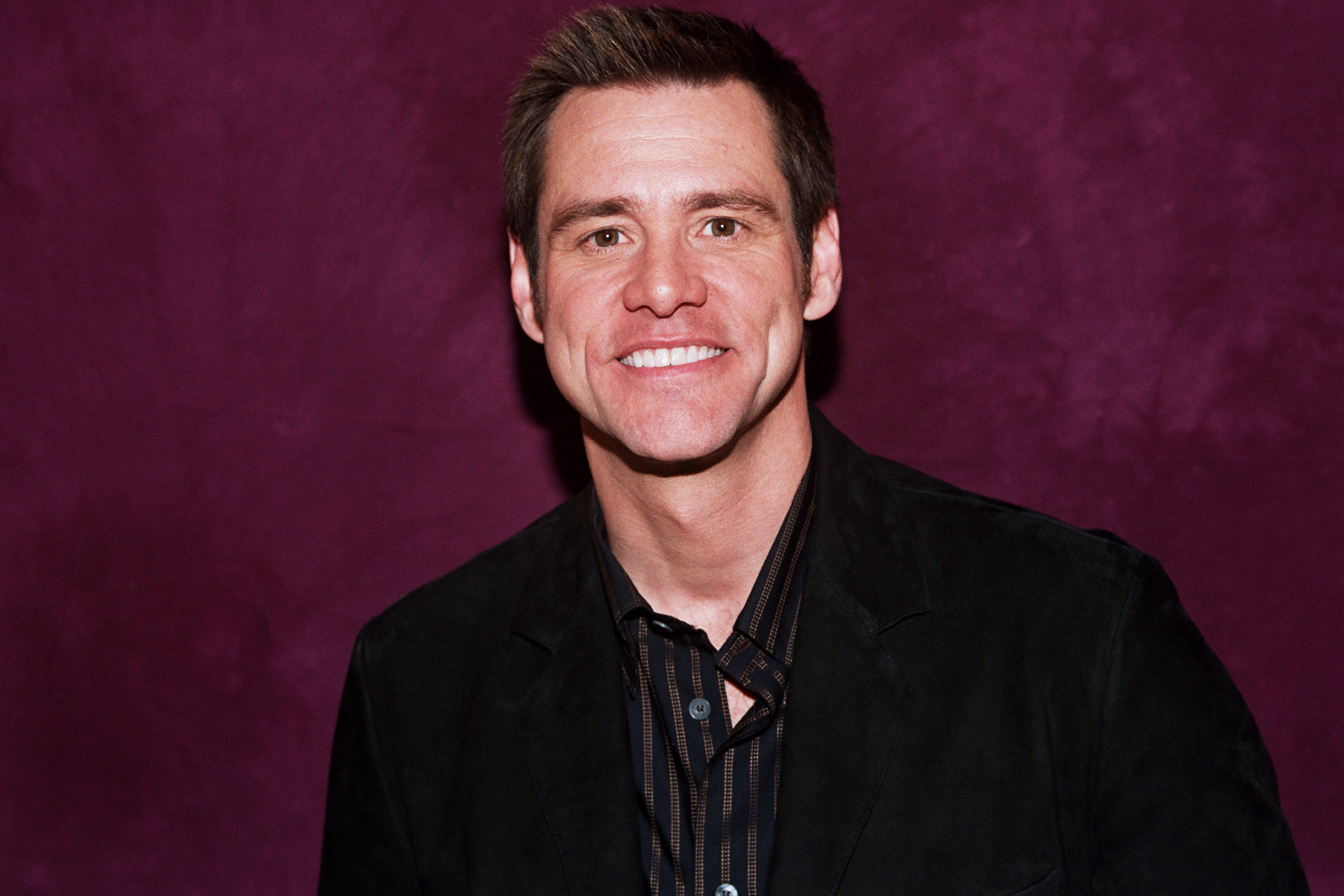
What began as a standard late-night monologue quickly evolved into one of the most widely discussed media moments of the week, as Stephen Colbert invited actor and artist Jim Carrey onto The Late Show for a conversation that veered sharply from comedy into a pointed critique of former President Donald J. Trump. The segment, which blends satire, politics and Carrey’s now-familiar brand of expressive political artwork, has generated intense reactions across social media and among political commentators, illustrating how late-night television continues to shape the national political conversation.
Carrey, who has spent the past several years producing a series of colorful, often confrontational portraits of political figures, used the segment to reflect on what he described as the “chaotic energy” of the Trump era. He explained that his artwork emerged from a desire to process what he saw as escalating tensions in American life — part caricature, part protest. Colbert, for his part, engaged with the work not merely as satire but as a lens through which to examine political performance, messaging and the increasingly theatrical nature of modern politics.

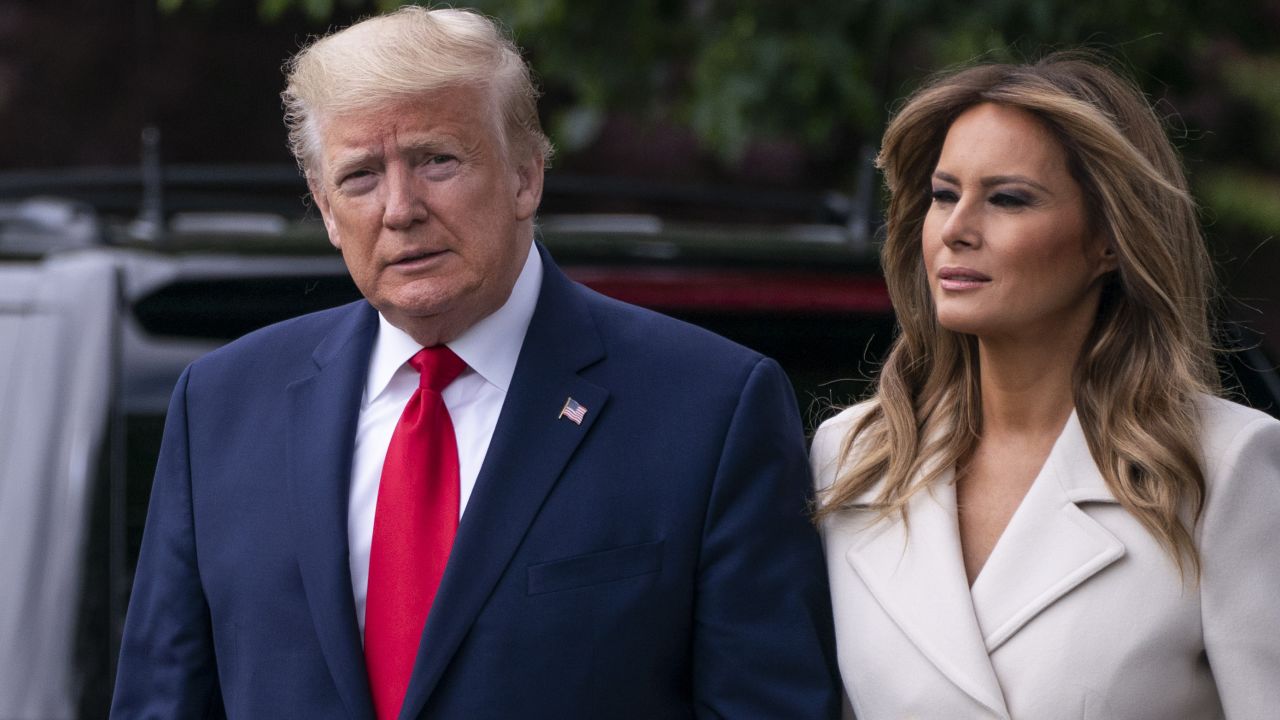
The audience responded with a mixture of laughter and surprise as clips and references to Trump’s recent public appearances — including moments where he appeared fatigued or agitated — were woven into the conversation. Colbert’s commentary, delivered with the polished cadence audiences have come to expect, framed these moments within a broader critique of political communication and the pressures surrounding a figure who remains at the center of national debate. Viewers in the studio reacted audibly as the host highlighted the contrast between Trump’s self-crafted image and his more vulnerable public moments.
Across social platforms, segments of the exchange spread rapidly, drawing millions of views within hours of broadcast. Supporters of Carrey’s activism praised the artist for channeling political anxiety into creativity, while critics accused the duo of blurring satire with partisan messaging. The rapid online dissemination of the clips — amplified by algorithmic recommendation systems and the public appetite for conflict-driven media — reinforced the degree to which late-night programs now operate as real-time political commentary rather than purely entertainment venues.
Behind the scenes, the segment caught the attention of political advisors and media analysts alike. Individuals familiar with Trump’s media team noted that the former president has long monitored late-night commentary, often viewing critical segments as personal attacks rather than comedic critique. While reactions within his circle were not publicly disclosed, several GOP consultants acknowledged that televised critiques from high-profile entertainers can sometimes influence broader public perception, especially when they gain momentum online.
Media scholars observing the exchange argue that the Colbert-Carrey moment fits into a larger trend: the transformation of late-night television into one of the most influential political platforms in American culture. The blending of humor, personal commentary and political narrative reflects a shift that began more than a decade ago but has accelerated significantly in the Donald Trump era. With audiences increasingly consuming news through comedic framing, hosts such as Colbert — and guests like Carrey — play a growing role in shaping how Americans interpret political events.
Industry figures noted that the segment seemed to strike a particular nerve, not because of any single remark, but because of the cumulative weight of satire, artwork and pointed commentary delivered in one uninterrupted sequence. As the conversation continued, Colbert emphasized not only moments of Trump’s public behavior but also the broader implications of media strategy, political branding and the fragility of narratives built around strength or inevitability.
By the time the show cut to commercial, the moment had already triggered responses from commentators across the political spectrum. Some praised the exchange as a necessary cultural critique, while others questioned whether late-night television should play such a central role in political discourse. Yet the traction the segment gained online — measured in reposts, discussions and reaction videos — suggests it tapped into an ongoing national conversation about political identity, media platforms and the power of satire.
As the clip continues to circulate, it stands as another example of how cultural figures and entertainers can shape public debate in ways that transcend the boundaries of traditional political journalism. Though the long-term impact of segments like these remains uncertain, their ability to dominate public attention underscores a broader fact: in contemporary American politics, the late-night stage is no longer just a comedic venue — it is a battleground for narratives, identities and influence.