De Niro’s Televised Remarks Against Trump Spark New Round of Political Tensions and Media Debate
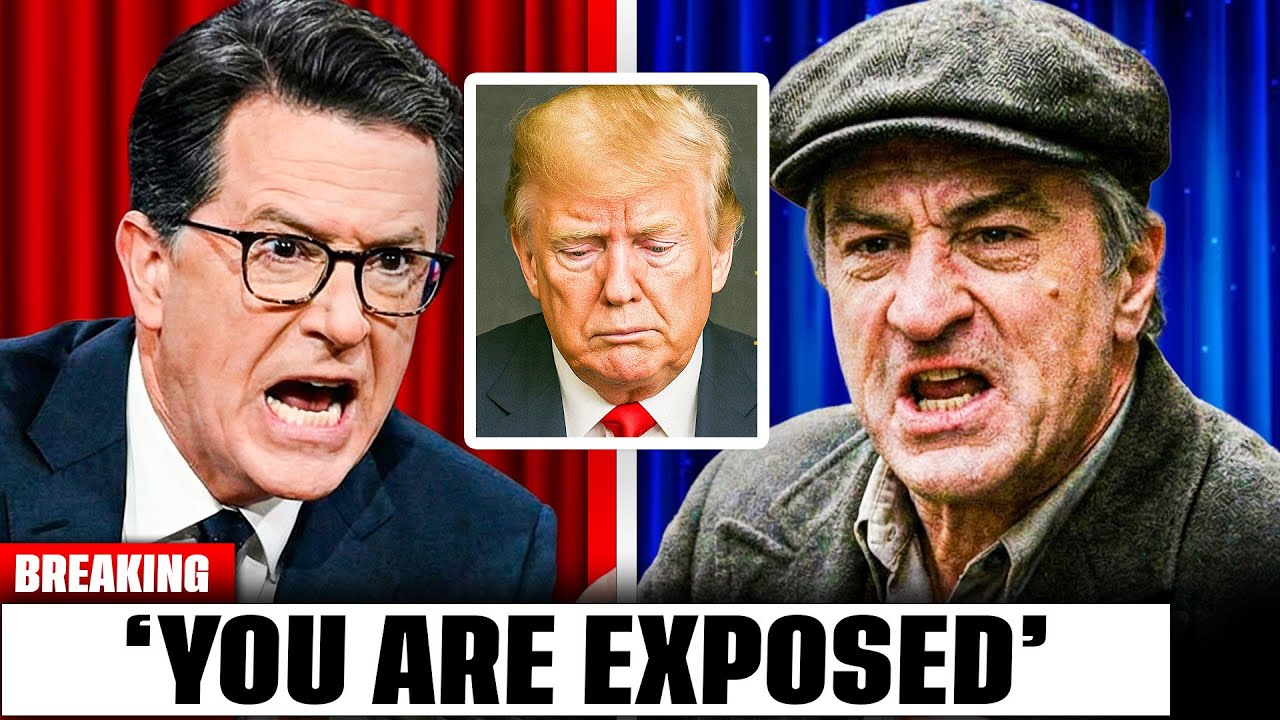
New York — A fiery exchange of words between actor Robert De Niro and former President Donald J. Trump has reignited a long-running feud, after De Niro delivered a pointed on-air critique during a taping of The Late Show with Stephen Colbert earlier this week. The episode, which blended political commentary, personal frustration, and late-night satire, quickly escalated into a national conversation as Mr. Trump issued a series of online denunciations and demanded that networks “stop amplifying” what he described as “defamatory attacks.”
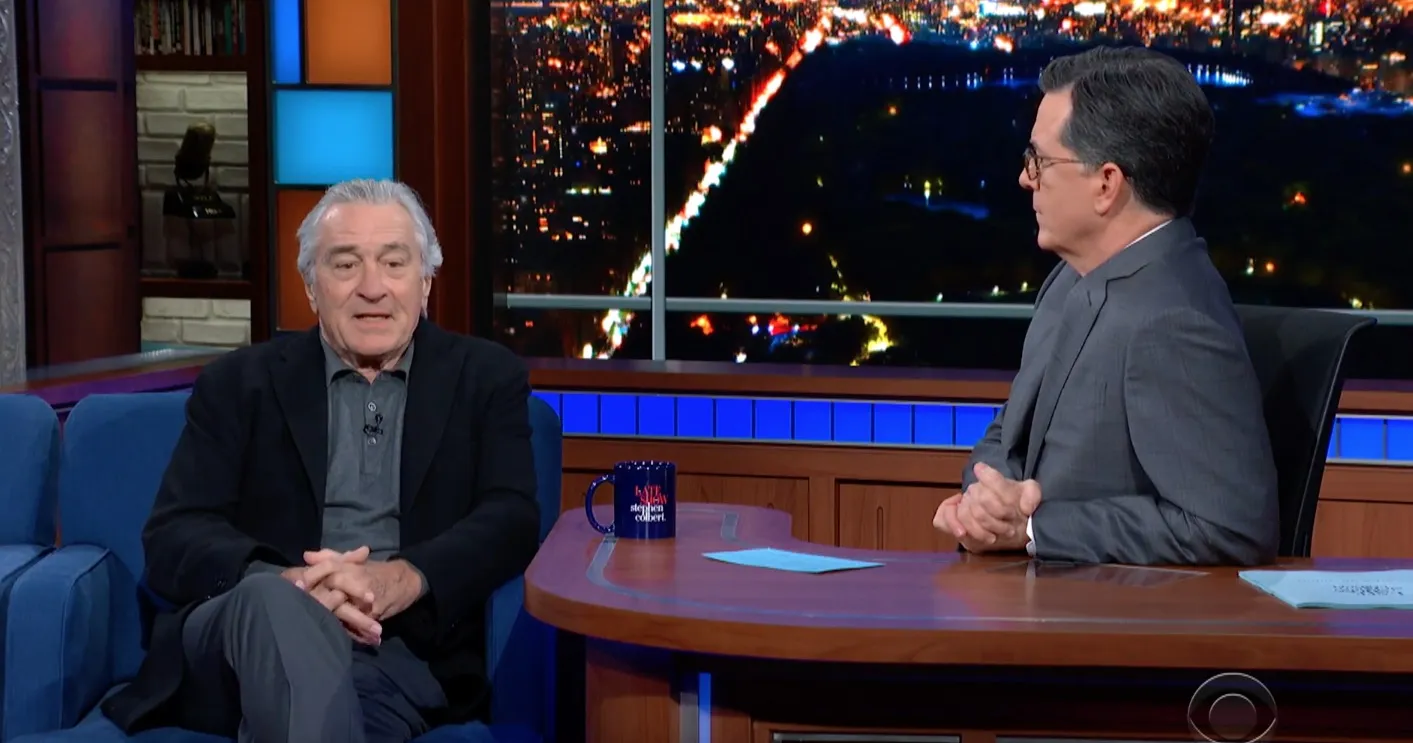
The controversy began when De Niro, appearing to promote an upcoming film, veered into political commentary, offering what several viewers described as an unusually blunt assessment of Mr. Trump’s recent legal and political behavior. According to partial transcripts circulated online, De Niro referenced Mr. Trump’s courtroom appearances, the former president’s public rhetoric, and what the actor called “a threat to the country’s basic civic norms.” While late-night programs often feature political humor, this segment took on a sharper edge.
As De Niro spoke, Mr. Colbert — a frequent critic of Mr. Trump — occasionally interjected with commentary of his own. At several moments, the audience reacted with a mix of applause, laughter and audible disbelief. Portions of the exchange went viral on social media within minutes, shared widely across platforms and generating intense reactions from supporters and detractors alike.
A Familiar Feud Reignited

Tensions between Mr. Trump and De Niro are not new. The actor has criticized the former president for years, both in interviews and at public events. Mr. Trump has frequently responded in kind, calling De Niro “unhinged” and “a failing actor.”
What made the latest episode different, according to political analysts, was the combination of timing, visibility, and the country’s increasingly polarized information environment. The exchange occurred amid a period of heightened scrutiny surrounding Mr. Trump’s legal exposure and public behavior, as well as renewed attention to his statements on issues ranging from immigration to democratic institutions.
Shortly after the segment aired, Mr. Trump posted a string of messages on his social media platform criticizing De Niro, dismissing the actor as “irrelevant,” and accusing media outlets of “trying to stir up drama.” He also demanded that networks “stop airing lies,” though there is no indication that any outlet violated broadcast standards or legal guidelines.
A spokesperson for Mr. Trump declined to comment on specific questions about the former president’s reaction but described the late-night segment as “a political stunt from Hollywood activists.”
Media and Campaign Reactions
The clip’s rapid spread online prompted responses from journalists, campaign strategists, and media scholars who noted the increasingly blurred lines between entertainment, political messaging, and public discourse.
“The intersection of celebrity culture and political communication is not new, but moments like these reveal how central television remains in shaping the narrative,” said Dr. Hannah Lennox, a media sociologist at Columbia University. “The significance lies not only in the content of the remarks but in the reactions they provoke.”
Advisers inside the Trump campaign expressed frustration privately, saying the episode risked distracting from planned messaging around economic policy and national security. One aide, who spoke anonymously, said, “Every time an entertainer attacks him publicly, it becomes a full news cycle. That is not always helpful to the campaign.”
Others, however, argued that the situation might energize supporters who see media criticism as evidence of bias. Conservative commentators quickly framed the segment as an orchestrated attack, while liberal commentators cast it as a moment of cultural accountability.
Legal and Political Context
The timing of the exchange coincided with several ongoing court proceedings involving the former president. While the late-night segment did not introduce new allegations, references to courtroom behavior and judicial scrutiny added a layer of sensitivity to the discussion.
Legal experts noted that while political commentary by public figures is broadly protected by the First Amendment, high-profile critiques can carry political consequences. “These episodes are less about legal risk and more about public perception,” said Janet Correll, a former federal prosecutor. “They become part of a larger mosaic that voters interpret.”
Mr. Trump’s advisers have sought to maintain messaging discipline during the legal proceedings, emphasizing stability and control. Episodes like the De Niro-Colbert exchange complicate that effort, particularly when Mr. Trump responds forcefully online.
A Cultural Flashpoint in an Election Year

Observers say the controversy highlights the increasingly intertwined nature of popular culture and electoral politics. In an era when millions obtain political information through entertainment programming, moments like De Niro’s remarks can carry unusual weight.
“The symbolic power of an Oscar-winning actor criticizing a former president on national television should not be underestimated,” said Dr. Lennox. “It becomes both a political event and a cultural one.”
As the clip continues to circulate, it is too early to determine whether the incident will have any measurable effect on public opinion. Polling experts caution that isolated media controversies rarely shift voter sentiment significantly, but they can contribute to broader narratives about temperament, leadership, and judgment.
For now, the episode has exposed deepening cultural divisions and provided fresh ammunition for both parties as the campaign season accelerates.
“It’s a reminder,” said Correll, “that in today’s environment, the line between politics and performance is thinner than ever.”