What began as a routine update on Canada’s long-running fighter replacement program has quickly escalated into one of the most closely watched defense stories in North America. A new wave of reporting and online speculation suggests that Ottawa’s interest in Sweden’s Gripen fighter — long considered a distant challenger to the U.S.-built F-35 — has taken on unexpected momentum after renewed discussions involving a Rolls-Royce engine partnership. While no formal proposals have been released, the possibility alone has sparked intense debate among military analysts, policymakers, and defense-industry observers.
For years, Canada’s participation in the F-35 program seemed inevitable. The aircraft — a centerpiece of NATO integration and U.S. defense strategy — was framed not merely as a purchase but as a long-term geopolitical alignment. Yet the emergence of a potential Gripen option has reopened arguments many believed were settled: questions about cost, sovereignty, Arctic operations, and Washington’s control over maintenance, software, and classified systems. The addition of Rolls-Royce into the discussion has only heightened that scrutiny, raising the prospect that Canada might pursue a more independent industrial pathway than previously assumed.
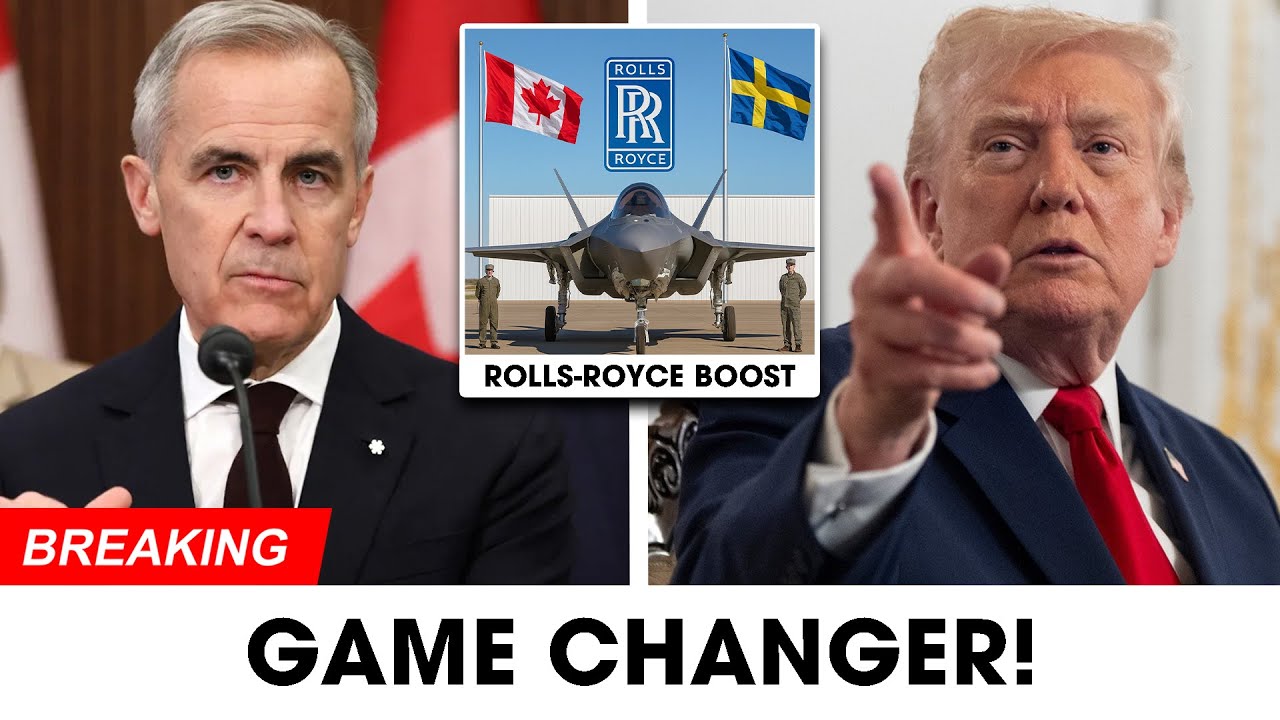
Experts watching the situation say the renewed attention on Gripen is not accidental. Recent months have brought increasing commentary about Canada’s desire for greater freedom in its defense procurement, particularly as tensions rise over the Arctic and as Ottawa seeks to strengthen domestic aerospace capabilities. While Sweden’s Gripen has historically been seen as a flexible, sovereign-friendly platform, the possibility of pairing it with a Rolls-Royce powerplant adds a layer of industrial appeal that resonates within Canada’s broader economic strategy.
Inside Washington, the development has not gone unnoticed. U.S. officials, speaking anonymously in several reports circulating online, have expressed concern that any shift away from the F-35 could undermine continental defense interoperability and weaken the political symbolism of shared platforms. Pentagon analysts are said to be watching closely, noting that every F-35 partner who reconsiders the aircraft creates ripple effects for global sustainment costs and long-term export planning.
In Ottawa, the tone is more cautious but undeniably curious. Canadian defense officials have neither confirmed nor denied the latest rumors, instead emphasizing that any major procurement must align with national interests, industrial partnerships, and the evolving security environment. Behind the scenes, insiders say discussions have widened to include long-term Arctic basing requirements, supply-chain resiliency, and the recurring question of how much operational autonomy Canada ultimately wants.

Meanwhile, online discourse has surged far beyond the defense community. Viral clips, leaked documents, and commentary from aviation enthusiasts have amplified public interest, framing the moment as a dramatic geopolitical shift — and sometimes exaggerating the implications. The Gripen hashtag has trended repeatedly across platforms, with supporters highlighting the aircraft’s lower operating costs and independence from U.S. export constraints. Critics counter that the F-35 offers unmatched stealth, integration, and long-term strategic alignment.
The renewed debate has also revived a central tension in Canadian defense planning: whether to prioritize interoperability with the United States or deeper industrial independence. The entry of Rolls-Royce into the conversation — whether speculative or substantive — encapsulates that dilemma. The company already has a footprint in Canadian aerospace, and any future collaboration could expand local manufacturing, training, or technology transfer, making the geopolitical calculus even more complex.

For now, the Fighter Replacement Program remains officially unchanged. Yet the pace of conversation, the intensity of political reaction, and the unusually high visibility of the Gripen option suggest the landscape may be shifting in real time. Observers note that even the suggestion of a competitive challenge can alter negotiations, pricing structures, and diplomatic signals.
In the coming weeks, analysts expect more clarity — or more confusion. What is clear is that a procurement story once seen as a foregone conclusion has unexpectedly become a point of international interest, industrial speculation, and online fascination.
And as the debate accelerates, one thing remains certain: the internet can’t stop talking.