What began as a familiar late-night monologue quickly transformed into a pointed exchange that dominated political conversation throughout the weekend, after Stephen Colbert delivered an unusually direct on-air critique of former President Donald J. Trump. The moment, initially framed as routine satire, became something more confrontational when Colbert shifted from jokes to a detailed response to Trump’s recent public remarks, challenging both the tone and substance of the former president’s messaging.
The audience in the studio appeared to sense the change instantly. What had been light laughter gave way to murmurs, then to a series of audible gasps as Colbert walked through his concerns, referencing Trump’s evolving rhetoric and the strategic choices behind his latest round of statements. It was a tonal shift that late-night television occasionally brushes against, but rarely embraces so fully. And almost immediately, the segment found a second life online, where clipped moments circulated widely—first among political commentators, then across a broader social-media audience.
Within an hour of airing, the exchange had begun trending on YouTube, TikTok, and X. One particularly circulated clip featured Colbert’s direct engagement with Trump’s recent claims regarding election narratives and media coverage. The segment struck a nerve across the political spectrum, prompting intense reactions from supporters and critics alike. While Colbert’s audience cheered throughout, a parallel wave of pushback emerged online from Trump allies, who described the moment as an orchestrated attack.
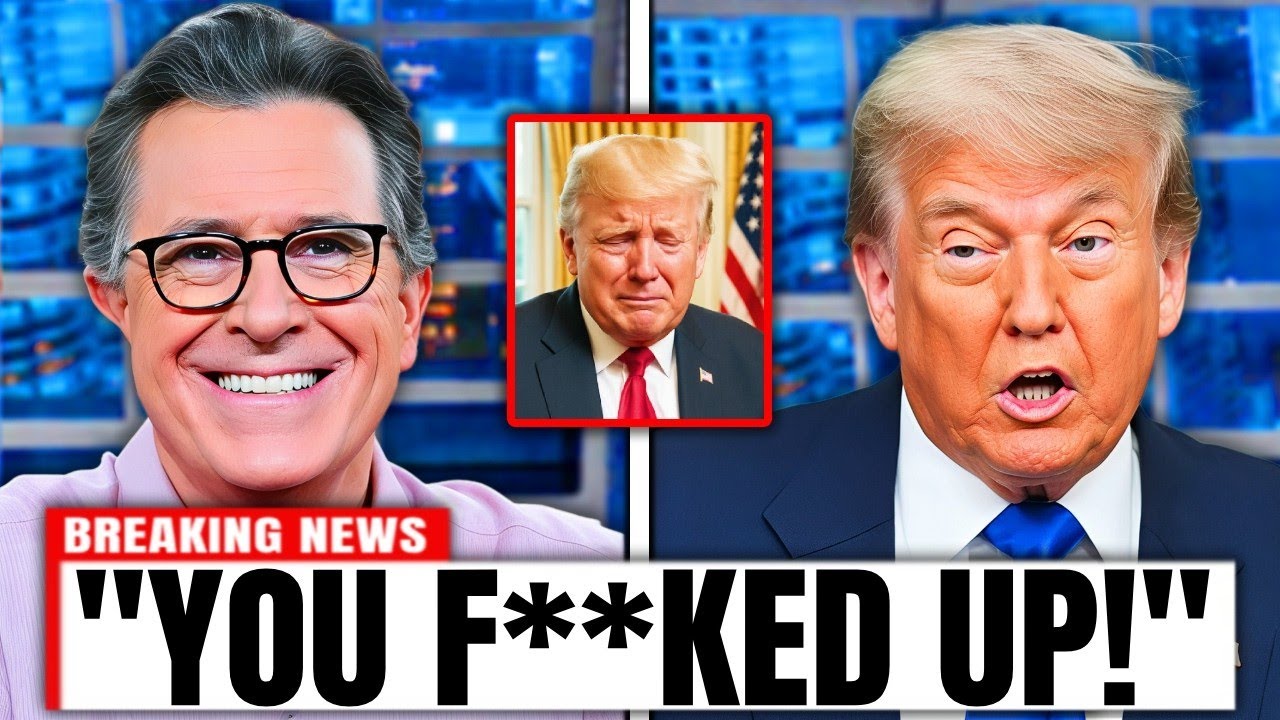
Sources with knowledge of the taping said the escalation was not planned. One production staff member, speaking on background, said the control room “recognized the shift the moment it happened.” According to another person familiar with the show’s editorial process, the segment had originally been structured as a brief satirical aside before Colbert decided to expand the commentary in real time—a decision that appeared to surprise even some of the show’s writers.
Trump’s reaction came swiftly. People close to his media team say he viewed the clip shortly after it began circulating, and he reportedly expressed frustration that Colbert’s commentary had gained such rapid traction. A series of social-media posts and statements from allies soon followed, echoing longstanding grievances about entertainment figures engaging in political criticism. The speed of the response underscored how quickly televised moments can shape political narratives—and how sensitive Trump and his circle remain to late-night scrutiny.
The resulting back-and-forth extended beyond the immediate audience for the show. Major news outlets incorporated excerpts from the segment into their weekend political coverage, and several commentators devoted airtime to analyzing the underlying themes. Some argued that Colbert had simply articulated concerns shared by many voters; others suggested the moment illustrated the increasingly blurred boundaries between political journalism and television comedy.
The cultural significance of such exchanges is not lost on scholars who study media influence. For nearly a decade, late-night hosts have served as unofficial interpreters of political events, helping audiences understand—and sometimes cope with—the turbulence of contemporary politics. Colbert, in particular, has built much of his current persona on the fusion between comedy and civic commentary. Yet this segment felt different: sharper, more pointed, and less reliant on satire as a cushion for criticism.

What also stood out was the symmetry of the reaction. Supporters of the host celebrated the segment as an overdue confrontation, while supporters of Trump described it as political bias masquerading as entertainment. The polarized reception served as a reminder of the shifting landscape in which media figures operate: they are no longer merely entertainers but participants in a larger national conversation, sometimes shaping it as much as elected officials do.
As the clip continued circulating through the weekend, its reach extended well beyond Colbert’s core viewers. Political analysts replayed portions during Sunday-morning programs; online creators remixed it into commentary videos; and pundits on both the left and the right used it as a springboard to reexamine Trump’s broader communication strategy. The moment, fleeting as it was, became a touchpoint in a wider debate about public rhetoric, accountability, and the role of television in scrutinizing political figures.
Whether this particular exchange will have lasting influence remains uncertain. But it highlights a broader pattern in American political culture: incidents that might once have passed as ephemeral now echo widely, refracted through a media environment in which every televised moment becomes a potential catalyst for national discussion.
For now, the clip continues to gain traction, drawing in viewers well beyond the late-night audience. And the conversation it sparked—about media, politics, and the space where the two meet—shows no sign of ebbing.