Trump’s Ukraine Peace Plan Backfires, Exposing Secret U.S.-Russia Talks and Sparking Ally Revolt
By Farnaz Fassihi and Keith Bradsher The New York Times November 24, 2025
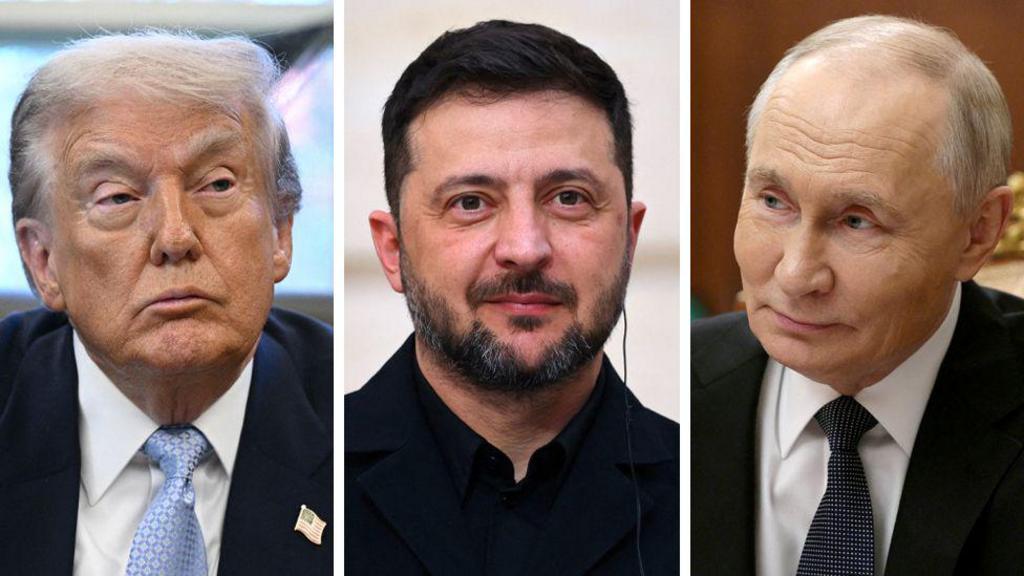
WASHINGTON — President Trump’s ambitious bid to broker a swift end to Russia’s war in Ukraine has unraveled in spectacular fashion, with the sudden revelation of secret U.S.-Russia backchannel talks — excluding Ukraine and its European allies — igniting a diplomatic firestorm that has left the White House scrambling and global leaders openly questioning America’s reliability as an alliance partner.

The controversy erupted Friday when Reuters reported that the Trump administration’s controversial 28-point peace proposal, unveiled last week as a “take-it-or-leave-it” ultimatum to Kyiv, was largely drafted in clandestine negotiations between Steve Witkoff, Mr. Trump’s Middle East envoy, and Kirill Dmitriev, a Russian sovereign wealth fund executive with close ties to President Vladimir V. Putin. The talks, held in Abu Dhabi and Geneva over several weeks, bypassed not only Ukrainian officials but also key U.S. diplomats and European partners, according to more than a dozen sources familiar with the discussions.
The plan, which demands Ukraine cede control of Crimea and four eastern oblasts, cap its military at 100,000 troops and foreswear NATO membership, was presented to Ukrainian President Volodymyr Zelensky in Geneva on November 23 as a non-negotiable framework. Mr. Zelensky rejected it outright, calling it “capitulation disguised as peace,” and European leaders quickly rallied behind him, proposing an alternative 15-point blueprint that emphasizes territorial integrity and reparations from Russia.
The exposure of the backchannel has provoked a revolt among allies. British Prime Minister Keir Starmer, speaking after a virtual emergency meeting with NATO counterparts, accused the U.S. of “undermining the transatlantic bond” and warned that the plan “rewards aggression.” French President Emmanuel Macron went further, telling reporters in Paris: “If America’s secret deals with Moscow dictate Europe’s security, then Europe must prepare to defend itself alone.” German Chancellor Olaf Scholz echoed the sentiment, announcing an immediate €5 billion boost to Ukraine’s arms funding, sourced from a European “coalition of the willing.”
The diplomatic snub extended to the Group of 20 summit in Johannesburg, where Mr. Trump’s absence — his first boycott of the forum — loomed large. Outgoing South African President Cyril Ramaphosa, in his closing remarks, skipped the traditional gavel handover to the U.S., declaring: “The G20 moves forward with or without full participation. Global order teeters when trust erodes.” Delegates from Canada, Japan and Indonesia privately mocked the U.S. isolation as “petty and self-defeating,” while China’s Premier Li Qiang seized the moment to tout Beijing’s “balanced” mediation role.

Mr. Trump, en route to Brazil for bilateral talks, lashed out on Truth Social: “Fake News exposes ‘secret talks’ that were MASTERSTROKES for PEACE! Crooked Dems and weak Europe sabotage America First. Ukraine ungrateful — we gave billions! #MAGA.” The post, viewed 14 million times by midday, tagged Secretary of State Mike Pompeo and accused Mr. Zelensky of “zero gratitude.” White House press secretary Karoline Leavitt, during Monday’s briefing, defended the backchannel as “discreet diplomacy” but dodged questions on whether Ukraine or Europe were consulted, insisting: “The plan saves lives — critics want endless war.”
Behind the scenes, the administration is in disarray. Aides described Mr. Trump in a near-constant state of agitation, placing frantic calls to Mr. Witkoff — a real estate developer with no prior diplomatic experience — and Mr. Dmitriev, whom he praised as a “smart guy” in a Fox News interview. “The president’s stunned — he thought this would be his Nobel moment,” one official said anonymously. “Now Europe’s talking nuclear umbrellas and NATO’s obituary.”
The backchannel’s exposure traces to a whistleblower leak to Reuters, corroborated by European diplomats who learned of the Geneva talks only after the fact. The plan, leaked in full by Ukrainian outlets, includes concessions like lifting sanctions on Russia’s energy sector and recognizing Moscow’s annexation of Crimea — demands Kyiv and Brussels have long deemed nonstarters. Ukrainian Foreign Minister Dmytro Kuleba called it “a betrayal drafted in secret,” while NATO Secretary General Jens Stoltenberg warned of “irreversible damage to alliance trust.”
Republicans, facing midterm headwinds, are fracturing. Senate Foreign Relations Chairman Lindsey Graham, a Trump ally, broke ranks Sunday on “Face the Nation,” urging revisions: “This plan gives Putin too much — we can’t reward invasion.” House Speaker Mike Johnson held an emergency caucus Monday, pleading for unity, but whispers of a “GOP revolt” abound, with moderates like Senator Susan Collins decrying the “unilateral diplomacy.”
A Quinnipiac poll released Monday shows Mr. Trump’s approval at 37 percent — a nadir — with independents citing “erratic foreign policy” as a top concern. Late-night host Jimmy Kimmel quipped: “Trump’s secret Russia talks? It’s like ‘The Art of the Deal’ meets ‘The Manchurian Candidate’ — all backchannel, no backbone.”
As the G20 declaration — adopted without U.S. input — commits $100 billion to green energy excluding American buy-in, the shockwave teeters the global order. For Mr. Trump, whose “America First” vision once rallied the base, the backfire is personal: A masterstroke turned misstep, leaving allies locked out and the world watching warily.