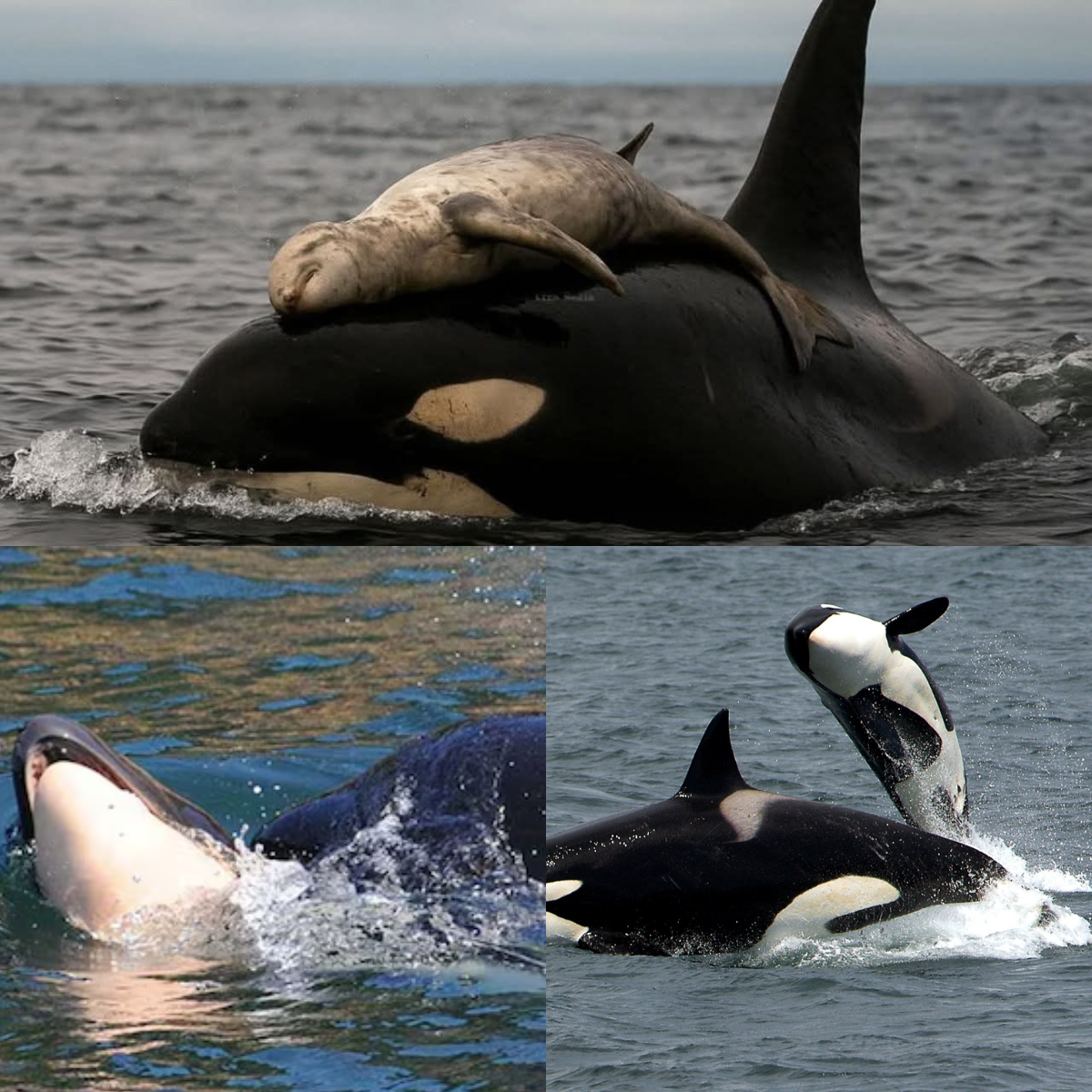
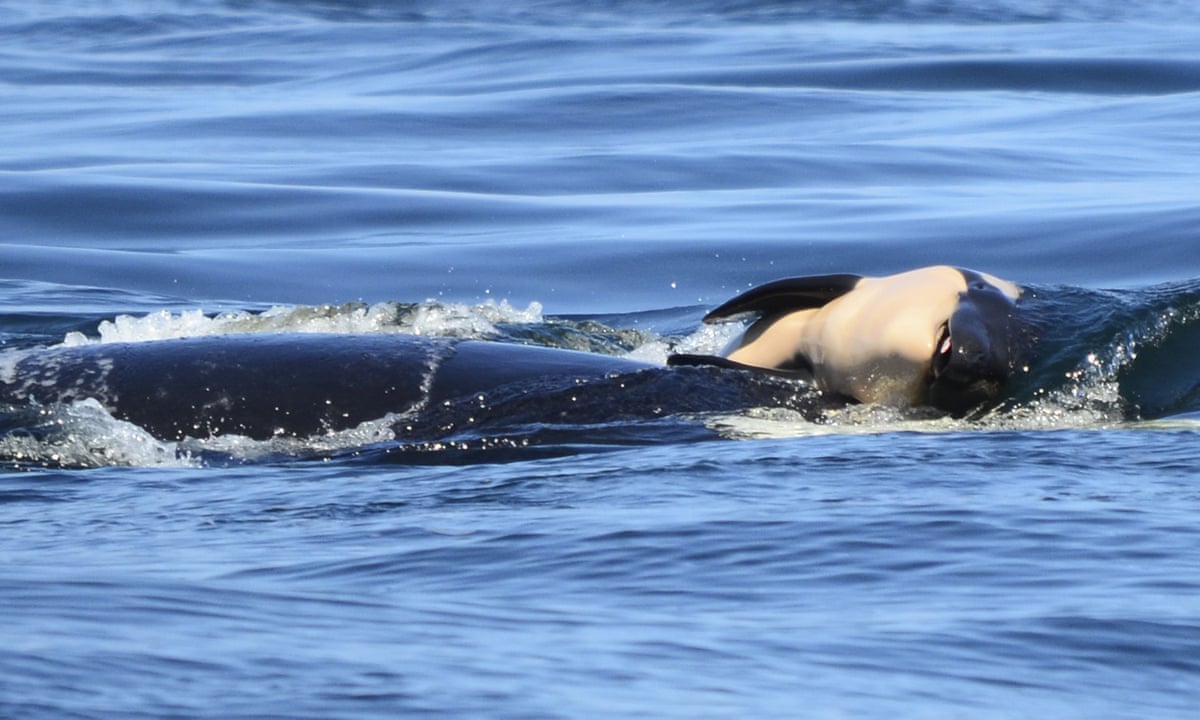
In the vast, restless Pacific Ocean, a mother whale swam against crashing waves and ferocious currents, her body shuddering with exhaustion. But she did not swim alone. Balanced delicately on her head, nudged gently along by her snout, was the lifeless body of her calf.
For days she carried it — through storms, through open stretches of endless gray water, through the silent dark of the deep. The calf’s body grew heavier as it swelled with seawater. Its fragile skin began to peel, and its once-supple form slowly disintegrated. Still, the mother did not let go. She dove, surfaced, pushed, and balanced, as if every breath she took must also be shared with her child.
Scientists and sailors alike have documented these painful journeys before. But the question remains: Why? Why does a whale mother cling so desperately to her dead calf, long after nature has claimed it back?
A Heartbreaking Vigil
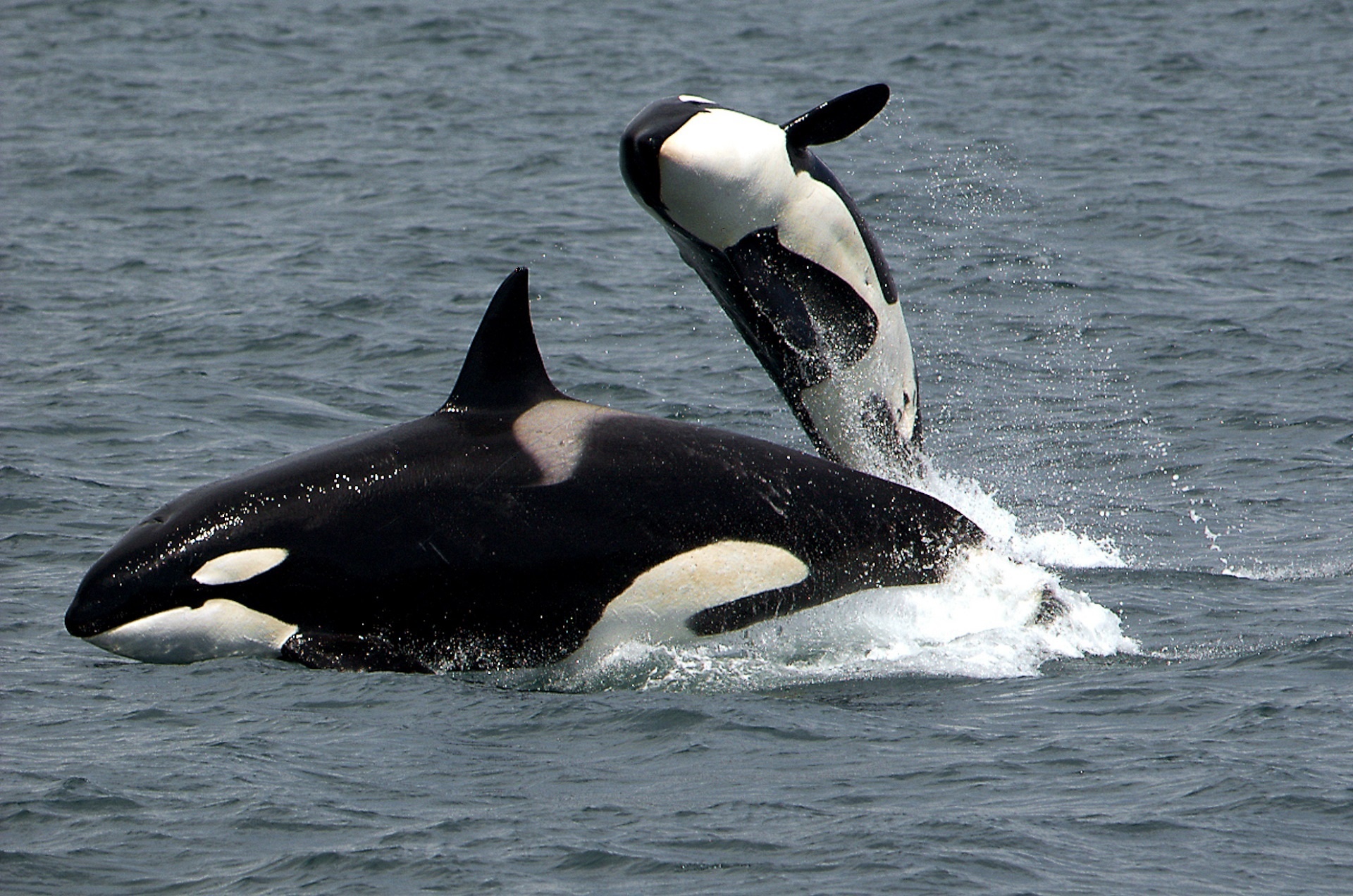
The scene is one of the ocean’s most haunting rituals. Sightings of whales carrying their dead calves have been recorded across species — from orcas in the frigid North Atlantic, to pilot whales in the Mediterranean, to humpbacks along the coasts of Hawaii.
Observers describe it as both awe-inspiring and agonizing. A female whale is seen swimming slowly, often falling behind her pod, nudging the body to the surface so it won’t sink. She appears restless, circling her calf, keeping predators at bay, even as the corpse deteriorates.
One of the most widely publicized instances occurred in 2018, when a Southern Resident orca known as Tahlequah (J35) carried her stillborn calf for 17 days across more than 1,000 miles of ocean. Her vigil transfixed the world, sparking headlines, vigils, and debates about whether whales truly grieve.
“She was clearly unwilling to let go,” recalled biologist Ken Balcomb, who observed the event. “It was an expression of something deeply emotional.”
More Than Instinct
Skeptics sometimes dismiss such behavior as mere instinct — a reflex, not a reflection. After all, many animals have routines that serve no obvious purpose once circumstances change.
But marine biologists argue that the prolonged carrying of dead calves cannot be explained by instinct alone. For one, there is no survival benefit to the mother. In fact, the behavior is costly: she expends immense energy, risks injury, and often falls behind in foraging.
Nor is it simply habit. Most whale births are successful, and when calves die, there is no evolutionary advantage to keeping the body afloat. Instinct would encourage the mother to conserve strength, to try again another season.
The persistence, researchers suggest, points to something deeper — an emotional drive, an inability to accept loss, a display of grief.
The Science of Whale Grief

Do whales grieve? It is a question that science approaches with caution. Grief, as humans know it, involves not only sadness but awareness of death itself. Proving that in animals is difficult.
Yet mounting evidence shows that whales and dolphins — members of the highly intelligent cetacean family — experience profound social and emotional bonds. Their brains contain spindle cells, specialized neurons associated with empathy, social processing, and mourning in humans and great apes.
“These animals have complex family structures,” explains Dr. Lori Marino, a neuroscientist who studies cetacean intelligence. “They recognize individuals, they form lifelong bonds, and when one of those bonds is severed, we see behaviors that look remarkably like mourning.”
In other words, the mother whale’s vigil may not be an evolutionary glitch. It may be the price of consciousness — the burden of love and memory.
A Mother’s Bond
To understand why whale mothers cling so tightly, one must consider the enormity of their investment.
Whales give birth to a single calf after a year-long pregnancy. The calf is born tail-first, weighing up to a ton, and must immediately be nudged to the surface for its first breath. From that moment, the mother is nurse, guardian, and teacher. She produces thick, fatty milk — as much as 200 liters a day — to sustain the calf. She shields it from predators, guides it through migrations, and communicates with it through a repertoire of clicks, whistles, and songs.
This bond can last years. In some species, like orcas, calves stay with their mothers for life. The death of a newborn, then, is not simply the loss of offspring. It is the shattering of a relationship into which the mother has already poured immense energy, hope, and care.
“From the moment of conception, everything is devoted to that calf,” says Dr. Deborah Giles, an orca researcher. “So when the calf dies, the mother doesn’t just walk away. She can’t.”
Through Storms and Currents
Carrying the body is not easy. The ocean is not a gentle place. Waves pound, currents pull, and scavengers circle. The corpse grows unwieldy. Sometimes, the mother must balance it awkwardly, pushing with her head or holding it against her pectoral fin.