Late Night War: Jimmy Kimmel’s Explosive Reaction to Colbert’s Cancellation
The late-night television landscape, already a battleground of declining ratings and shifting viewer habits, erupted into chaos on July 17, 2025, when CBS announced the cancellation of The Late Show with Stephen Colbert, set to end in May 2026 after a 33-year run. The decision sent shockwaves through Hollywood, but it was Jimmy Kimmel’s raw, unfiltered response on live television that turned a network’s financial maneuver into a cultural firestorm. “Love you, Stephen. F— you, CBS!” Kimmel roared during his Jimmy Kimmel Live! monologue, his voice a mix of fury and solidarity. The outburst left executives scrambling, insiders reeling, and viewers glued to their screens, as a late-night war unlike any other ignited in real time.
The announcement came abruptly, with Colbert breaking the news to his audience during a taping, his trademark wit tempered by visible emotion. “I found out just last night,” he said, as boos cascaded from the crowd. “Next year will be our last season. The network is ending The Late Show in May.” CBS framed the decision as “purely financial,” citing the “challenging backdrop in late night” and denying any connection to the show’s content or performance. But the timing raised eyebrows. Just days earlier, on July 14, Colbert had lambasted CBS’s parent company, Paramount Global, for settling a $16 million lawsuit with President Donald Trump over a 60 Minutes interview with Kamala Harris, calling it a “big fat bribe.” The coincidence fueled speculation, amplified by Senator Elizabeth Warren’s pointed question on social media: “America deserves to know if his show was canceled for political reasons.”
Kimmel, the longest-serving late-night host on network television, didn’t wait for answers. His Jimmy Kimmel Live! monologue the following night was a masterclass in controlled chaos. “They’re canceling The Late Show? The number-one show in its slot? Are you kidding me?” he said, pacing the stage. “Love you, Stephen. F— you, CBS, and all your Sheldons!” The jab at CBS’s reliance on The Big Bang Theory spin-offs like Young Sheldon drew raucous laughter, but Kimmel’s anger was palpable. “This isn’t about money,” he continued. “Colbert’s pulling 2.4 million viewers a night, beating me, beating Fallon. This is about gutless suits caving to pressure.” The audience roared, and within minutes, clips of Kimmel’s tirade flooded social media, with hashtags like #SaveColbert and #KimmelVsCBS trending nationwide.
The fallout was immediate. CBS executives, already bracing for backlash, were reportedly blindsided by Kimmel’s public assault. Insiders described “panic” in boardrooms as the network scrambled to control the narrative. Paramount’s statement reiterating the “financial” rationale did little to quell the storm, especially as industry voices piled on. TV producer Mike Schur posted on Bluesky: “When media companies cancel late-night shows to appease fascists, America ends.” Jon Stewart called the decision “shameful,” while Jimmy Fallon, typically reserved, shared his grief on Instagram: “I thought I’d ride this out with Stephen for years.” Even David Letterman, The Late Show’s former host, shaded CBS in a video, quipping, “You can’t spell CBS without BS.”
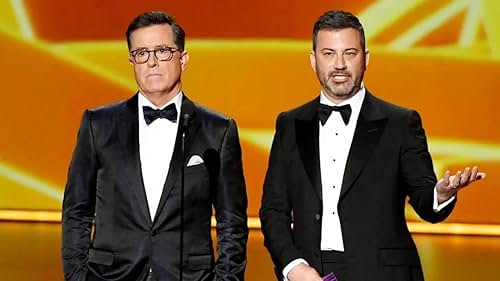
The controversy gained further traction when Trump weighed in on Truth Social, gleefully claiming credit. “I love that Colbert was fired. His ratings were low, and his talent even lower. Jimmy Kimmel is next!” he posted, despite Colbert’s ratings lead with 2.42 million nightly viewers, outpacing Kimmel’s 1.8 million and Fallon’s 1.2 million. Trump’s remarks, coupled with his administration’s pending review of Paramount’s merger with Skydance Media, intensified suspicions of political meddling. The Writers Guild of America East and West demanded a probe, accusing Paramount of offering a “bribe” to secure regulatory approval.
Kimmel, undeterred, doubled down in subsequent shows. “If CBS thinks they can silence Stephen, they’re dreaming,” he said, mocking their pivot to “cheaper game shows and Sheldon reruns.” His defiance resonated with viewers, many of whom flooded social media with support for both hosts. “Kimmel’s saying what we’re all thinking,” one X user wrote. “Colbert’s cancellation feels like a warning to anyone who dares speak truth.” Others, however, saw it differently, with some conservative voices cheering CBS’s move as a rebuke to “woke” late-night comedy.
Behind the scenes, the mood was somber. Colbert, sources said, was devastated but resolute, planning to explore streaming or independent platforms. Kimmel, meanwhile, faced renewed scrutiny about his own show’s future, despite ABC’s assurance that Jimmy Kimmel Live! was safe through 2026. The broader late-night genre, already battered by streaming and social media, felt increasingly fragile. “This isn’t just about Stephen,” Kimmel said in a quieter moment. “It’s about what happens when networks decide satire’s too risky.”
The Kimmel-Colbert saga exposed a deeper fault line in American media: the tension between commerce, creativity, and courage. As CBS retreated from late night, Kimmel’s outburst became a rallying cry for those who believe comedy should challenge power, not cower to it. Whether his words will spark change or merely mark the end of an era remains unclear. But for now, the late-night war rages on, with Kimmel’s voice—fierce, profane, and unapologetic—ringing loudest of all.